



-
 Courier delivery
-
 DHL Courier delivery
-
 Warranty 1 year
-
 Free 30-Day returns

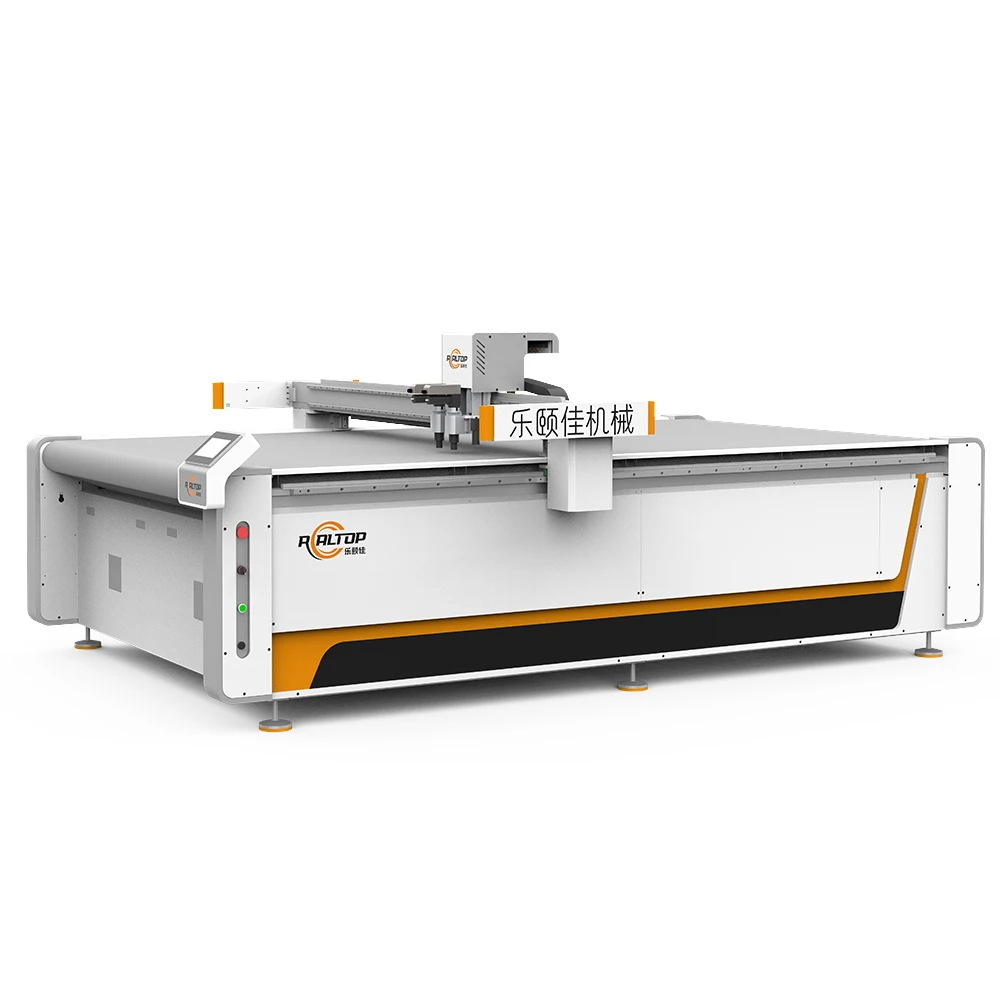
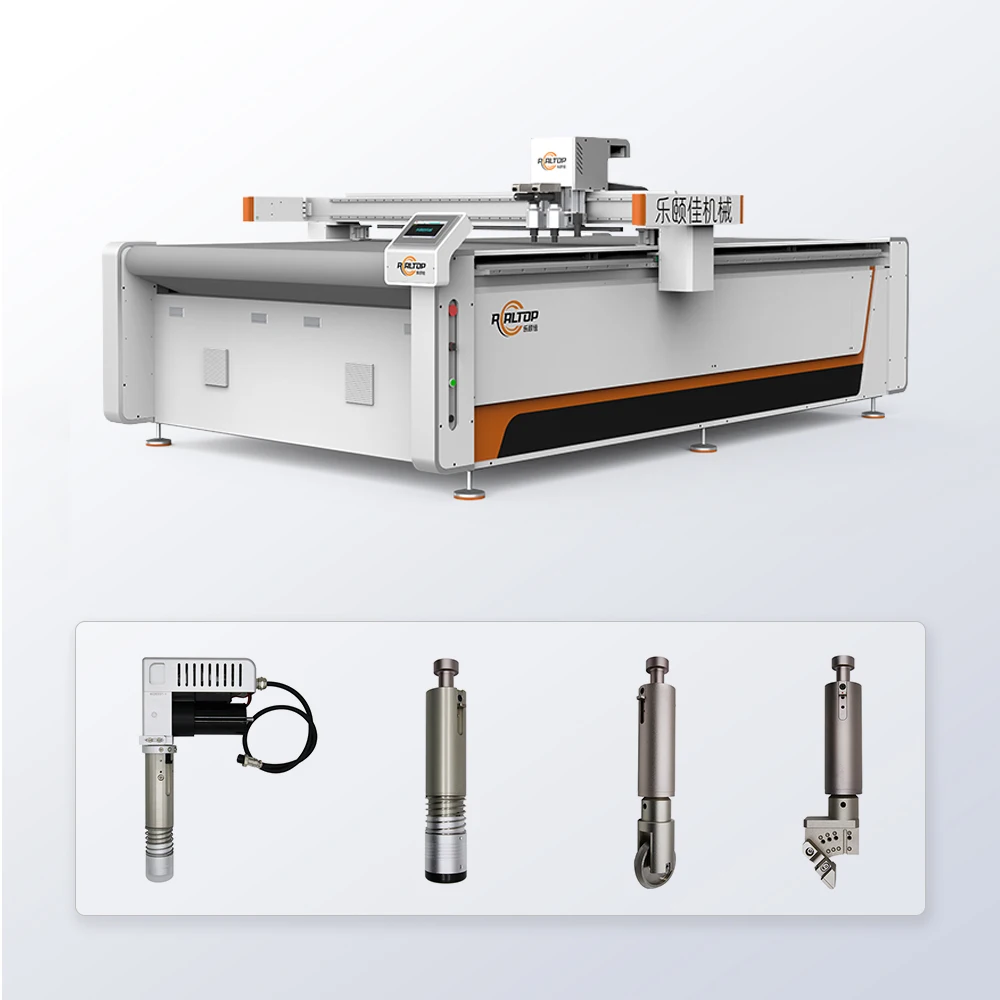
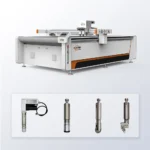
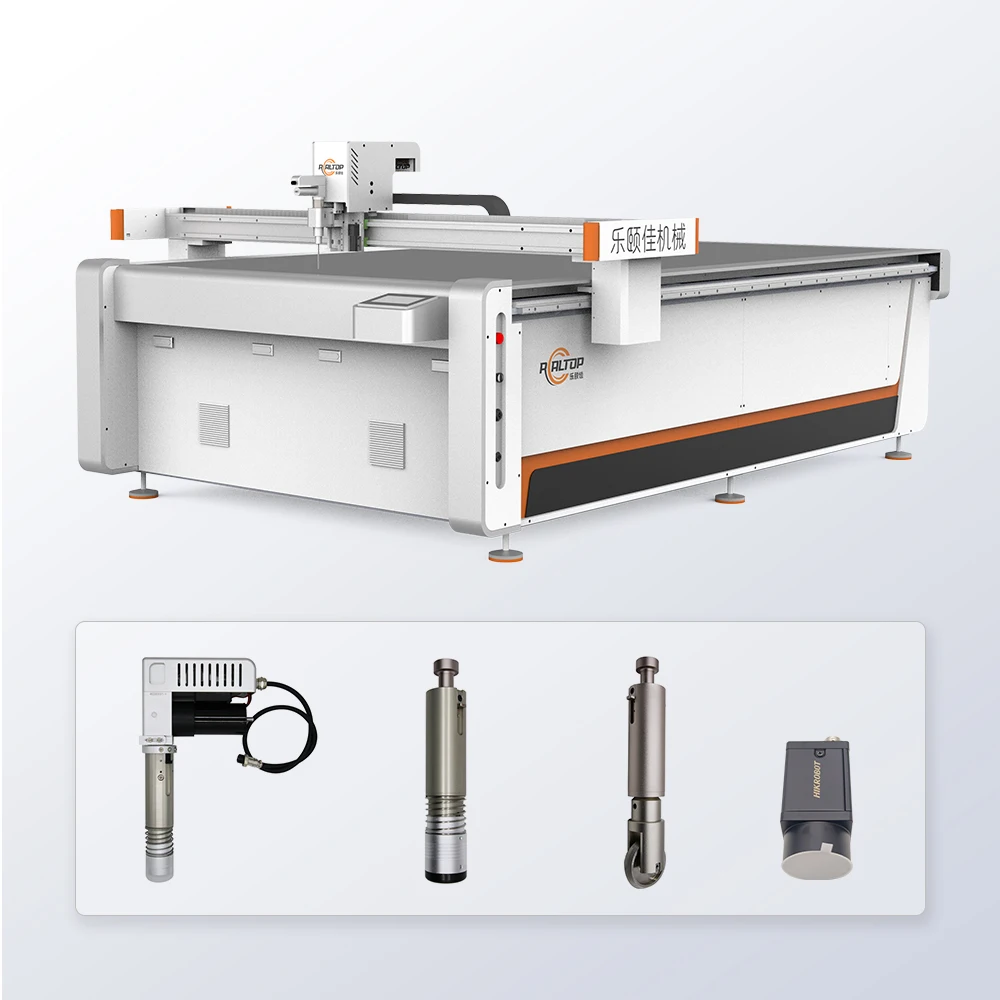
In-house tool head engineering — we design and build oscillating knife, driven rotary and creasing assemblies under one roof so your carton cutting table ships with the exact configuration your flute profile demands.
Technical Specifications
| Parameter | Value |
|---|---|
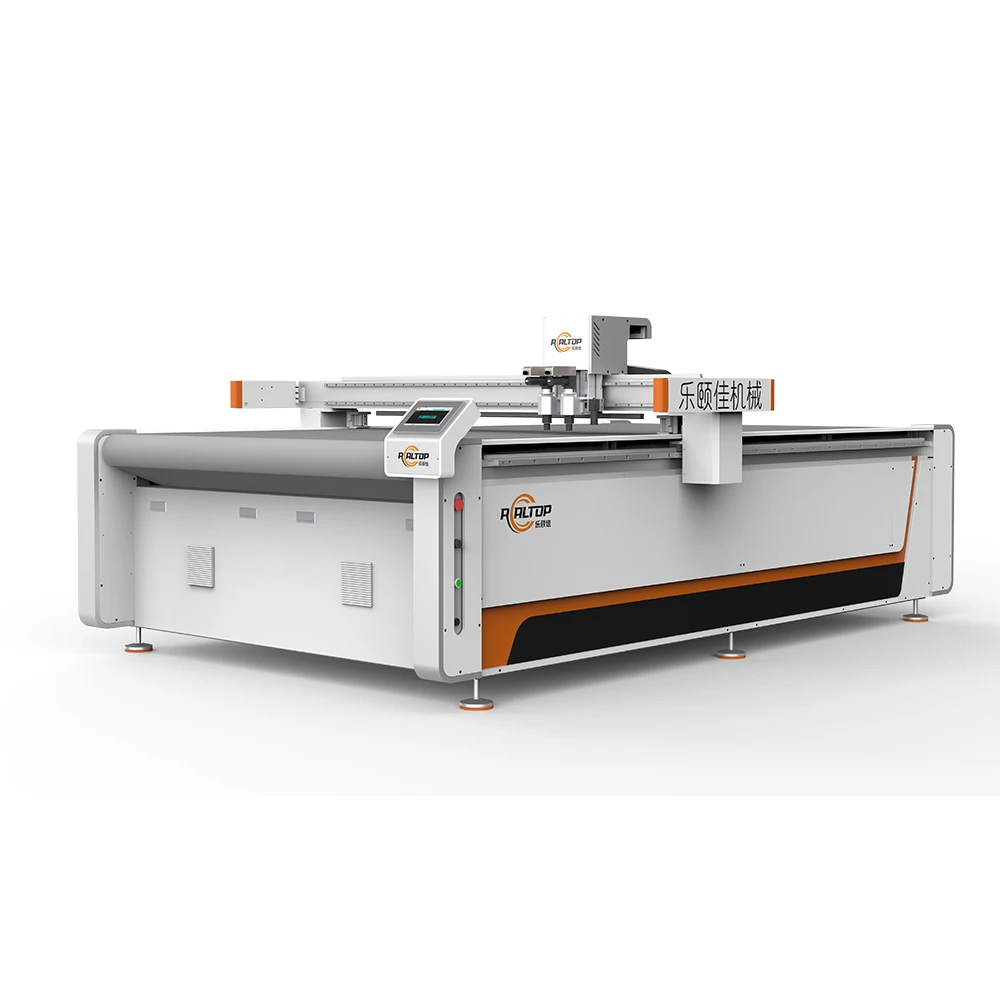
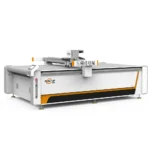
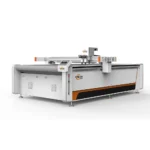
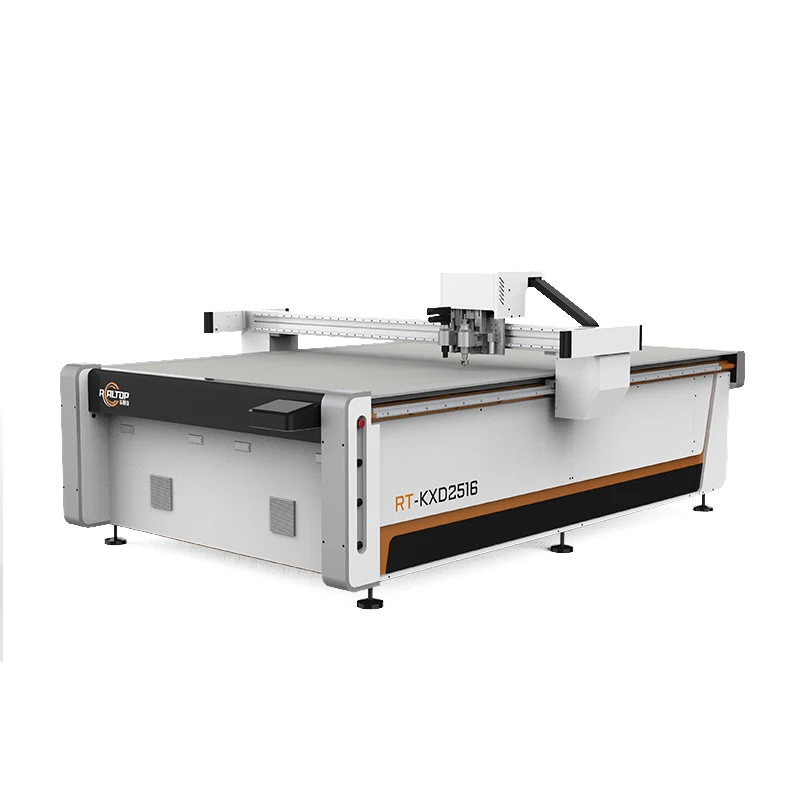
| Product Type | CNC Oscillating Knife Cutting Machine |
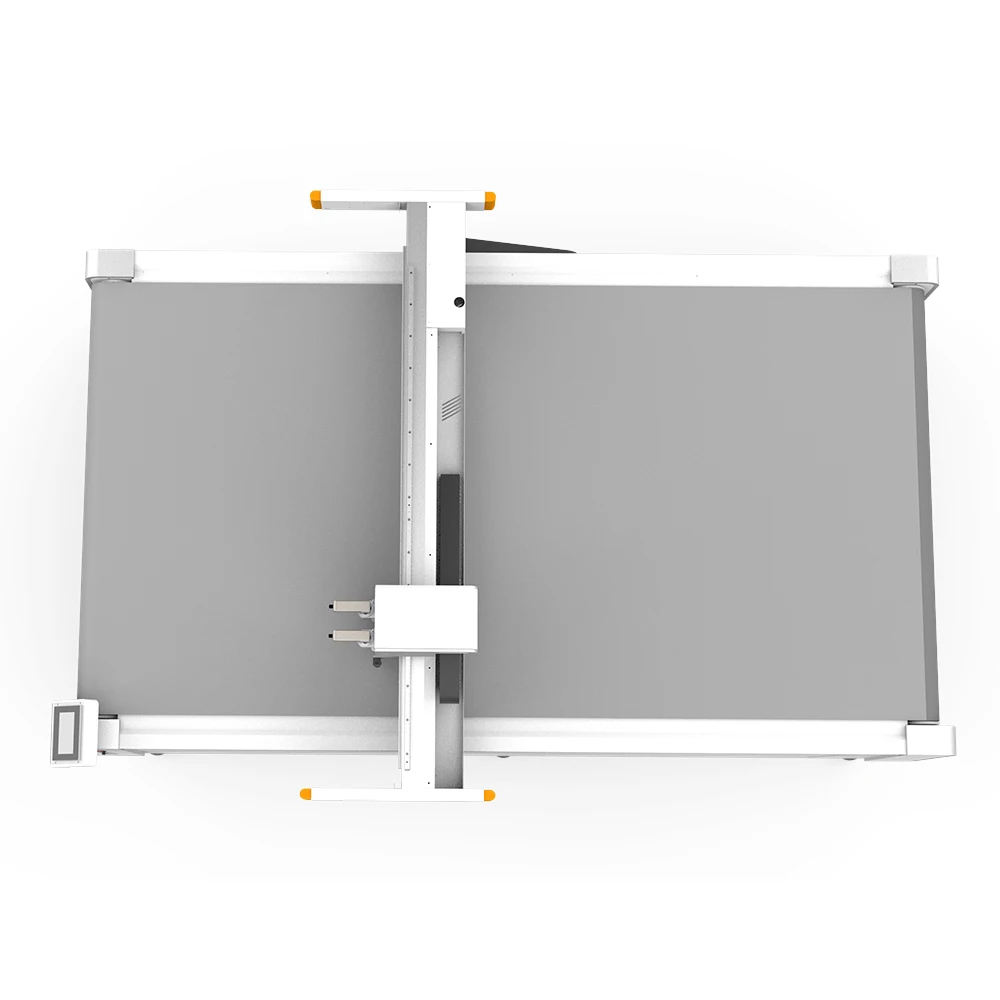
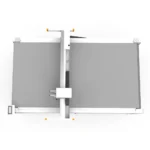
| Working Area | 1600×2500 mm |
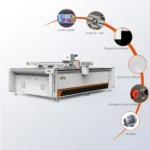
| Tool Head Options | Oscillating knife, driven rotary knife, creasing wheel, kiss cutting, pneumatic knife, milling tool, V-groove knife |
| Cutting Thickness Capacity | ≤ 40 mm |
| Cutting Speed Range | 0–1500 mm/s |
| Positional Accuracy | ±0.1 mm |
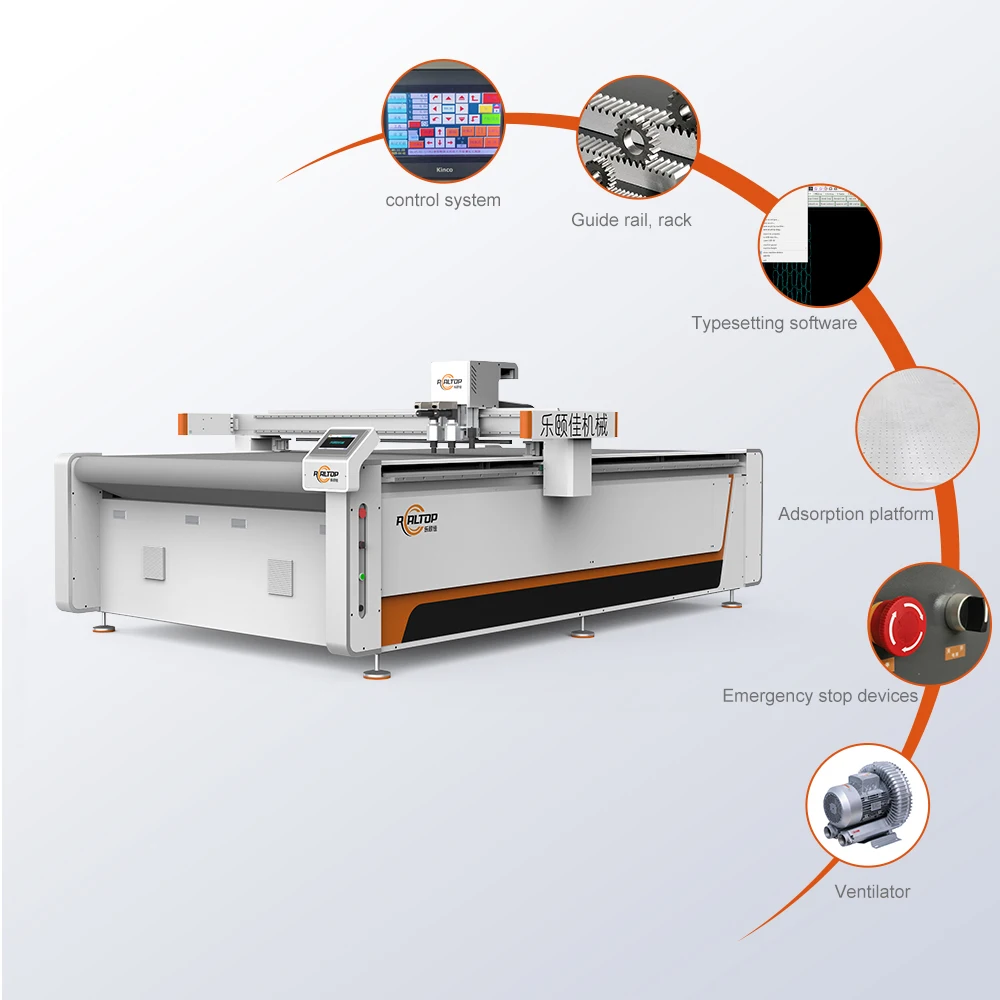
| Vacuum Table Type | Aluminum bellows vacuum table |
| Vacuum Pump Rating | 9 kW |
| Voltage Options | 110V, 220V, 380V (configurable per destination market) |
| Control System | PLC control panel |
| Acceptable File Formats | PLT, DXF, AI, PDF |
| Software Suite | Dedicated packaging box structure design software |
| Safety Equipment | Infrared sensor device and emergency stop |
| Machine Dimensions | 3300×2100×1350 mm |
| Interface Languages | English, Russian, Italian, Chinese (customizable) |
Application Suitability
| Application | Material or Output |
|---|---|
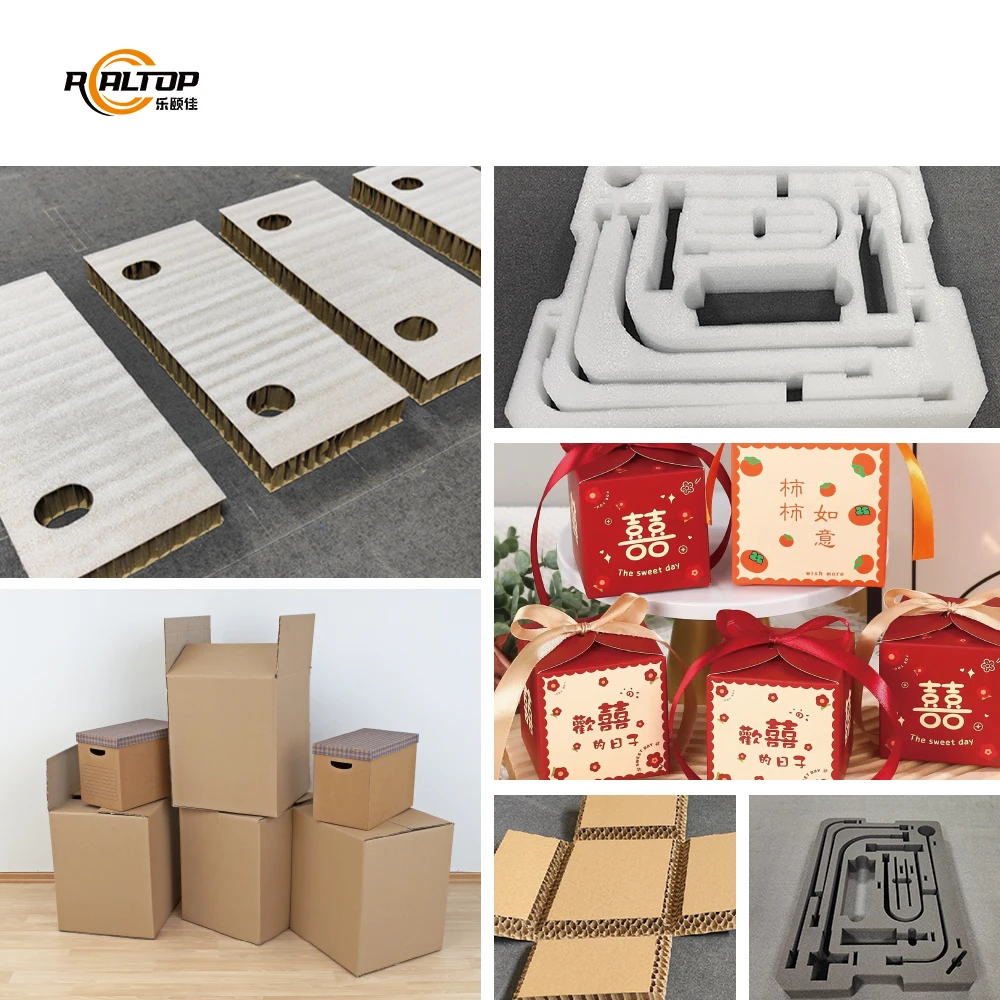
| Packaging sample making and short-run carton prototyping | E-flute, B-flute and BC-flute corrugated board, greyboard, cardstock |
| Corrugated box structural design and die-less production | Multi-ply corrugated cardboard up to 40 mm combined thickness |
| Custom inner packaging and cushioning fabrication | EVA, EPE, PU foam sheets, rubber mats |
| Point-of-purchase display and premium box finishing | Art paper, velvet, fleece, non-woven fabric, synthetic leather |
| Gasket and protective insert cutting for packaged goods | PTFE, PVC, PET thin plastic sheets, adhesive-backed composites |
Why Tool Head Selection Must Precede the Quotation on Every CNC Carton Box Cutting Machine Factory Order
A cutting table quoted only on working area size will leave you with ragged corrugated edges or crushed foam inserts the moment production starts.
I have stood beside packaging lines in Poland and Michigan where the machine arrived with a single oscillating knife, and the buyer then discovered their 3 mm B-flute board required a driven rotary tool for clean severing while their EVA cushion inserts needed a completely different blade geometry. Reordering tool heads after shipment means weeks of downtime, air-freight charges and recalibration. [NEED_CITE: mechanical cutting tool selection for corrugated and foam materials]
A CNC oscillating knife cutting machine manufacturer that specifies tool heads against your actual material stack before the build avoids this entirely. On this platform, the tool head list — oscillating knife, driven rotary, creasing wheel, kiss cutting, pneumatic knife, milling and V-groove — is not a menu to browse later but a configuration locked in during the engineering review, with each tool matched to the substrate, thickness and edge quality your packaging specification requires.
Frame Stability and Motion Repeatability Under Continuous Shift Work
A packaging sample room cutting fifty short-run box designs a day places different demands on a frame than a die-cutting press running one SKU. The heavy-duty precision-ground frame on this CNC oscillating knife cutting machine manufacturer’s platform maintains the ±0.1 mm positional accuracy across the full 1600×2500 mm envelope, even when the machine transitions repeatedly between long straight cuts and tight corner radii on complex carton geometries. The aluminum bellows vacuum table complements this by maintaining flatness across the working surface, so thin cardstock and single-face corrugated sheets stay registered without lifting at the edges during high-speed traverses.
How the Dedicated Software Closes the Gap Between Designer Intent and Cut Output
Structural packaging design lives in three dimensions — fold lines, glue tabs, dust flaps and locking slots all have to register precisely after folding. The dedicated packaging box structure design software bundled with this platform imports PLT, DXF, AI and PDF files and translates crease, cut and kiss-cut commands to the appropriate tool in sequence. For a CNC carton box cutting machine factory buyer running mixed short batches, this eliminates the manual toolpath translation that typically introduces registration errors between scored fold lines and cut outlines, particularly on multi-panel carton designs where cumulative drift across a 2500 mm sheet compounds at every fold. [NEED_CITE: digital die-cutting workflow integration for packaging sample rooms]
Reading the Specification Sheet Against Your Actual Production Variables
Cutting thickness capacity of ≤ 40 mm must be read against material density, not just caliper measurement. A 40 mm stack of low-density EPE foam behaves completely differently under the oscillating knife than a 12 mm sheet of BC-flute corrugated board with high-density liner. The 9 kW vacuum pump and aluminum bellows table generate sufficient hold-down force to keep rigid corrugated sheets flat, but thin adhesive-backed films and non-woven fabrics require careful zoning of vacuum regions to prevent material distortion at the cut boundary. The PLC control panel manages these zone settings alongside the cutting speed range of 0–1500 mm/s, and the operator can match traverse speed to material resistance — slower passes on dense greyboard to protect blade life, faster passes on foam inserts where blade loading is minimal. The availability of seven distinct tool options means the same platform handles carton prototyping, foam cushioning fabrication and flexible material cutting without requiring secondary equipment.
The Hidden Cost of Shipping a Machine Before the Electrical Conversation Happens
A 380V three-phase machine dropped into a workshop wired only for 220V single-phase will sit idle until a transformer or phase converter arrives — and I have watched that delay stretch past three weeks on two separate installations. The voltage options on this platform (110V, 220V, 380V) exist because destination markets differ: North American facilities often run 220V single-phase or 480V three-phase, while European sites standardize on 400V three-phase. Confirming the exact supply, frequency and plug type before the build is not a paperwork exercise but the difference between a machine that powers up on day one and one that requires on-site electrical rework. [NEED_CITE: industrial voltage and frequency standards by export region]
What In-House Design and Manufacturing Actually Means at the Order Stage
This is not an assembly operation that sources a frame from one supplier, a motion system from another and a vacuum table from a third. The design team engineers the frame geometry, motion component specification and tool head assemblies together, which means a change in your material specification — say, moving from B-flute to double-wall BC-flute — can be accommodated in the build specification without creating incompatibilities between subsystems. Core factory control over the build sequence means the electrical schematic, the PLC program and the tool head configuration list are all generated from one engineering review rather than reconciled across three vendor drawings. Distributors evaluating OEM capability see the same integration: branding, control language and documentation can be aligned to the destination market without the translation errors that emerge when those specifications pass through intermediaries.
Documentation & Verification
- Machine specification sheet with tool head and vacuum table configuration matched to your material stack
- Sample cutting report produced on your corrugated board or foam stock before order confirmation
- Electrical schematic with voltage, frequency and plug type confirmed for your facility supply
- PLC interface language and software license with file format compatibility note at dispatch
- Factory test record documenting accuracy verification across the full 1600×2500 mm working area
- Operation and maintenance manual with tool change intervals and blade replacement procedures
Installation, Commissioning & Support
- Foundation assessment for the 3300×2100×1350 mm machine footprint and 9 kW vacuum pump placement
- Dedicated circuit provision confirmed for selected voltage configuration before arrival
- Assembly and leveling of the aluminum bellows vacuum table with flatness verification on site
- First-run calibration of each configured tool head against your actual material thickness range
- Operator training on the PLC control panel, tool change procedure and dedicated packaging software
- Spare parts list covering oscillating knife blades, creasing wheels and vacuum table seals
What We Need to Specify the Right Configuration
Send us the specific flute profile or material type you cut most frequently, the sheet dimensions you receive from your board supplier and the daily volume range your sample room or production cell handles. If your facility runs a non-standard voltage or requires a specific control panel language, include that in the first message — it changes the electrical build from day one of production.
Frequently Asked Questions
Q: How does REALTOP’s in-house manufacturing differ from sourcing through a trading company?
A: The frame, motion system, tool head assemblies and PLC programming are all engineered and built under one operation. This means your material specification drives the configuration directly, without subsystem mismatches that emerge when components are sourced separately. You deal with the team that designed the machine, not an intermediary relaying specifications.
Q: What OEM and customization options are available for distributors?
A: Distributors can specify control panel language, branding on the machine housing, documentation formatting and electrical configuration for their destination market. Because the design and build happen in-house, these customizations are integrated into the production sequence rather than applied as after-market modifications.
Q: How is the tool head configuration determined for each buyer?
A: We review your material type, thickness range and edge quality requirement, then match each substrate to the appropriate tool from the seven available options. This configuration is locked before the build, so the machine arrives with the correct heads installed and calibrated rather than requiring post-shipment tooling orders.
Q: What factory testing is performed before the machine ships?
A: Each unit undergoes a full working-area accuracy verification, tool head calibration against the configured material thickness, and PLC control sequence validation. A factory test record documenting these checks ships with the machine, and a sample cutting report on your own material is provided before order commitment.
Q: What documentation arrives with the machine?
A: You receive the machine specification sheet, electrical schematic with confirmed voltage and frequency, tool head and vacuum table configuration list, CE declaration, factory test record, operation and maintenance manual, software license with file format compatibility note, and a spare parts list.
You may also like

商品评价
Clear filtersThere are no reviews yet.