


-
 Courier delivery
-
 DHL Courier delivery
-
 Warranty 1 year
-
 Free 30-Day returns

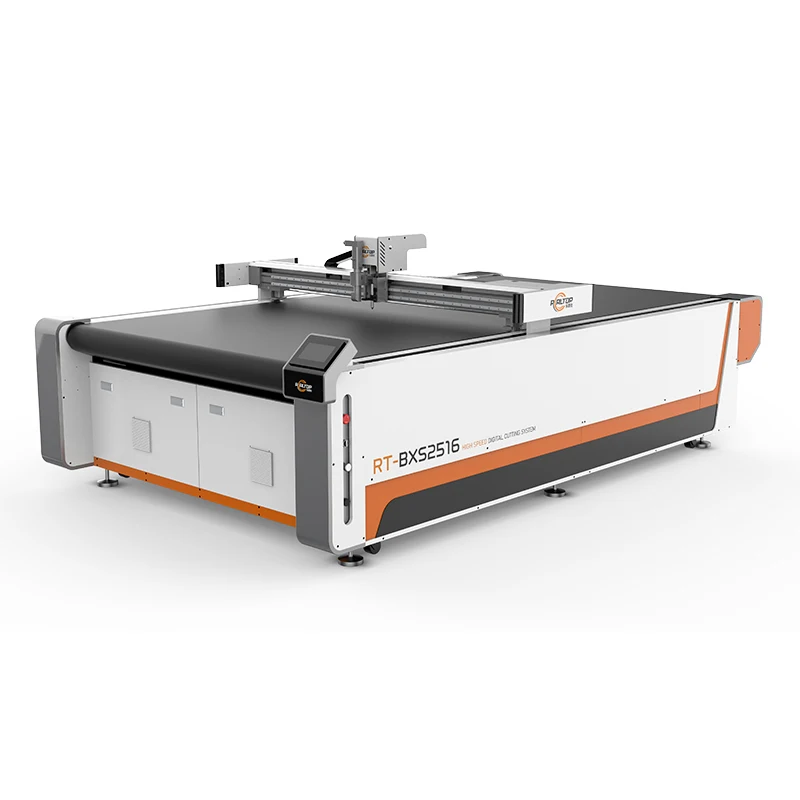
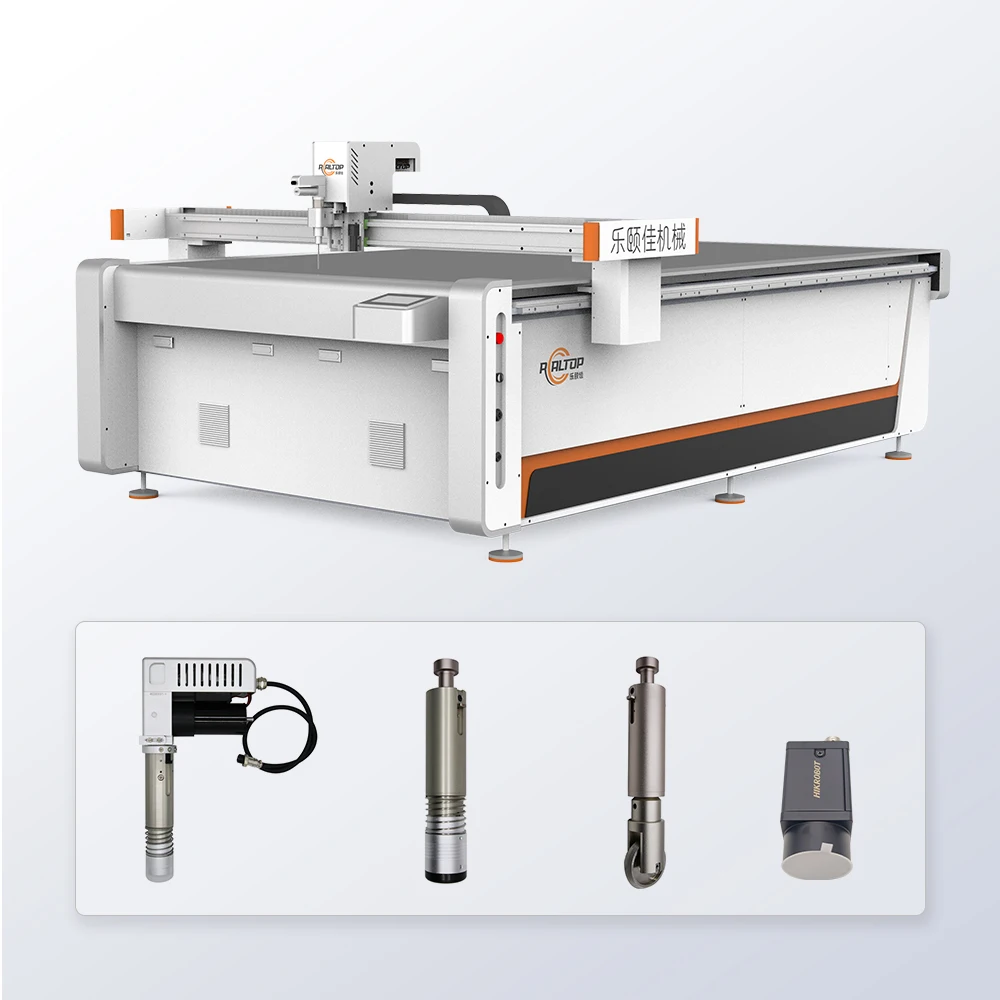
Engineered Tool Head Integration — Every oscillating knife, drag knife and CCD positioning module is matched to the buyer’s material thickness and production volume before the frame enters final assembly, ensuring the CNC digital cutting machine manufacturer delivers a system configured for actual cutting tasks rather than generic catalog specs.
Technical Specifications
| Parameter | Value |
|---|---|
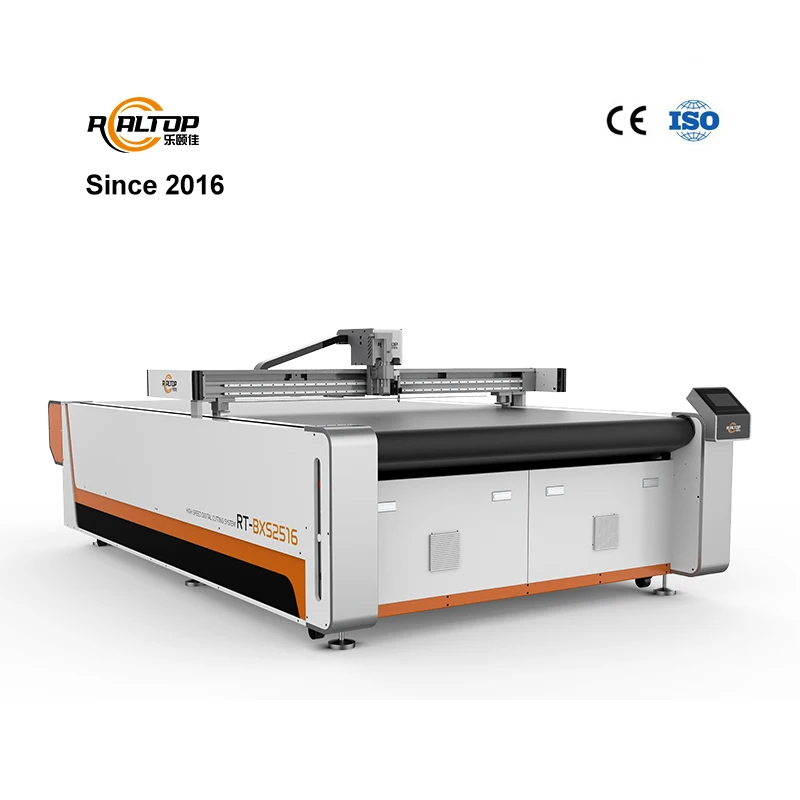
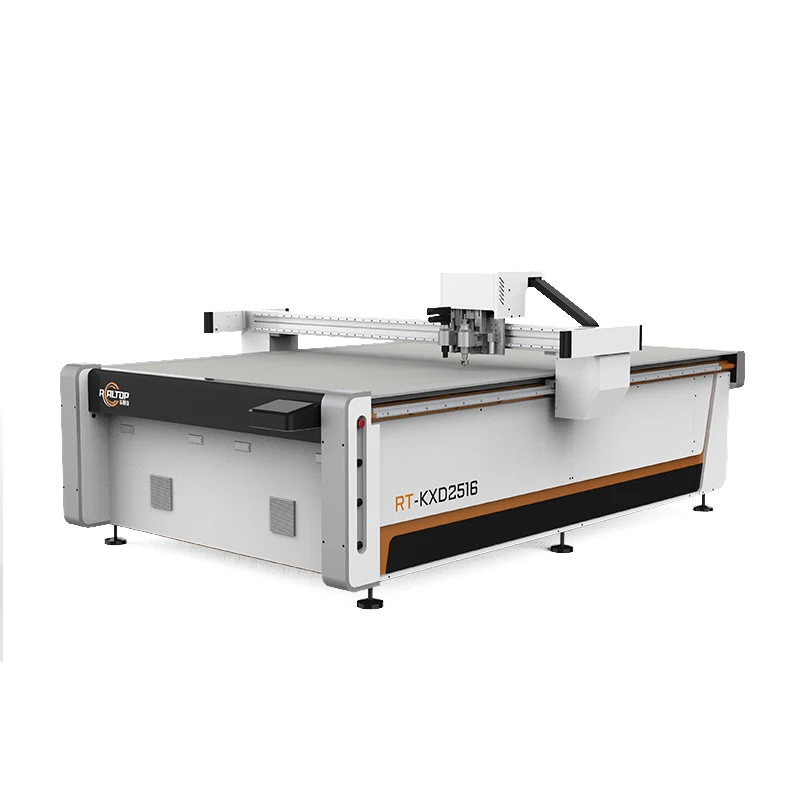
| Model | RT-D2516/RT-S2516 |
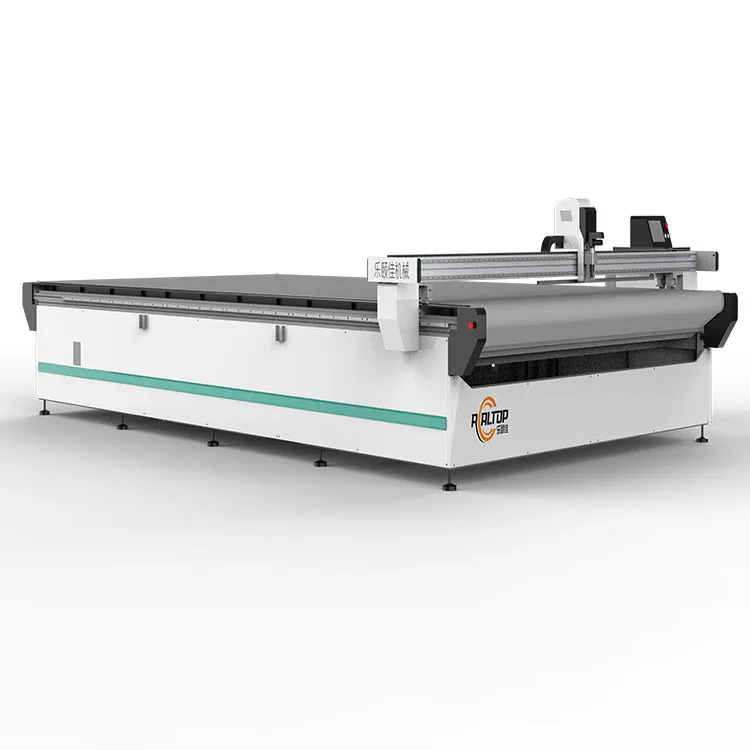
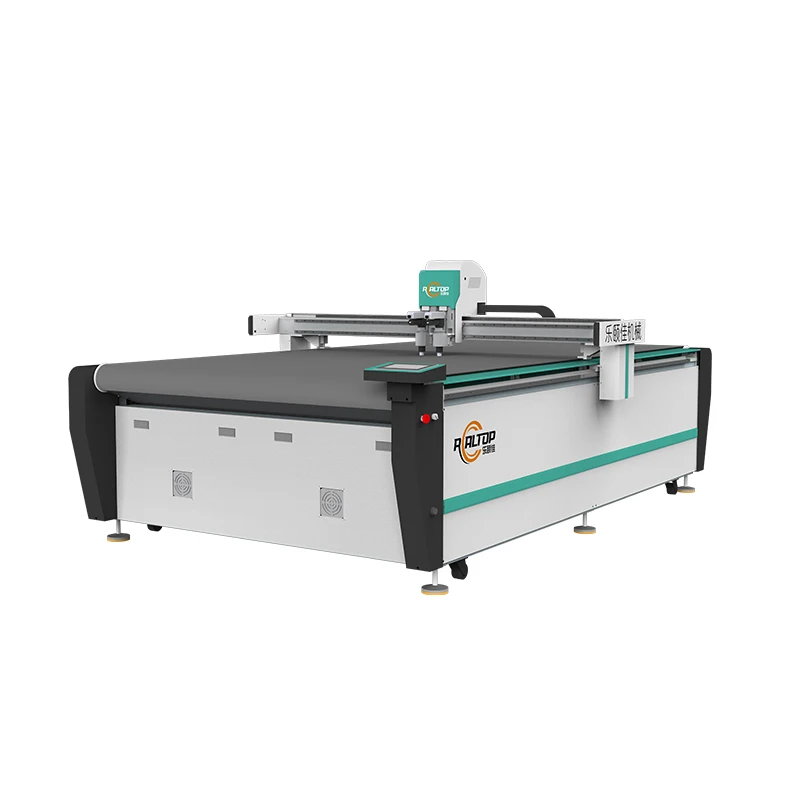
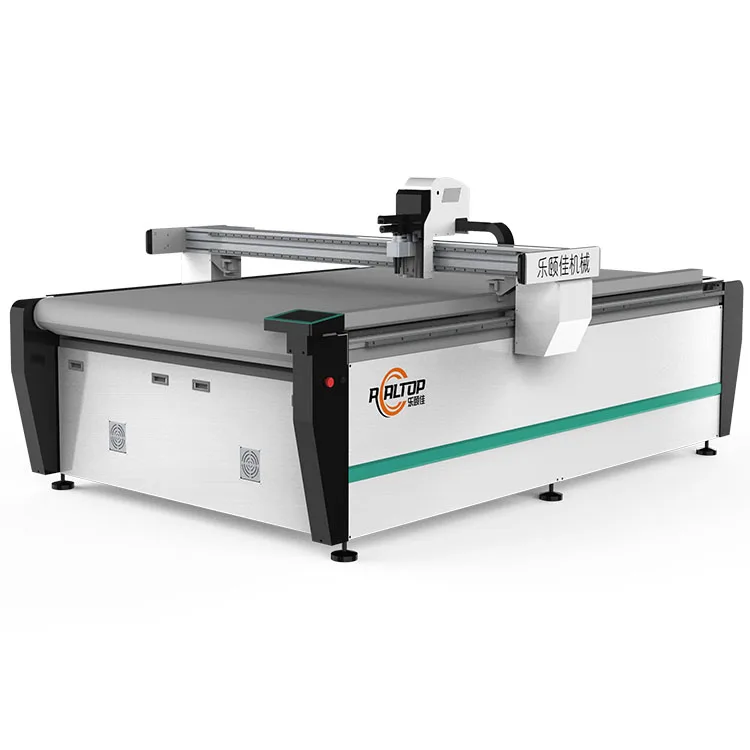
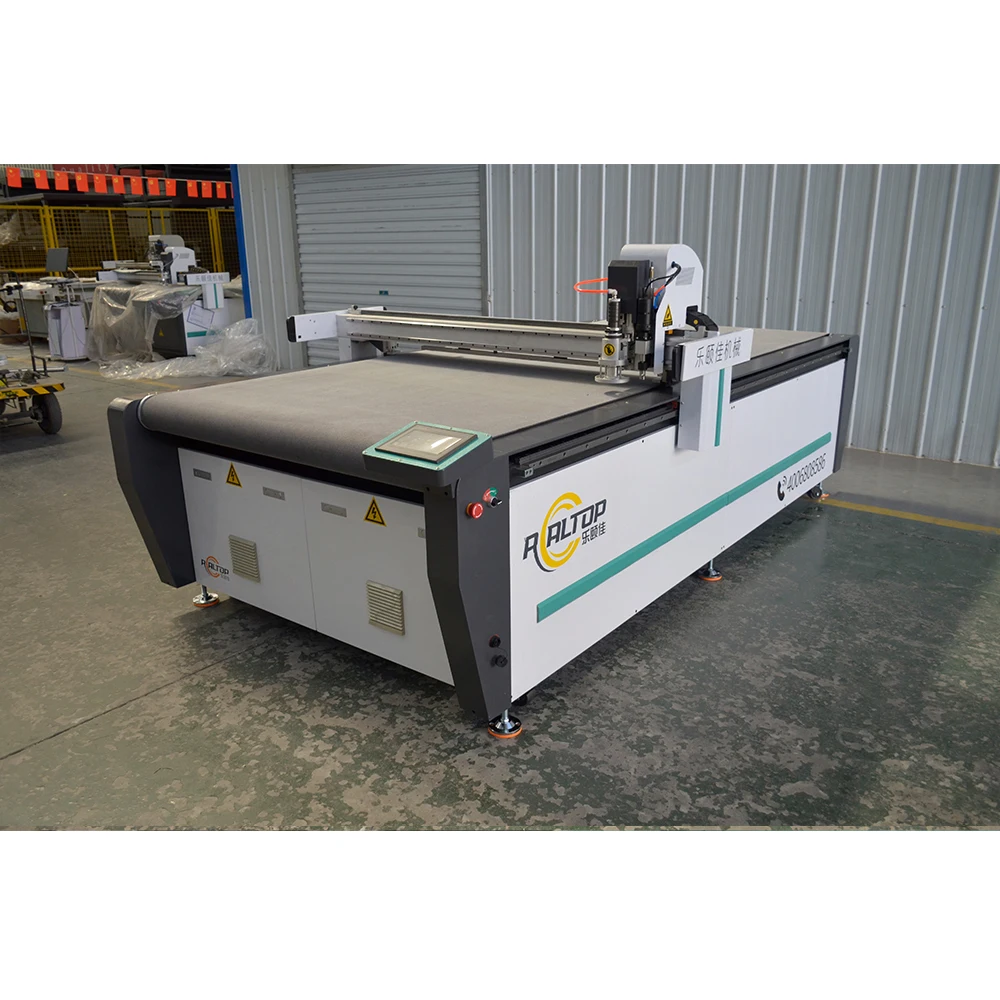
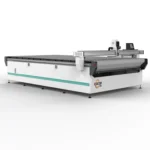
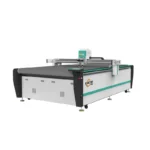
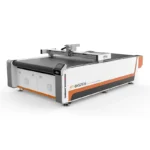
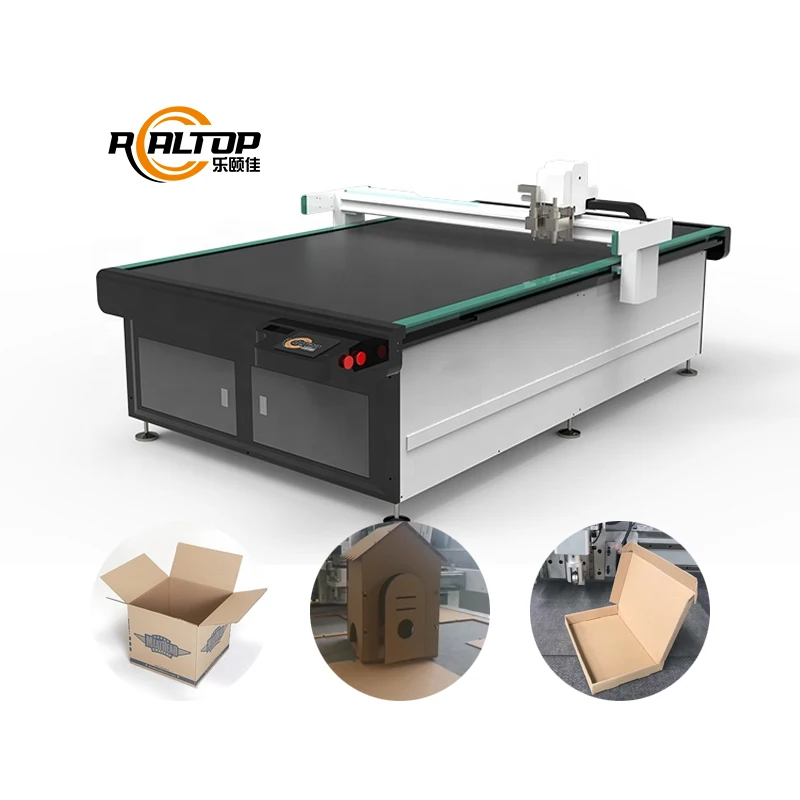
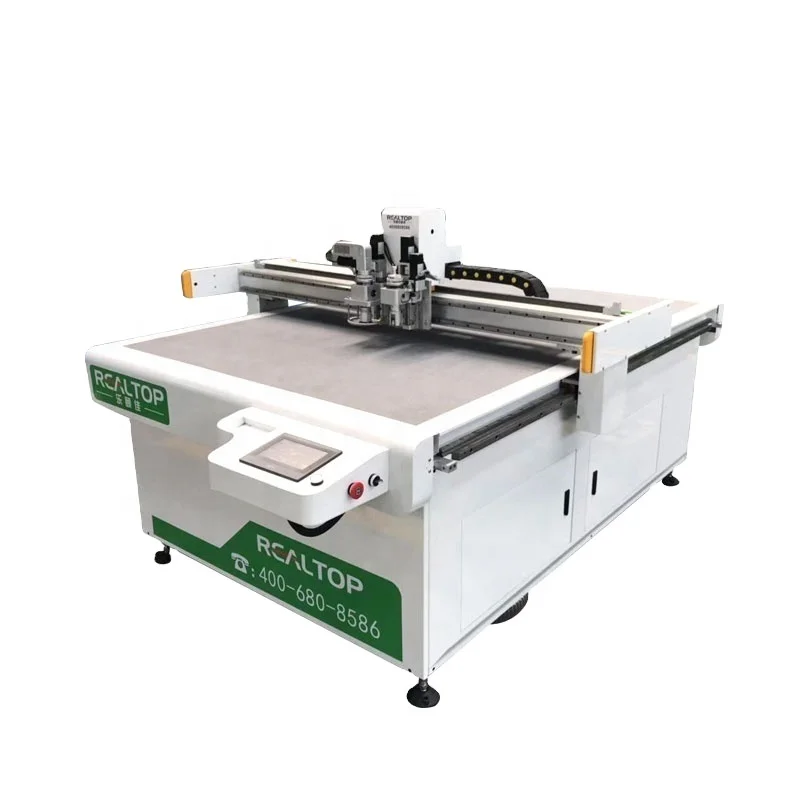
| Product Type | CNC Flatbed Digital Cutting Machine |
| Working Area | 1600×2500 mm |
| Overall Dimensions (L×W×H) | 3450×2300×1250 mm |
| Rated Power | 9 kW |
| Vacuum Pump Power | 7.5 kW |
| Voltage | 380V±10% (frequency to be confirmed per destination market) |
| Control System | CNC with touch screen control panel |
| Transmission System | Digital servo motor, linear guide, synchronous belt, ball screw |
| Servo Motor Options | Delta or Panasonic (IP67 waterproof) |
| Translational Velocity | 800–2000 mm/s |
| Cutting Speed | 200–800 mm/s (varies according to material type and thickness) |
| Cutting Thickness | ≤100 mm (depends on material density and tool head selection) |
| Repeated Accuracy | ≤0.1 mm |
| Linear Guide | Taiwan Hiwin rail |
| Conveyor Belt | Germany imported (auto feeding table option) |
| Vacuum Table | Magnesium-aluminum alloy, PVDF fluorocarbon powder sprayed, anodic and hard oxidation |
| Tool Head Options | Swiss imported vibrating knife, oscillating knife, pneumatic knife, circular knife, V-cutting knife, drag knife, creasing wheel, dotted line knife, punching, brush |
| Visual Positioning Options | Small CCD camera mark point, panoramic camera recognition, projection positioning |
| Instruction System | HP-GL compatible format |
| Software | Auto nesting; supports PLT, DXF, AI file formats |
| Language Options | English, Russian, Italian, Chinese (custom languages available) |
| Safety Devices | Infrared induction blocking, beam anti-collision sensors, emergency stop with in-situ resume |
| Assembly State | Fully assembled |
| Cutting Method | Blade physical cutting (no burr, no burnt edge, no discoloration) |
Application Suitability
| Application | Material or Output |
|---|---|
| Garment and footwear production | Woven fabric, knitted textile, leather, shoe uppers, lining materials in nested layouts |
| Automotive interior trim cutting | Gasket material, foam sheets, composite panels, headliner fabric |
| Soft furnishings and upholstery | Carpet, curtain fabric, non-woven textile, sponge, PU and EVA foam |
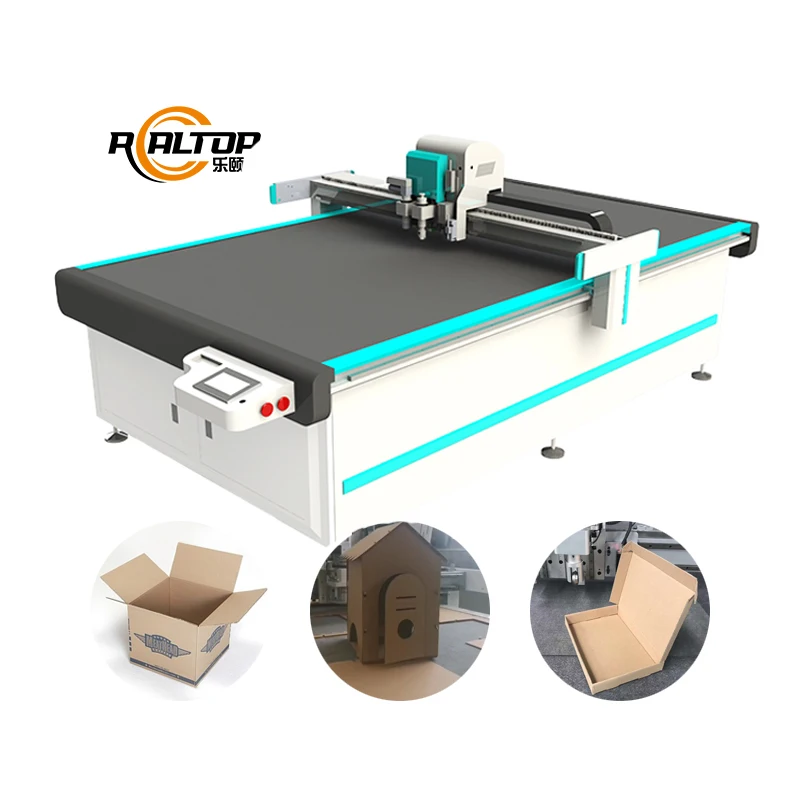
| Packaging and sample making | Corrugated cardboard, sticker film, carton board with creasing and kiss-cut |
| Technical textile and composite | Carbon fiber prepreg, fiberglass, PTFE, ETFE, XPE foam |
Why Specifying Only Working Area Leads to Cutting Failures
A CNC digital cutting machine manufacturer that quotes working area alone leaves the buyer exposed when the material thickness exceeds the tool head’s effective stroke or the vacuum zoning cannot hold small nested parts flat. Tool head, cutting depth and vacuum table configuration must be specified together against the buyer’s actual material before the order is confirmed. I spent years installing these machines across Africa and South Asia, and the most common site visit complaint traces back to a mismatch between what was quoted and what the production floor actually cuts. A garment factory might test fine on standard polyester, then switch to elastane-blend stretch fabric and discover the feed tension produces wrinkled edges across the entire roll. That is not a machine defect — it is a specification gap that should have been closed before the frame was welded [NEED_CITE: oscillating knife stroke range versus material compressibility].
Frame Rigidity and Long-Term Dimensional Stability
The RT-D2516/RT-S2516 platform is built on a thick-walled seamless steel welded frame that undergoes high-temperature tempering followed by CNC machining center finishing. This sequence relieves welding stress and establishes the reference flatness that the linear guide and ball screw transmission depend on. When the frame holds its geometry ove*in rails maintain alignment and the repeated accuracy stays within the ≤0.1 mm tolerance band that nested fabric layouts demand.
Vacuum Table Construction and Material Hold-Down
The magnesium-aluminum alloy vacuum table receives PVDF fluorocarbon powder spraying, anodic oxidation and hard oxidation in sequence — a treatment stack that resists abrasion from repeated blade contact and chemical exposure from adhesives or fabric sizing agents. The integrated aviation aluminum shell pump includes built-in silencer sponge to reduce operational noise. For buyers cutting small gasket parts or narrow label strips, uniform suction across the full 1600×2500 mm surface prevents material lift that would otherwise produce ragged edges or force the operator to re-cut rejected pieces [NEED_CITE: vacuum hold-down requirements for thin flexible materials].
How Cutting Speed, Tool Stroke and Servo Response Interact on the Production Floor
The 200–800 mm/s cutting speed range is material-dependent: a dense composite gasket requires the lower end with a high-power oscillating knife, while woven garment fabric allows the upper range with a Swiss imported vibrating knife. The Delta or Panasonic IP67-rated servo motors drive the transmission at translational velocities up to 2000 mm/s between cuts, which determines how quickly the tool head repositions across nested layouts. The CCD camera options — mark point, panoramic or projection positioning — add automatic registration for printed contour work, but only when the software file format matches the buyer’s existing PLT, DXF or AI workflow. Specifying cutting speed without matching it to material density and tool head type produces either crushed foam cores or frayed fabric edges. The emergency stop with in-situ resume function means an interrupted cut can be continued from the exact point of interruption without re-registering the entire sheet.
The Hidden Cost of Ignoring Voltage and Frequency Before Shipment
Confirming voltage, frequency and control language after the machine arrives at the buyer’s facility creates delays that no amount of technical support can shorten. The 380V±10% specification must be verified against the local supply standard — some West African grids run at 415V/50Hz while South Asian industrial zones may operate on different tolerances. A servo motor or vacuum pump receiving voltage outside its rated band will overheat, trip protection circuits or degrade insulation over time [NEED_CITE: voltage and frequency standards by export market]. The touch screen control panel language should also be locked in before production, since retrofitting a different language pack requires software reloading that delays the first production shift.
Why This CNC Digital Cutting Machine Manufacturer Builds the Complete System In-House
The design team engineers the tool head, vacuum table and motion system as one integrated platform rather than assembling sourced sub-systems. Knife and laser cutting technologies are developed under the same roof, so a buyer can match the cutting method to the material — oscillating knife for thick foam, drag knife for vinyl sticker, CCD positioning for printed garment panels — without forcing one method onto the wrong application. Sample cutting on the buyer’s own material is conducted before the order is finalized, producing a documented report that confirms edge quality, cutting speed and vacuum hold-down performance. Voltage, plug type and control language are confirmed in writing before the frame enters final assembly. OEM and private-label configurations are available for distributors and importers who require specific branding or documentation packages.
Documentation & Verification
- Machine specification sheet confirming working area, tool head list and voltage before production begins
- Sample cutting report on the buyer’s fabric or composite material with edge quality photographs
- Electrical schematic and voltage confirmation matched to the destination country power standard
- Factory test record documenting repeated accuracy and servo response before packing
- Packing photographs showing frame protection and tool head securing for ocean freight
- Software licence and file format compatibility note confirming PLT, DXF, AI import capability
Installation, Commissioning & Support
- Floor space of approximately 3450×2300 mm required with clearance for auto feeding conveyor roll loading
- Dedicated 380V circuit with confirmed frequency to match the 9 kW rated power plus 7.5 kW vacuum pump
- Machine ships fully assembled; rigging plan needed for the 1600×2500 mm table footprint at destination
- First-run commissioning includes vacuum zoning calibration and servo motor parameter tuning on site
- Operator training covers tool head changeover, nesting software workflow and CCD camera mark-point registration
- Spare parts list provided covering Swiss knife blades, drag knife tips and conveyor belt segments
What to Include in Your Inquiry
Send the material type, maximum thickness and sheet or roll width you plan to cut daily, along with your local voltage and frequency specification. Confirm the control panel language your operators require and whether your existing design files use PLT, DXF or AI format so the software compatibility is verified before quotation. If your production involves printed contour cutting, specify the registration mark style so the appropriate CCD camera option is selected.
Frequently Asked Questions
Q: How is the welded frame treated to prevent deformation during long-term cutting operation?
A: The frame uses thick-walled seamless steel that undergoes high-temperature tempering to relieve welding stress, followed by CNC machining center finishing. This establishes the reference flatness that the Hiwin linear guide and ball screw transmission depend on, keeping repeated accuracy within ≤0.1 mm throughout the machine’s service life.
Q: How does the factory determine which tool head to install for a specific material?
A: The buyer sends material samples or detailed specifications including type, thickness and daily volume. The engineering team tests cutting with the appropriate tool — oscillating knife for foam, Swiss vibrating knife for fabric, drag knife for sticker film — and issues a sample cutting report documenting edge quality and speed before the order is finalized.
Q: What voltage and control language options can be configured before shipment?
A: The standard voltage is 380V±10%, with frequency confirmed per destination market. Control panel languages include English, Russian, Italian and Chinese as standard options, with custom languages available. All electrical specifications are documented in the schematic and confirmed in writing before production begins.
Q: Can buyers send their own material for sample cutting before committing to purchase?
A: Yes. The factory conducts sample cutting on the buyer’s actual fabric, leather, foam or composite material and provides a report covering edge quality, cutting speed and vacuum hold-down performance. This allows the buyer to verify the configuration against their production requirements before the order is placed.
Q: What OEM capability does the manufacturer offer for distributors and importers?
A: The in-house design team supports private-label branding, custom documentation packages and configuration changes for distributor partners. The core factory handles frame fabrication, assembly and testing, allowing OEM buyers to specify tool head combinations, table types and software configurations matched to their local market requirements.
You may also like

商品评价
Clear filtersThere are no reviews yet.