




-
 Courier delivery
-
 DHL Courier delivery
-
 Warranty 1 year
-
 Free 30-Day returns

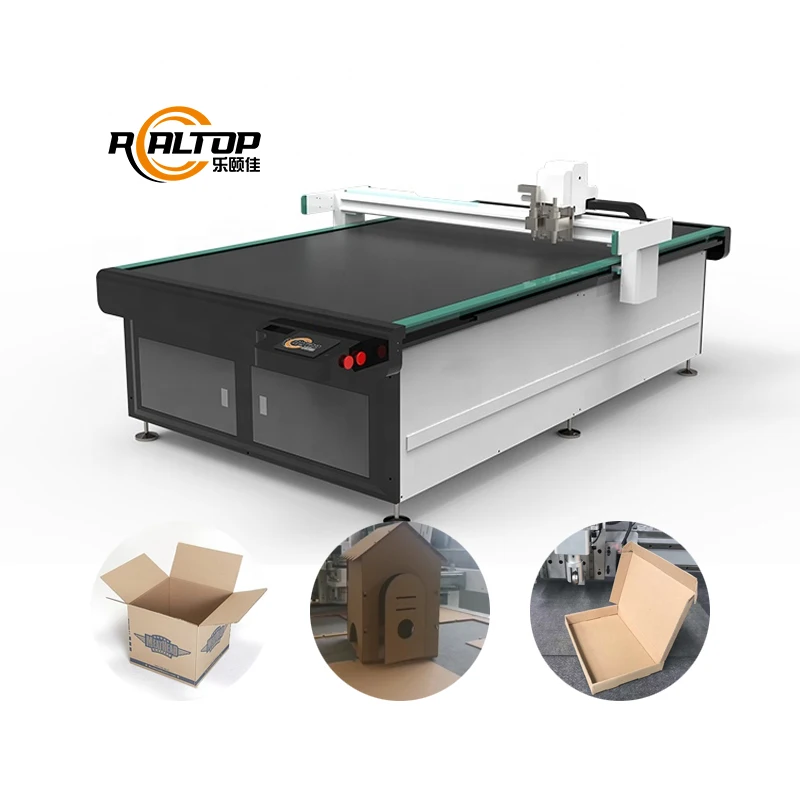
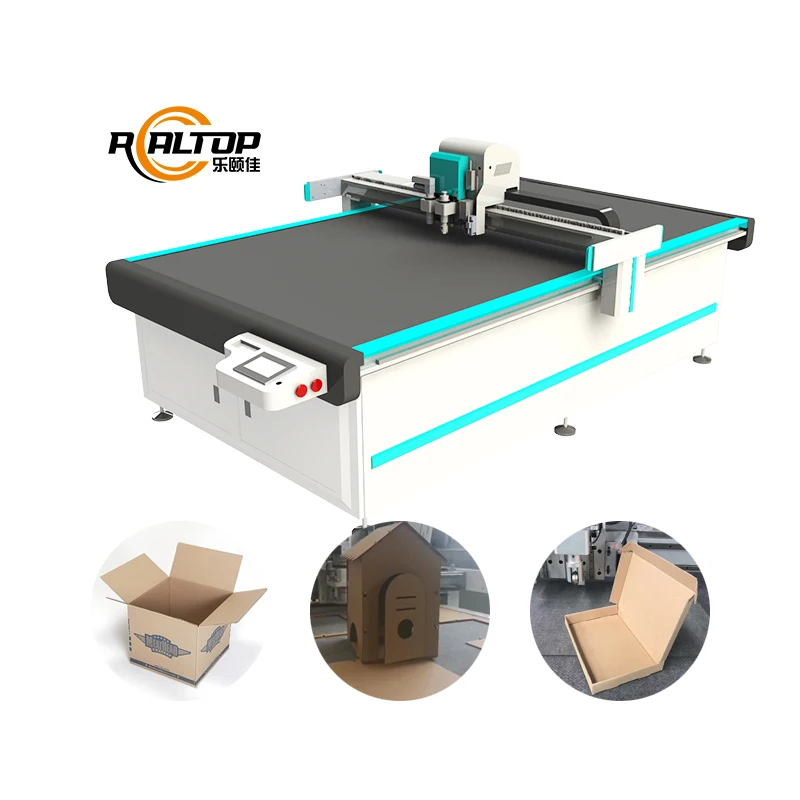
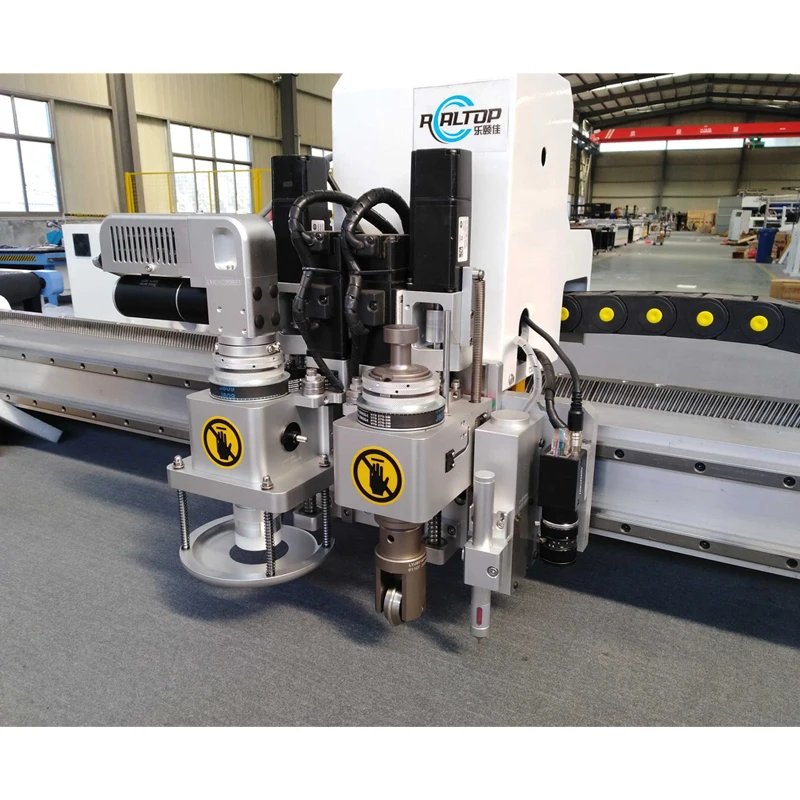
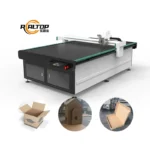
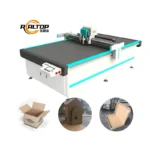
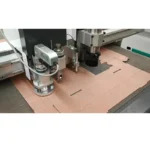
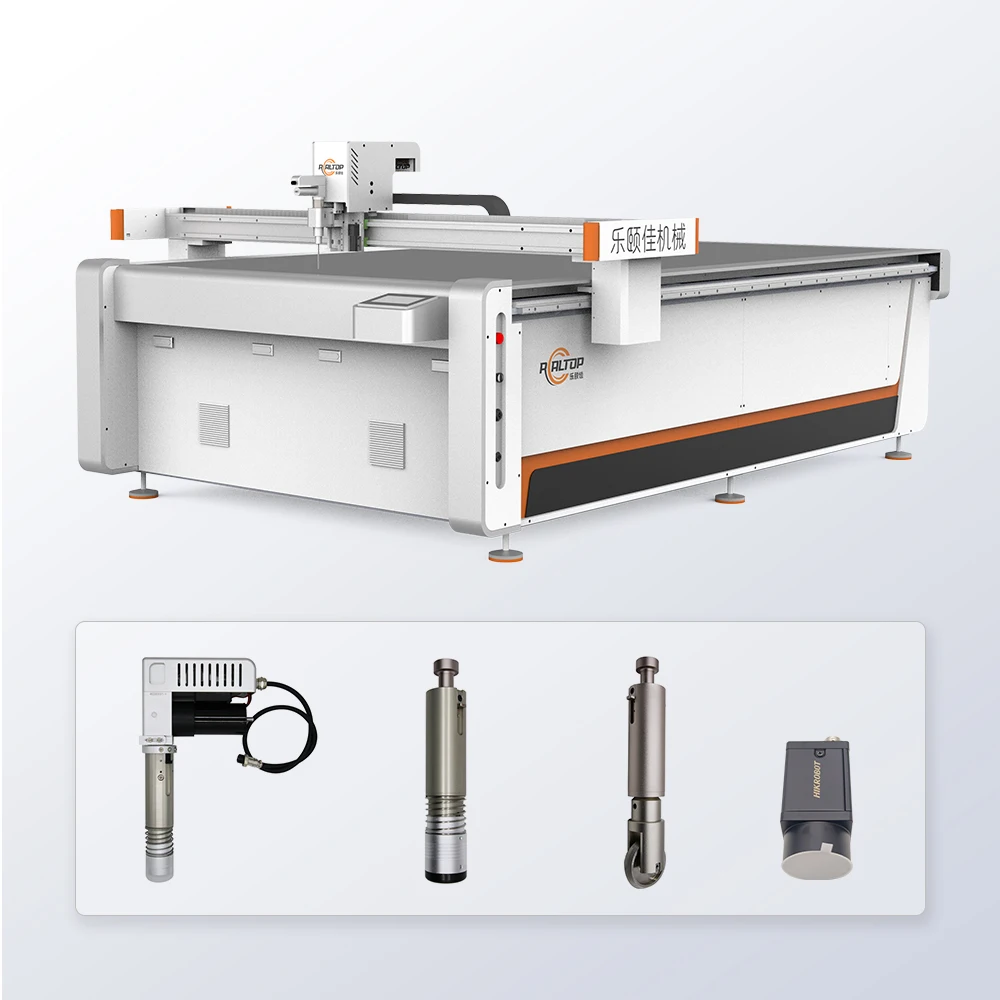
Integrated Tooling Platform — oscillating knife, creasing wheel and kiss-cut heads mounted on a single gantry, specified per corrugated flute grade and sample volume.
Technical Specifications
| Parameter | Value |
|---|---|
| Product Type | CNC Oscillating Knife Cutting Machine for Packaging |
| Working Area Options | 2500×1300mm / 1600×2500mm |
| Machine Dimensions (L×W×H) | 3550×1910×1400mm / 3450×2300×1250mm |
| Cutting Thickness Capacity | ≤18mm |
| Repeated Positioning Accuracy | <0.05mm |
| Tool Head Configuration | Oscillating knife, Creasing tool, Kiss-Cut Knife, Round punch |
| Vacuum Pump | 7.5 kW |
| Rated Power | 9 kW |
| Table Structure | Aluminum alloy honeycomb vacuum adsorption platform |
| Machine Frame | Welded thick square seamless steel, high temperature treated |
| Transmission | Rack and pinion with imported linear square guides |
| Servo Motor | Dongling servo (verify against final build sheet) |
| File Format Compatibility | DXF, OLT, PDF, AI |
| Voltage | 380V (configurable for target market) |
| Safety Devices | Infrared sensors, emergency stop |
| Control Language | Customizable (English, Russian, Italian, Chinese options) |
| Included Blade Supply | 10 pieces of oscillating blades |
Application Suitability
| Application | Material or Output |
|---|---|
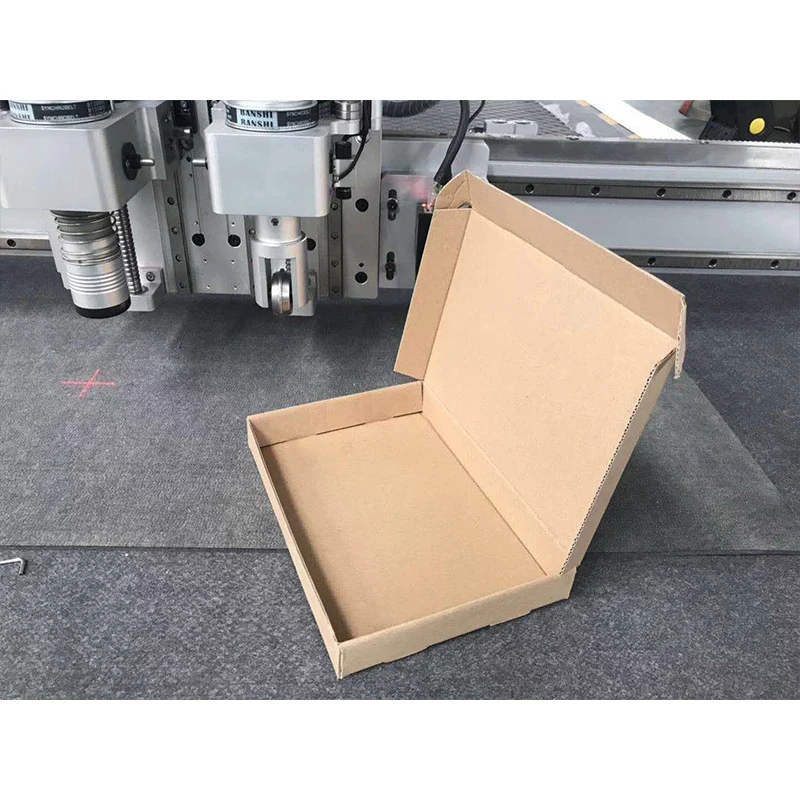
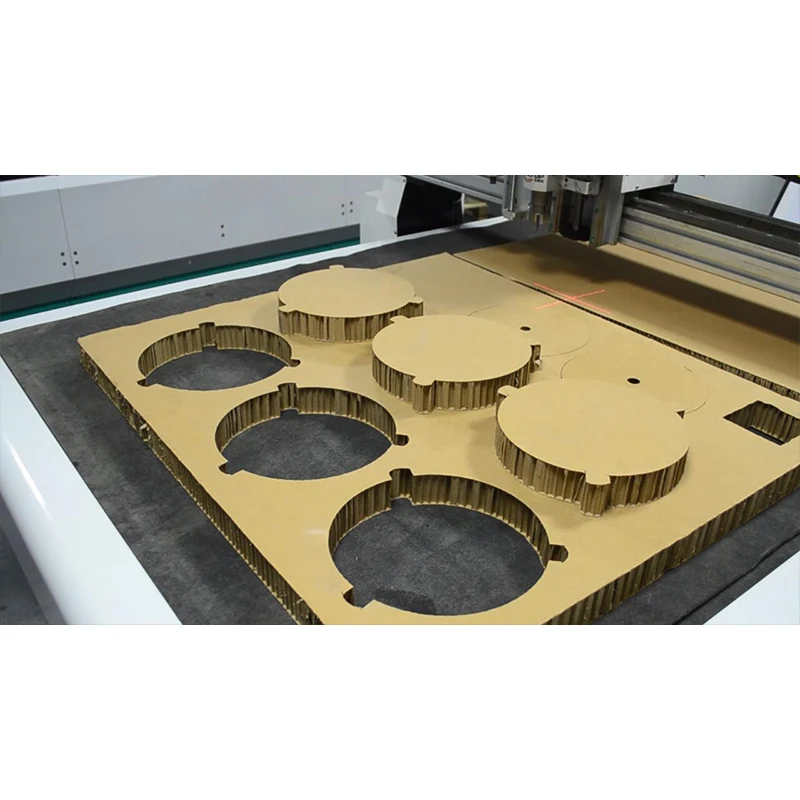
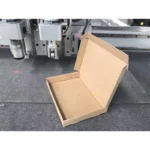
| Packaging carton sample making | Corrugated cardboard (E, B, C, BC flute), honeycomb board |
| Short-run custom box production | Single and double-wall corrugated up to 18mm |
| Sticker and label contour cutting | Adhesive vinyl, PP paper, printed sticker sheets |
| Large electrical appliance packaging | Heavy-duty corrugated and composite board |
| Express and snack food box cutting | Lightweight single-face and micro-flute board |
| High-end gift box sample making | Grey board, laminated card stock, foam-core board |
Why the Wrong Tool Head Ruins Your Corrugated Edge
A machine specified on working area alone, then found unable to handle the material thickness — this is the single most common failure point I see in packaging sample rooms. The real decision is not table size, but which combination of oscillating knife, creasing wheel and kiss-cut tool your board grades actually demand.
When a buyer orders based solely on bed dimensions, they often discover the oscillating knife cannot fully shear through double-wall BC flute at production speed, or the creasing wheel leaves crushed rather than cleanly scored fold lines on heavier honeycomb board. I once spent two days on-site adjusting parameters after a carton client switched from standard corrugated to high-density honeycomb without telling us — the knife pressure was insufficient and every edge came out ragged. That is why I now insist on sample cutting on the buyer’s actual board grade before any quotation is finalized [NEED_CITE: corrugated flute classification and cutting resistance by grade].
Multi-Tool Gantry for Complete Carton Processing
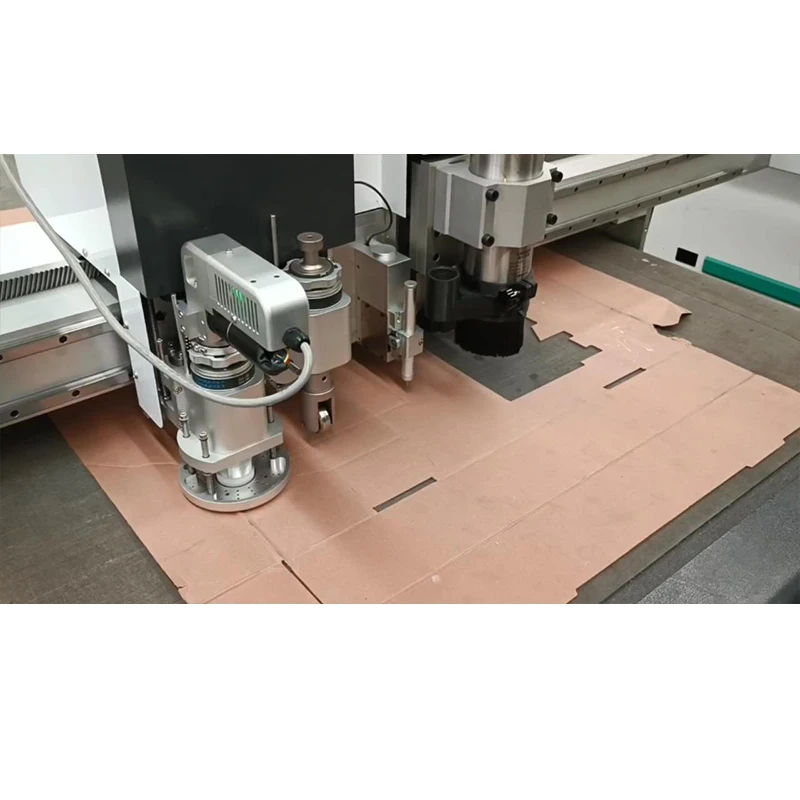
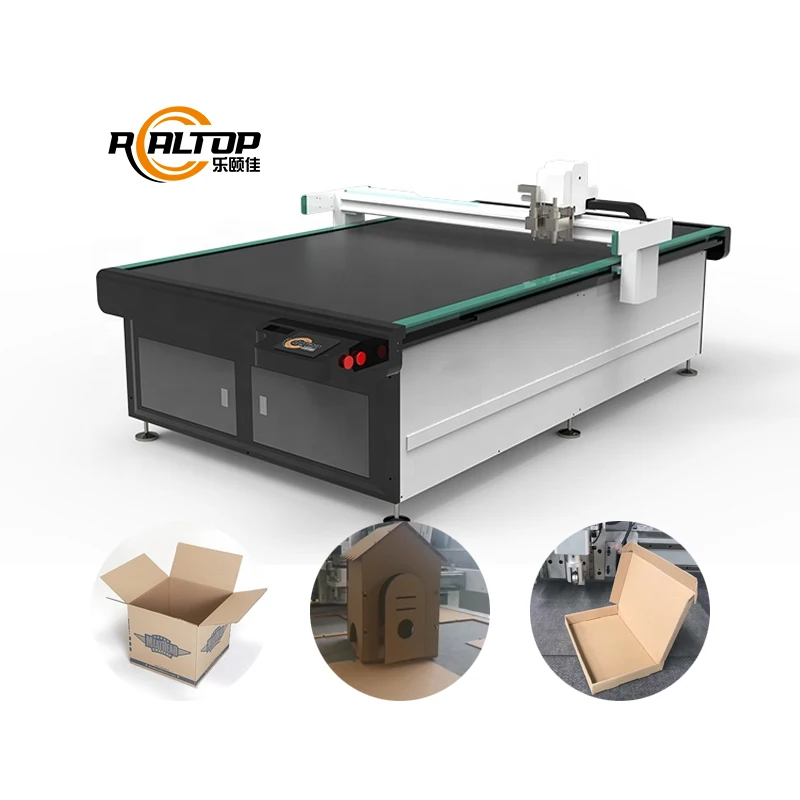
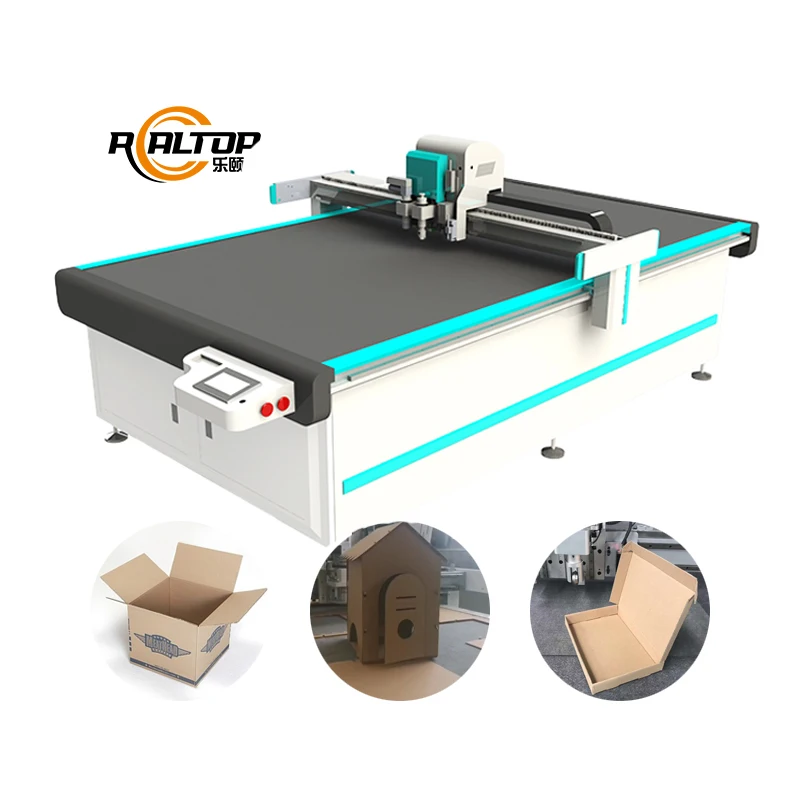
A CNC Oscillating Knife Cutting Machine for Packaging must handle more than just cutting outlines. The four-tool configuration — oscillating knife for through-cuts, creasing wheel for fold lines, kiss-cut knife for stickers and labels, and round punch for ventilation holes — lets you complete a full carton sample without removing the sheet from the table. This eliminates repositioning errors and keeps the repeated accuracy within the <0.05mm tolerance across the entire layout.
Vacuum Zoning and Small Part Hold-Down
Corrugated sample making involves cutting multiple small carton blanks from a single sheet. Without proper vacuum zoning, the smaller pieces lift as the knife exits the cut, producing torn edges and shifting the remaining layout. The aluminum alloy honeycomb platform is divided into adsorption zones so you can activate only the sections under active material, maintaining flat contact even for narrow strips and small insert cards.
Reading the Spec Sheet Against Your Actual Board
The ≤18mm cutting thickness is measured against standard single-face corrugated. When you move to BC double-wall or high-density honeycomb board, the effective clean-cut depth decreases because the oscillating knife must shear through more fiber with each stroke [NEED_CITE: relationship between board density and effective cutting depth in oscillating knife systems]. The rack-and-pinion transmission with imported linear guides maintains positioning accuracy, but the knife oscillation frequency and downward pressure must be matched to your specific flute profile. That is why the sample cutting report on your own board grade matters more than the headline thickness number.
The Hidden Cost of Wrong Configuration
When the vacuum table zoning does not match your typical carton blank size, small parts lift and the knife drags, creating ragged edges that fail quality checks. When the control language is not confirmed before shipment, operators spend weeks navigating menus they cannot read. When voltage and plug type are assumed rather than verified, the machine sits idle while transformers are sourced locally [NEED_CITE: industrial voltage and plug standards by export market].
Why Buyers Specify Here
The in-house design team covers both knife tooling and vacuum table engineering, so the configuration is matched to your corrugated grade rather than sold as a generic flatbed. Tool head selection and table zoning are specified per material and daily sample volume, not left as default settings. Software file format compatibility — DXF, OLT, PDF, AI — is confirmed against your existing packaging CAD workflow before the order is placed. Voltage, plug type and control language are locked in during the specification review, not discovered at commissioning. Every machine ships with a sample cutting report run on the buyer’s own corrugated board, giving you proof of edge quality and creasing accuracy before the crate leaves the factory.
Documentation & Verification
- Machine specification sheet matching your confirmed tool head and table zoning layout
- Electrical schematic with voltage and frequency locked to your local supply standard
- Sample cutting report on your corrugated board grade showing cut edge and crease quality
- Software licence and file format compatibility note for your packaging CAD system
- Factory test record documenting repeated accuracy across the full working area
- Operation and maintenance manual in your confirmed control language
Installation, Commissioning & Support
- 9 kW rated power plus 7.5 kW vacuum pump require a dedicated 380V circuit with proper breaker sizing
- Machine dimensions up to 3550×1910mm need clear floor space plus operator access on three sides
- Welded steel frame arrives as a single assembly; gantry and tool heads are mounted and aligned on-site
- First-run commissioning includes vacuum zone calibration against your actual sheet sizes and board weights
- Operator training covers tool head changeover, creasing pressure adjustment and nesting software workflow
- Ten oscillating blades included; spare parts list covers consumables for your daily sample volume
What to Share With Your Inquiry
Send your typical corrugated board grades and flute types — E, B, C, BC or honeycomb — along with maximum sheet dimensions and the smallest carton blank you produce daily. Confirm your local voltage and frequency standard, preferred control language, and the CAD file formats your design team currently uses. If you are producing printed contour work, let us know whether CCD camera positioning is required for your workflow so the configuration can be quoted accurately.
Frequently Asked Questions
Q: How is cutting thickness verified against different corrugated flute types?
A: We run a sample cut on your actual board — E-flute, B-flute, C-flute, BC double-wall or honeycomb — and document edge quality, creasing depth and effective cutting speed in a written report. The ≤18mm rating applies to standard corrugated; denser materials reduce effective clean-cut depth, and the sample report shows you exactly what the machine achieves on your stock.
Q: Can the vacuum zoning hold small carton samples without material lift?
A: The aluminum honeycomb platform is divided into independently controlled adsorption zones. You activate only the zones under your current sheet area, so narrow strips and small insert blanks stay flat as the oscillating knife exits the cut. Zone layout is matched to your typical blank sizes during configuration.
Q: What file formats does the software accept from existing packaging CAD workflows?
A: The system imports DXF, OLT, PDF and AI files directly. Before your order is confirmed, we test your actual design files for layer recognition, cut and crease line separation, and nesting compatibility. Any format gaps are identified and resolved before the machine ships.
Q: How are voltage, plug and control language confirmed before shipment?
A: During the specification review stage, we document your local voltage, frequency, plug type and preferred control interface language in the electrical schematic. This locked specification is verified against your facility’s supply before production begins, so no adapters or transformers are needed on arrival.
Q: What is the lead time for custom working area or multi-head configurations?
A: Standard working areas ship within typical multi-week lead times. Custom bed sizes, additional tool heads or specific servo configurations require a revised production schedule confirmed during quotation. The sample cutting and specification review stages run in parallel so the final build matches your verified requirements.
You may also like

商品评价
Clear filtersThere are no reviews yet.