


-
 Courier delivery
-
 DHL Courier delivery
-
 Warranty 1 year
-
 Free 30-Day returns

Design and Build Accountability — Every RT–R2513 frame, motion assembly and tool head is produced and tested in our Jinan facility before it ships, so the manufacturer you audit is the one that built your machine.
Technical Specifications
| Parameter | Value |
|---|---|
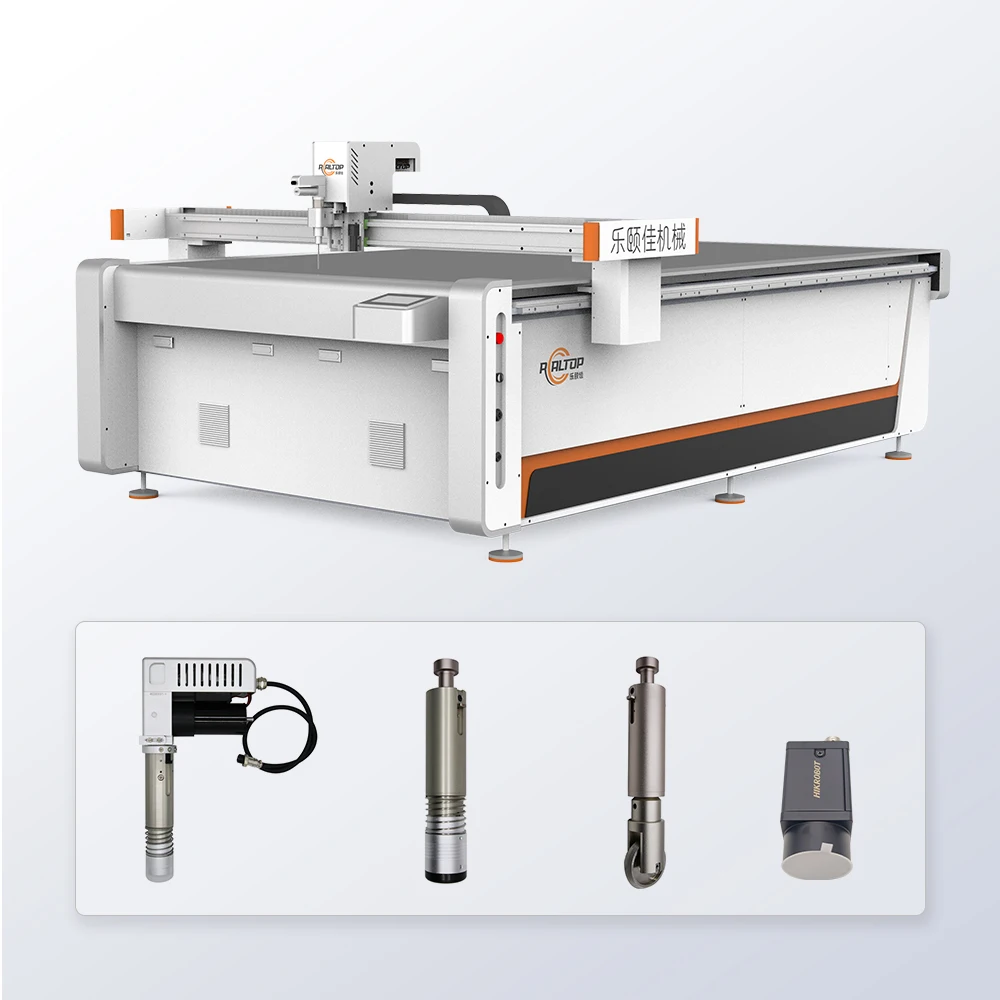
| Model | RT–R2513 |
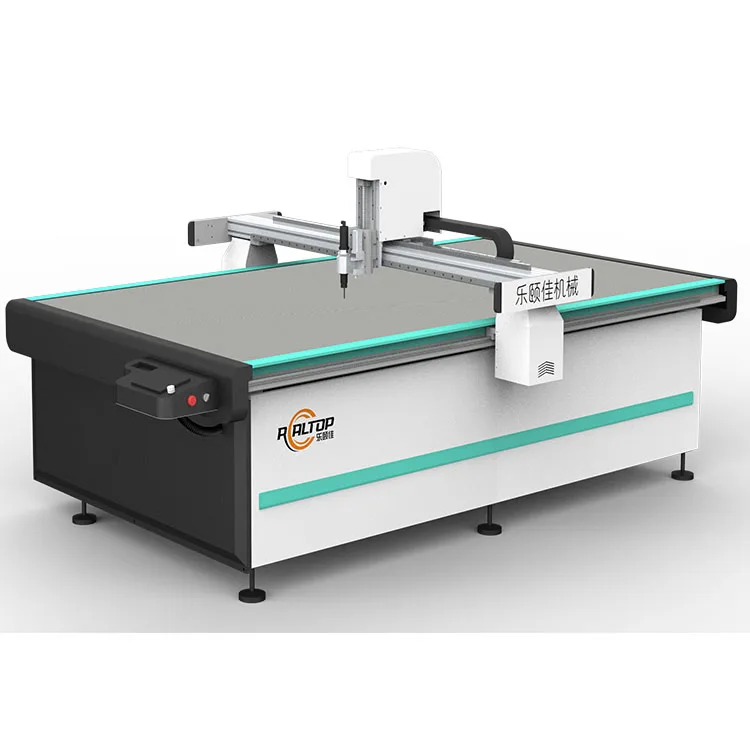
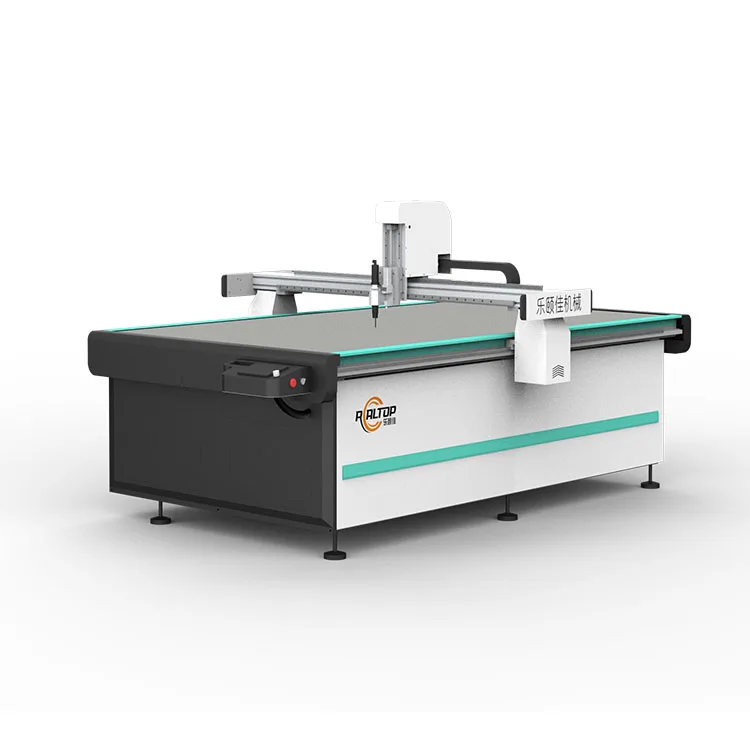
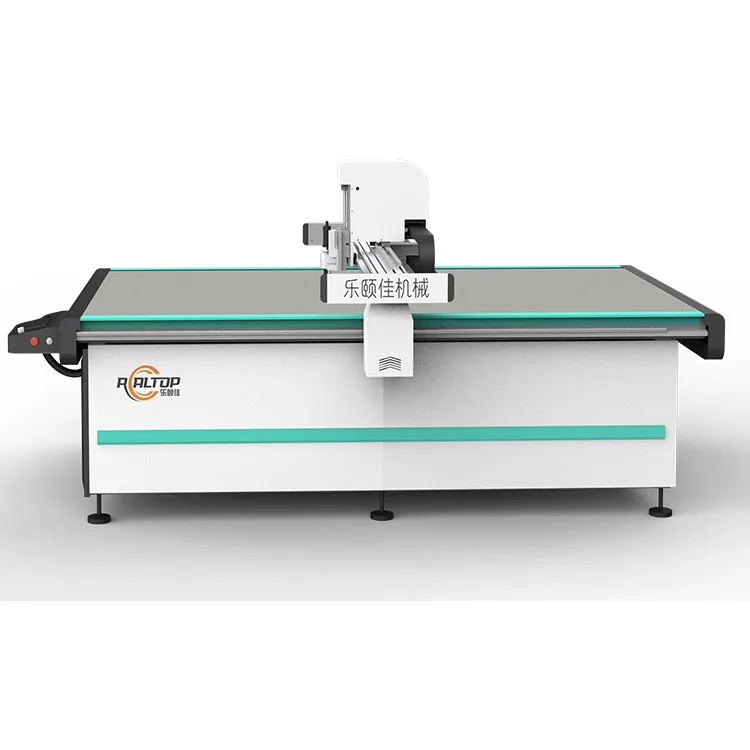
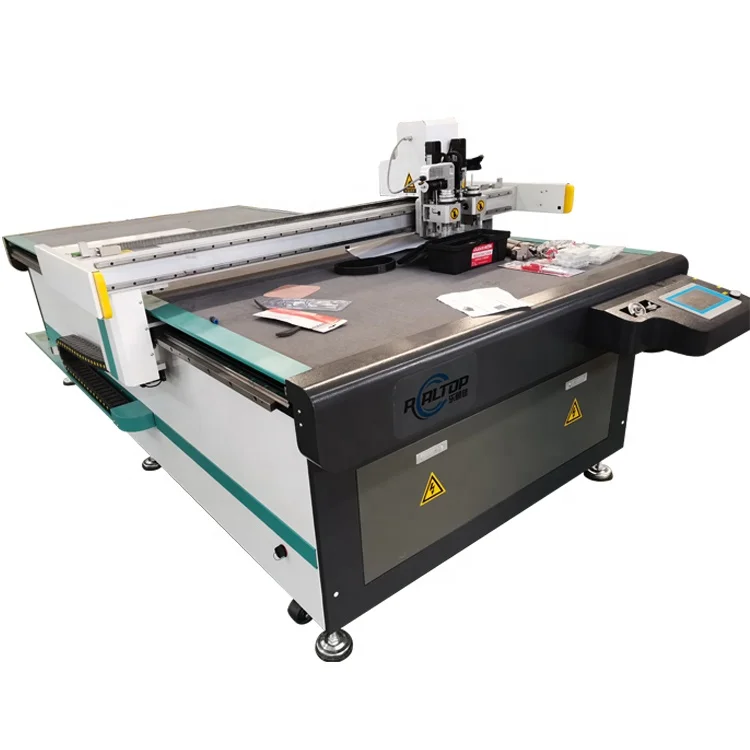
| Product Type | CNC Oscillating Knife Cutting Machine |
| Working Area | 2500 × 1300 mm |
| Machine Dimensions | 3550 × 1910 × 1400 mm |
| Rated Power | 9 kW |
| Vacuum Pump | 7.5 kW |
| Servo Motor Options | Dongling or Delta servo motor |
| Linear Guide | Taiwan Hiwin rail |
| Cutting Thickness | Up to 18 mm (basis not stated in source — confirm material type and density) |
| Repeated Accuracy | <0.05 mm |
| Voltage | 380 V (frequency to be confirmed per market) |
| Fixing Method | Vacuum table with auto-feeding conveyor belt |
| Conveyor Belt | Germany imported belt material |
| Safety Device | Infrared sensors |
| Profile Format | DXF, OLT, PDF, AI |
| Transmission | Ethernet port |
| Certification | CE declaration where applicable |
| Warranty | 1 year (excluding felt and knife blades) |
| Delivery Time | Under 30 working days |
Application Suitability
| Application | Material or Output |
|---|---|
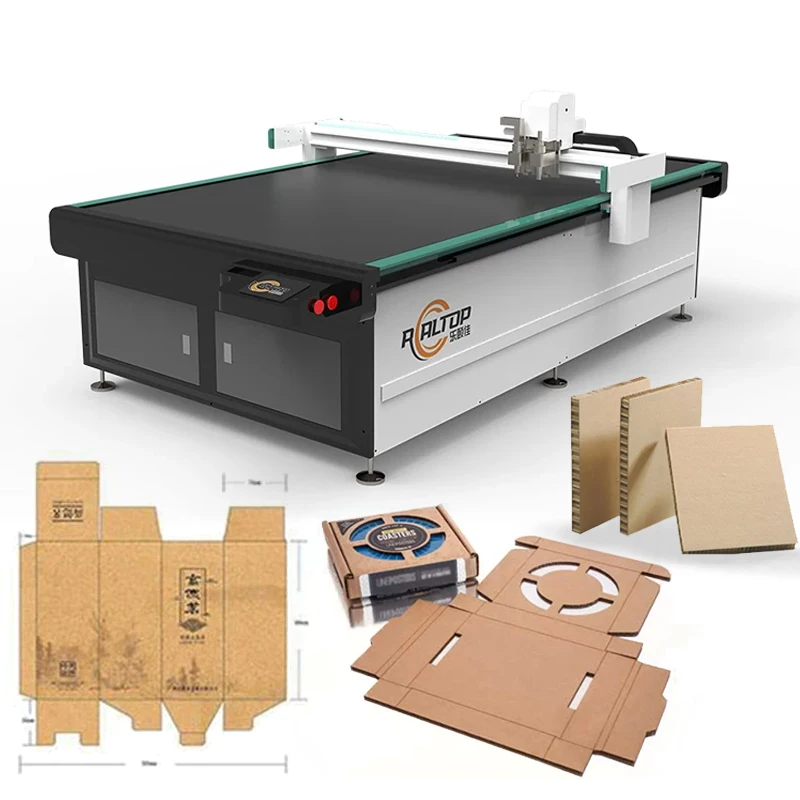
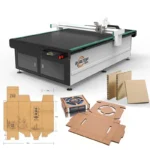
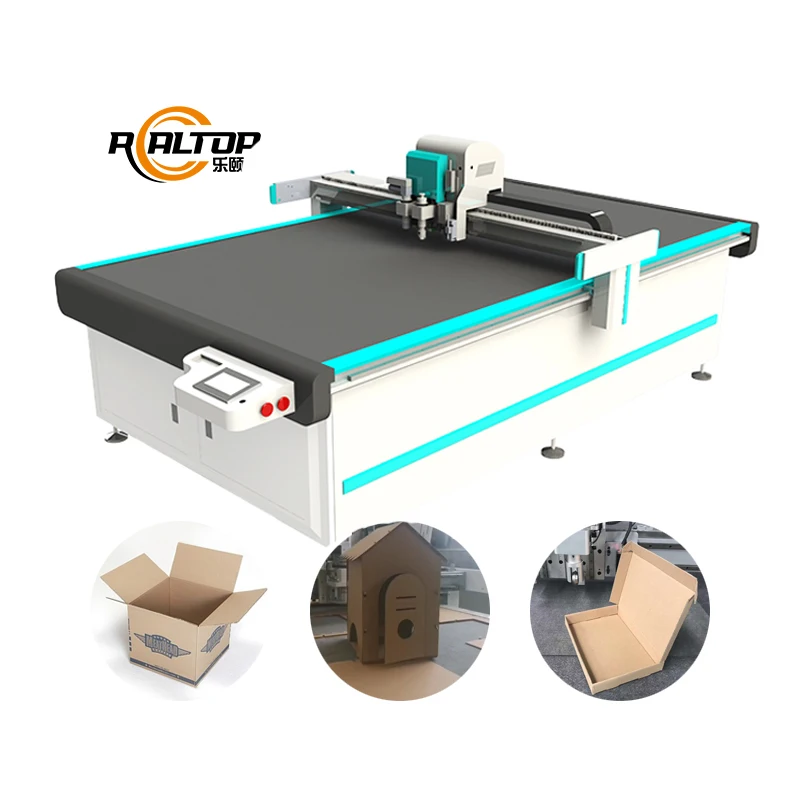
| Packaging carton sample making | Corrugated cardboard, grey board, kraft paper — cutting, creasing and round punching in a single setup |
| Sticker and label contour cutting | Adhesive vinyl, PP paper, sticker stock — kiss-cut and full-cut on printed or unprinted sheets |
| Leather and synthetic hide processing | Natural leather, PU, synthetic leather — oscillating knife for clean edge without fraying |
| Signage and display graphics | Foam board, PVC sheet, PP corrugated board — shape cutting for point-of-sale and exhibition displays |
| Gasket and seal prototyping | Compressed fibre, cork-rubber, non-asbestos gasket sheet — short-run sample cutting |
Why the Thickness Claim Needs a Material Name Behind It
When a buyer reads "cuts up to 18 mm" without a material qualifier, the number means almost nothing in production. Corrugated B-flute at 3 mm density behaves entirely differently from 12 mm grey board or dense EVA foam, and the oscillating knife cutting machine manufacturer you work with should be able to prove cutting capacity on your specific stock before you commit to an order.
We run your material on the RT–R2513 and issue a sample cutting report before the machine enters production.
Too many importers discover after delivery that the vacuum hold-down was specified for large sheets, but their actual job involves small sticker nests that lift during cutting. Others find that the creasing wheel leaves micro-cracks on coated board because the wheel profile was never matched to the flute. These mismatches do not show up in a brochure [NEED_CITE: common causes of cutting quality complaints in digital flatbed finishing]. They show up on the shop floor, weeks after the container is unpacked.
Matching the Tool Head to the Stock You Actually Run
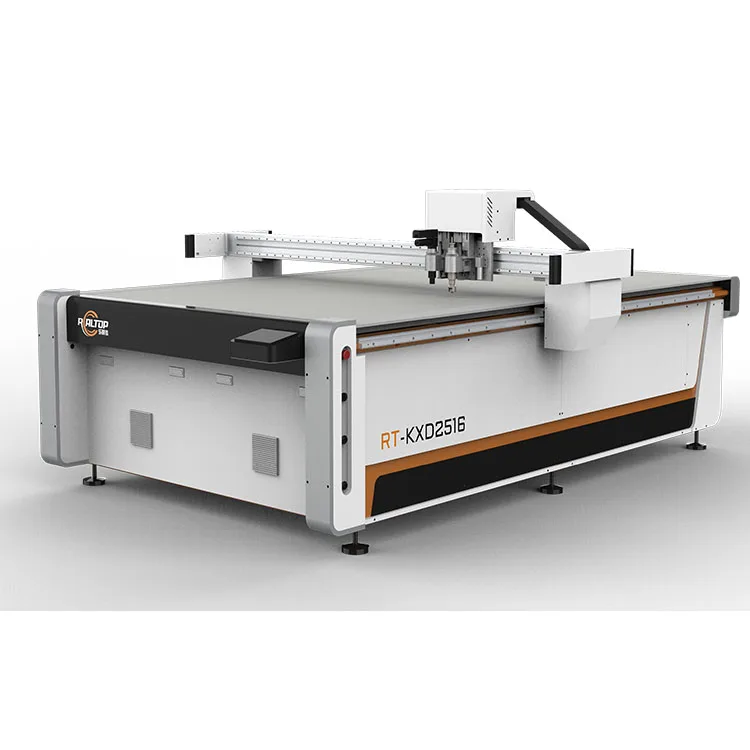
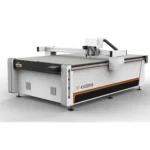
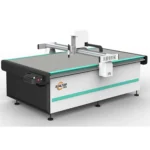
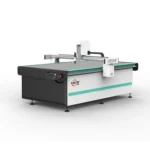
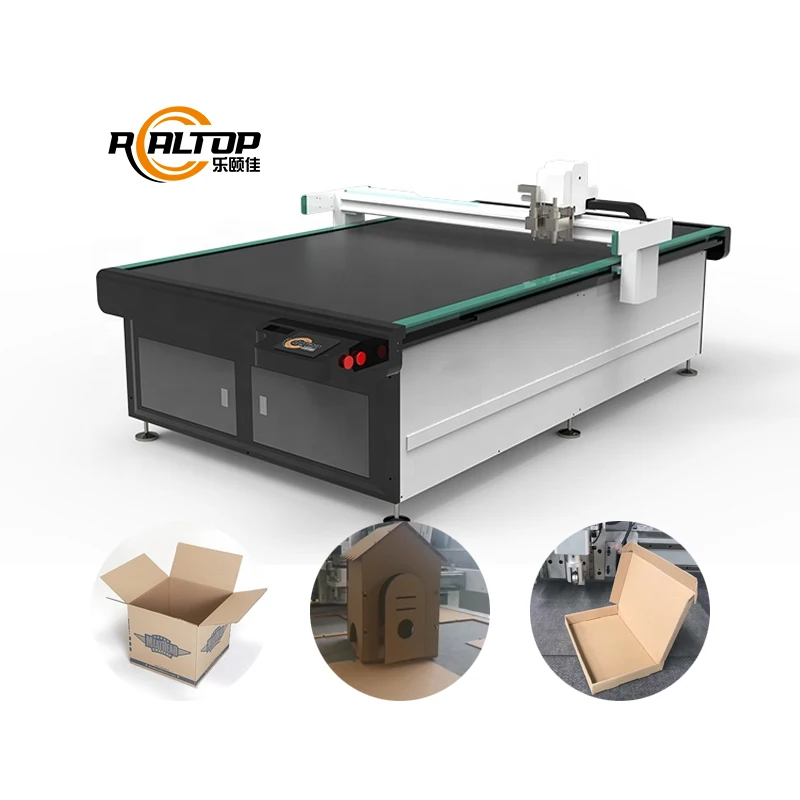
The RT–R2513 carries an oscillating knife, creasing tool, kiss-cut knife and round punch in a single tool carriage. For corrugated carton sample work, the oscillating knife handles the outer profile while the creasing wheel scores fold lines without crushing the flute structure. The kiss-cut blade sits at a calibrated depth for sticker sheets where the backing paper must remain intact. Each tool is selected against the buyer’s material sample, not guessed from a generic chart, and the tool head configuration is locked into the machine specification sheet before production begins.
How the Vacuum Table Zoning Affects Small-Part Yield
A full-sheet vacuum zone works fine when you are cutting one large carton blank. It fails when the same sheet nests dozens of small labels, because uncut areas leak vacuum and tiny parts drift mid-pass. The RT–R2513 vacuum platform is divided into independently controlled zones so that suction concentrates under the active cutting path. Combined with the auto-feeding conveyor and the Germany-imported belt, this arrangement keeps continuous sticker or label stock flat through repeated passes [NEED_CITE: vacuum zoning principles for digital flatbed cutting tables]. The result is consistent registration on long runs without manual re-positioning between nests.
What the Motion Specs Mean on the Shop Floor
The Taiwan Hiwin linear rail and rack transmission deliver repeated accuracy below 0.05 mm across the full 2500 × 1300 mm bed. In carton sample making, that tolerance keeps crease lines aligned with cut edges so folding jigs close square. The servo motor choice — Dongling or Delta — is specified against the buyer’s duty cycle and local service availability rather than defaulted to the lowest-cost option. The 9 kW rated power covers the spindle oscillation, vacuum pump draw and conveyor feed simultaneously, which matters when a buyer’s workshop runs the machine through full shifts rather than short sample bursts. File formats DXF, OLT, PDF and AI are accepted natively through the Ethernet port, so a packaging house can send artwork directly from its existing design workflow without intermediate conversion software.
The Cost of Skipping the Configuration Conversation
Choosing a machine on working area alone leads to predictable problems. A buyer cutting 5 mm foam board discovers the oscillating frequency is too low for clean edges because the frequency was never matched to foam density. Another buyer specifies a single vacuum zone to save cost, then spends months fighting lifted corners on sticker nests. When the control language and plug type are not confirmed before shipment, the machine sits idle while an electrician sources a local transformer [NEED_CITE: electrical adaptation delays in imported industrial equipment]. These are not design failures — they are specification gaps that a thorough pre-order conversation would have closed.
Why Buyers Source This Machine Directly From the Factory
Realtop designs and builds both the knife cutting system and the supporting automation in-house, so one engineering team is accountable for the frame, the tool head and the software integration. The RT–R2513 configuration is specified per buyer material and production volume, not pulled from a standard list. Sample cutting runs on the buyer’s own stock confirm edge quality, creasing depth and punching alignment before the order is finalised. Voltage, plug type, frequency and control language are documented and agreed before the machine enters assembly. For distributors, OEM branding, control panel layout and documentation language are configurable within the production run.
Documentation & Verification
- Machine specification sheet listing every tool head, servo option and voltage configuration confirmed for your order
- Electrical schematic with voltage, frequency and plug type matched to your destination market
- Sample cutting report on your corrugated board, sticker stock or leather with photographs and measured edge quality
- Factory test record showing repeated accuracy, vacuum pressure and conveyor feed run before packing
- Packing photographs of the RT–R2513 crated and strapped, shared before container loading
- Operation and maintenance manual with software licence note and file format compatibility guide
Installation, Commissioning & Support
- Foundation must support 3550 × 1910 mm footprint with level tolerance for Hiwin rail alignment
- Dedicated 380 V circuit required, sized for 9 kW machine load plus 7.5 kW vacuum pump draw
- Machine ships partially assembled; tool head carriage and conveyor belt fitted on site
- First-run calibration covers oscillating knife depth, creasing wheel pressure and punch alignment
- Operator training addresses DXF and AI file import, vacuum zone switching and blade replacement
- Ten oscillating blades included; felt and consumable blades excluded from the one-year warranty
Before You Send an Enquiry
To give you a configuration that actually fits your workflow, tell us the material type, thickness and sheet size you cut most often, along with your daily volume. Let us know your local voltage, frequency and plug standard, the language you need on the control interface, and whether your design team works in DXF, AI or another format. If you can send a sample of the stock you plan to process, we will run it on the RT–R2513 and return a cutting report before we quote a machine.
Frequently Asked Questions
Q: How is cutting thickness verified against my specific material and flute type?
A: We ask you to send a sample of the exact stock — corrugated flute, grey board grade, foam density or leather type. We run it on the RT–R2513, measure edge quality, creasing depth and cutting speed, and issue a sample cutting report. The tool head, blade type and vacuum zone configuration are then specified from that result, not from a generic thickness chart.
Q: What voltage, frequency and plug configurations are available for my target market?
A: The standard build is 380 V, but frequency and plug type are confirmed per destination market before production. We document the electrical specification in the machine specification sheet and electrical schematic so your local electrician can prepare the circuit before the container arrives. Any voltage adaptation is agreed at order stage, not discovered on the shop floor.
Q: Can the control system language and software be customized to my local market?
A: Yes. Control interface language, software menus and documentation are configurable for distributors and end-users. File format compatibility — DXF, OLT, PDF, AI — is confirmed against your existing design workflow before the order is finalised. We note software licence terms and any third-party nesting software requirements in the documentation package.
Q: What is the OEM capability and customization range for distributors?
A: Distributors can specify branded control panels, custom machine colour, localised documentation and region-specific electrical configurations within the production run. Tool head selection, servo motor brand preference and vacuum table zoning are adjustable per order. All OEM details are locked into the specification sheet before assembly begins.
Q: How are spare parts and blade consumables supplied after delivery?
A: Ten oscillating blades ship with the machine. The spare parts list covers wear items including felt, blades and vacuum seals, with part numbers matching the factory inventory. Consumables excluded from the one-year warranty are identified in the documentation so you can plan reorder quantities based on your cutting volume and material abrasiveness.
You may also like

商品评价
Clear filtersThere are no reviews yet.