




-
 Courier delivery
-
 DHL Courier delivery
-
 Warranty 1 year
-
 Free 30-Day returns

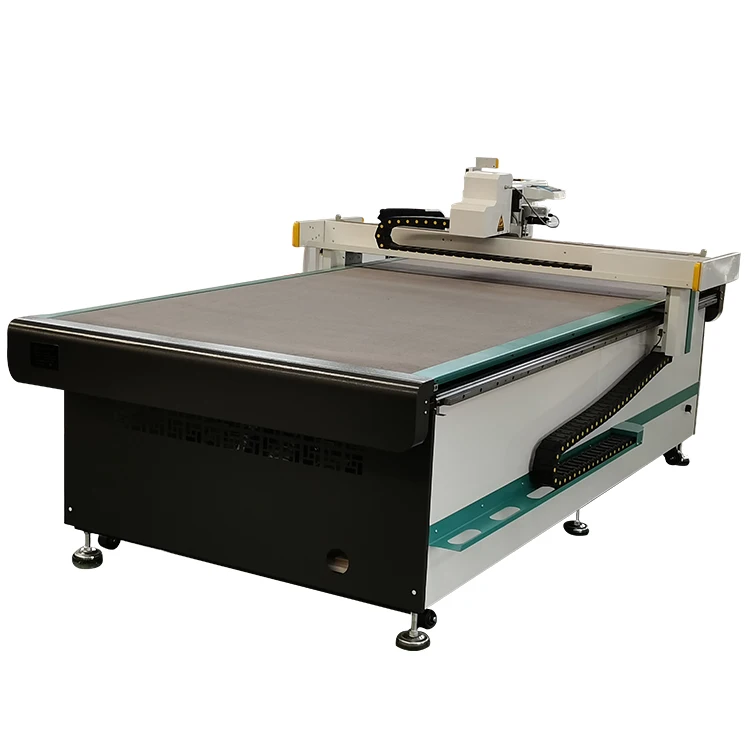
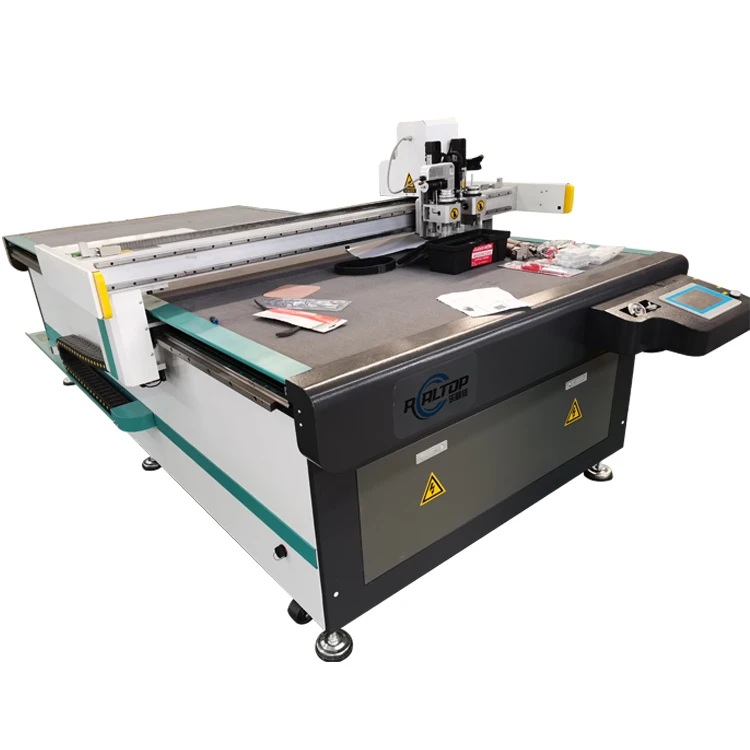
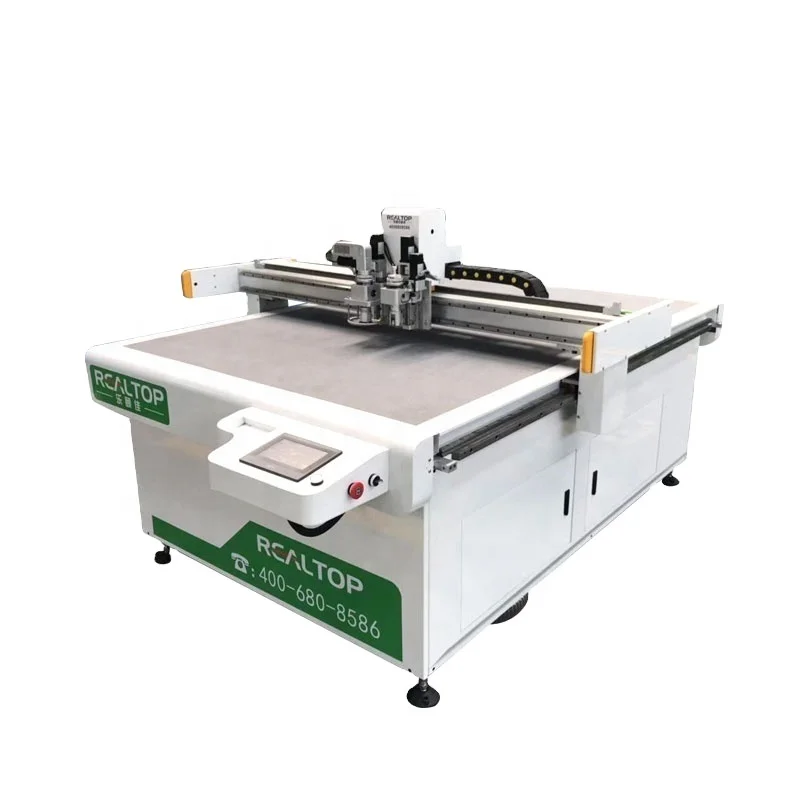
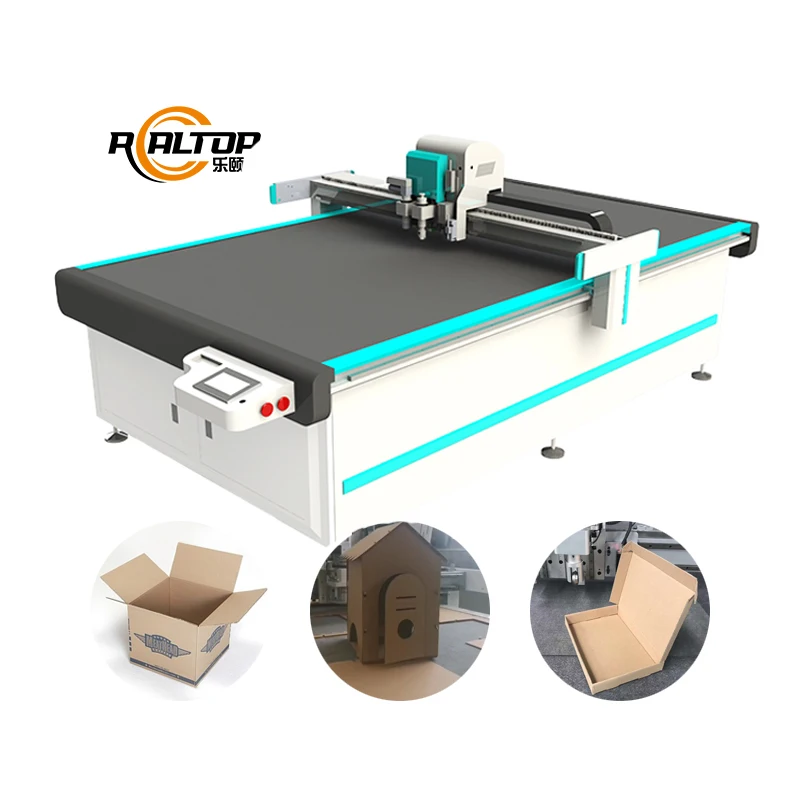
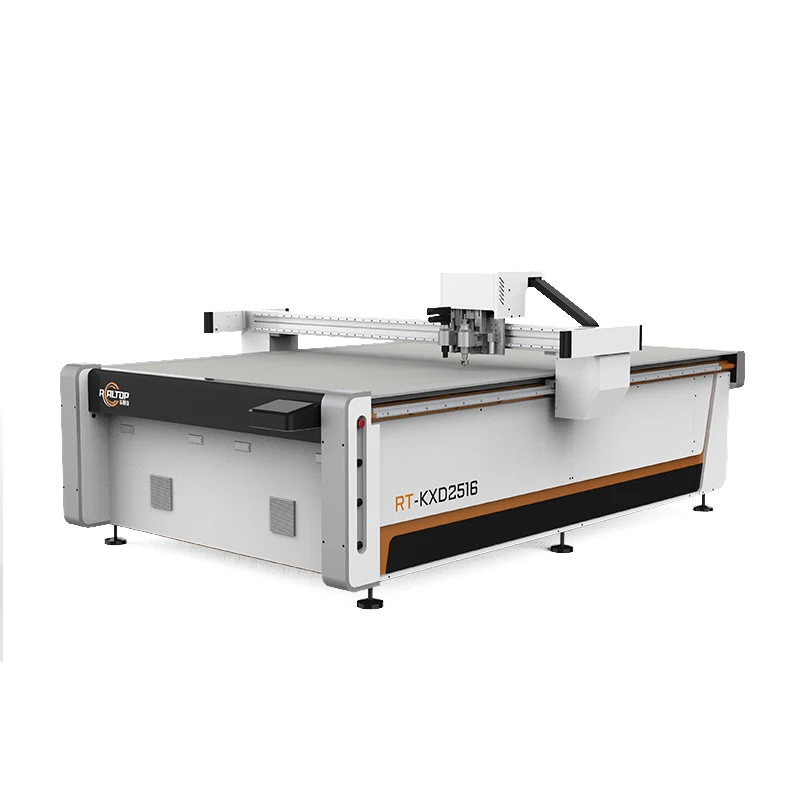
Factory-Direct Configuration Control — Realtop aligns tool head, vacuum zoning, and software stack to the buyer’s board grade before the RT-D2516/RT-S2516 leaves the Jinan production floor.
Technical Specifications
| Parameter | Value |
|---|---|
| Model | RT-D2516/RT-S2516 |
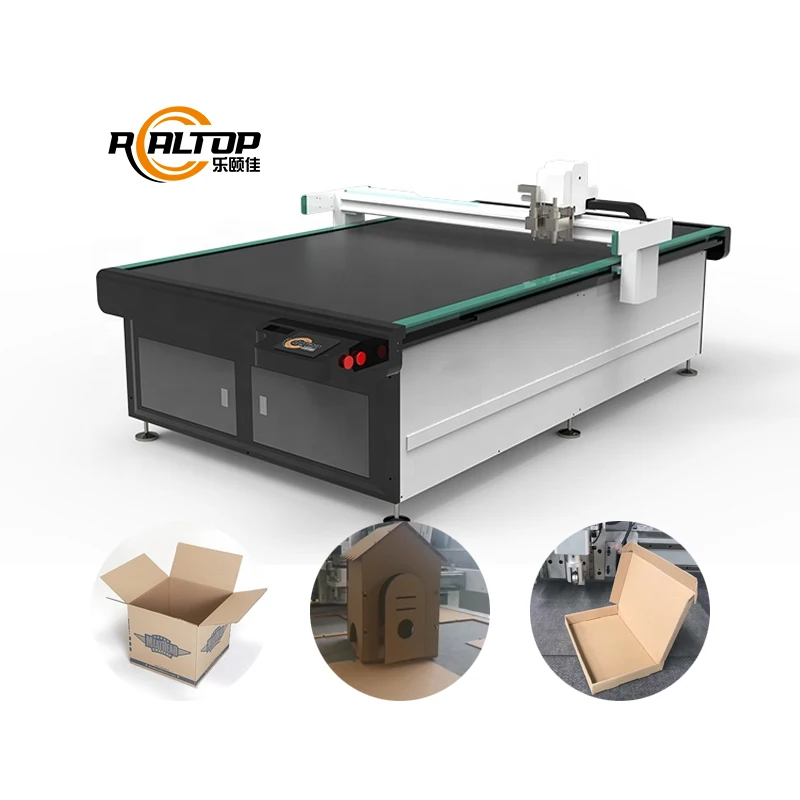
| Working Area | 1600 × 2500 mm |
| Machine Size | 3450 × 2300 × 1250 mm |
| Rated Power | 9 kW |
| Vacuum Pump | 7.5 kW |
| Worktable Type | Flat vacuum table with auto-feeding conveyor |
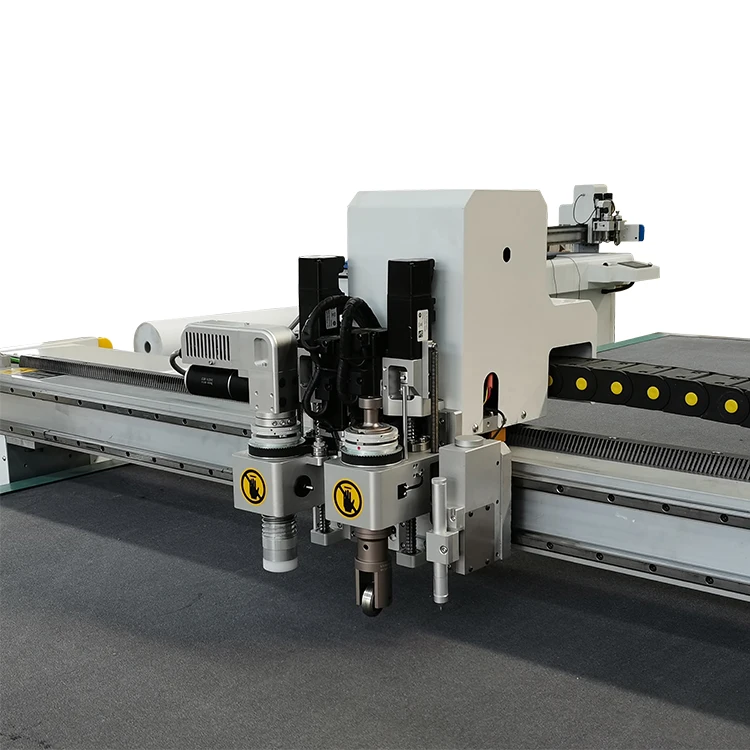
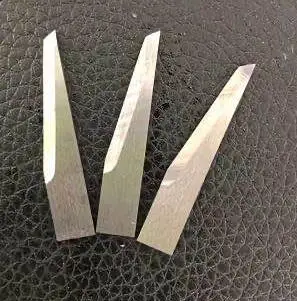
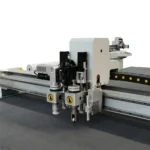
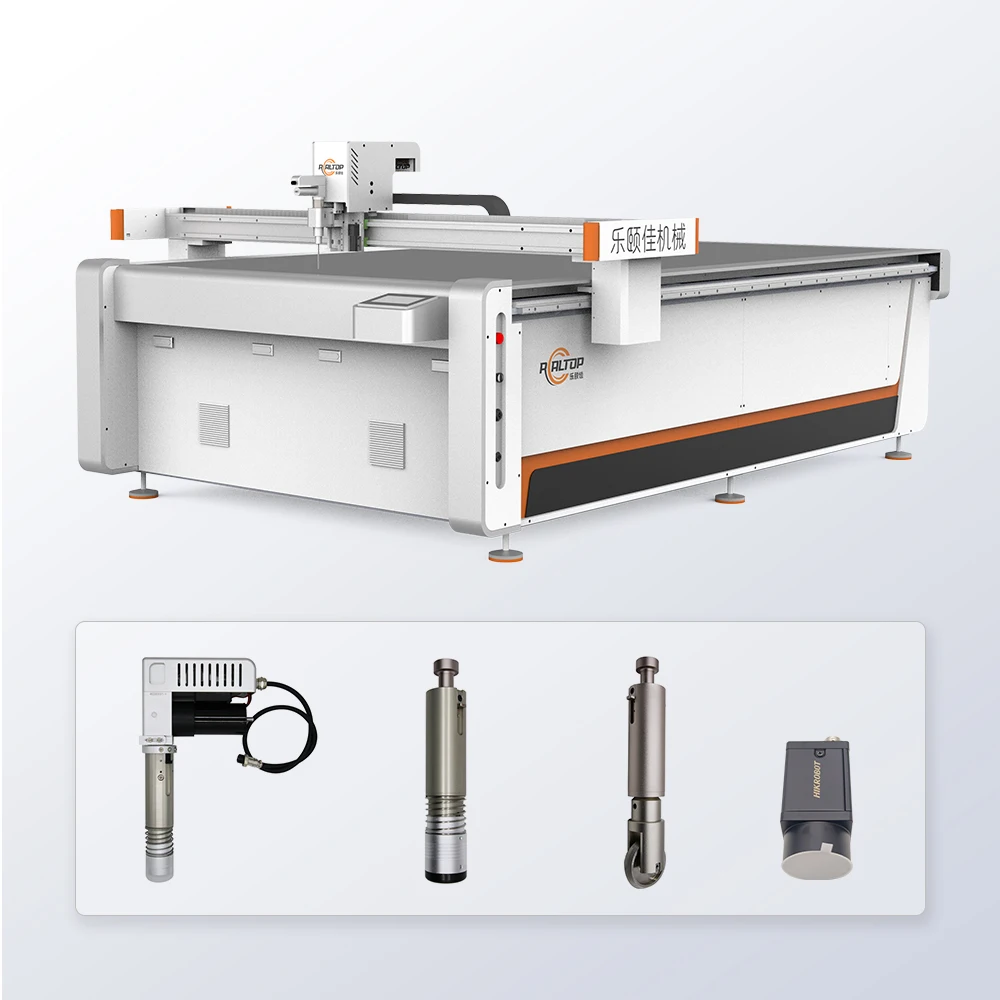
| Multifunctional Tool Head | Swiss imported oscillating knife (vibration full cut / half cut), creasing wheel, cursor location |
| Translational Velocity | 800–1200 mm/s |
| Cutting Speed | 200–800 mm/s (basis not stated in source, varies by board grade and thickness) |
| Repeatability | ≤0.1 mm |
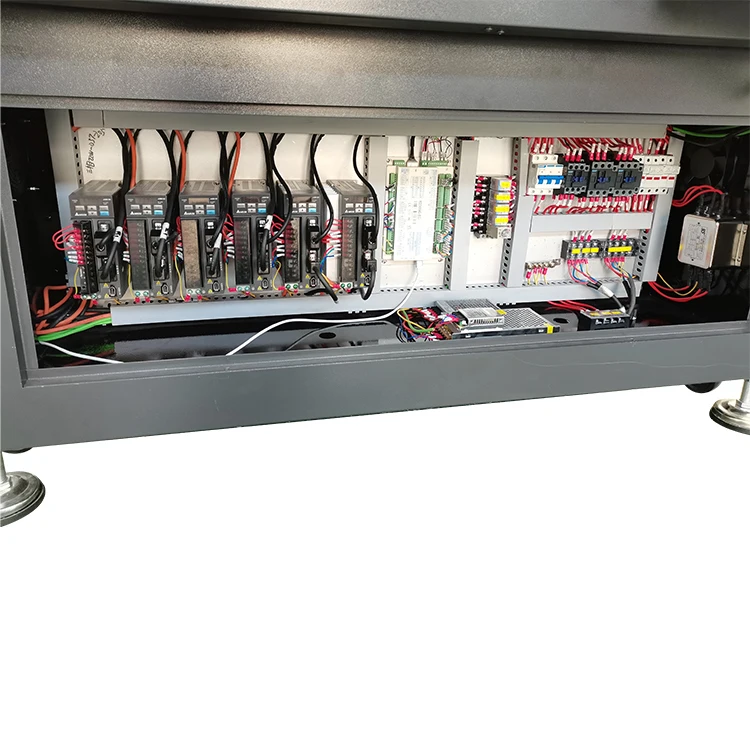
| Transmission System | Digital servo motor, linear guide, synchronous belt, imported ball screw |
| Servo Motor | Japanese Yaskawa |
| Linear Rail | Taiwan Hiwin |
| Instruction System | HP-GL compatible format |
| Voltage | 380V ± 10% |
| Safety Device | Infrared sensors |
| Certification | CE |
Application Suitability
| Application | Material or Output |
|---|---|
| Carton sample making and box prototyping | Corrugated paper board across flute profiles |
| Rigid box and gift box short-run production | Rigid grey board and thick cardboard |
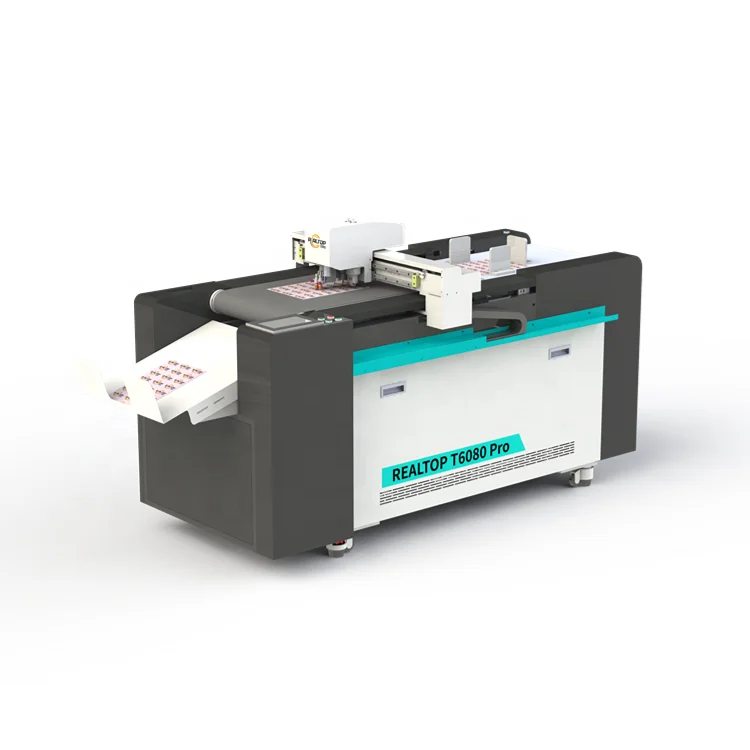
| Sticker and label sheet cutting | Adhesive-backed paper and vinyl |
| Pre-production approval runs | Corrugated board stock ahead of mass die-cutting |
Why Board Thickness Dictates the Entire Machine Configuration
A cutting speed figure means nothing without the flute profile and ply count it was measured against.
When packaging houses specify a CNC carton sample cutting machine manufacturer on working area alone, the conversation skips past the variables that determine whether a sample actually folds cleanly. Corrugated board behaves differently at single-face, double-wall, and triple-wall constructions, and rigid grey board demands a completely different knife pressure and tool path strategy than B-flute corrugated [NEED_CITE: material behavior differences across corrugated flute profiles]. The oscillating knife must be matched to the crush resistance of the specific board, otherwise the operator spends hours compensating for ragged edges and incomplete half-cuts that refuse to fold along the crease line.
Frame Rigidity and the Repeatability That Sample Work Demands
Every folding carton prototype must hold tight dimensional tolerances, because a deviation on the sample translates directly into a misaligned die when the job goes to mass production. The RT-D2516/RT-S2516 pairs Yaskawa servo motors with Hiwin linear rails to maintain ≤0.1 mm repeatability across the full 1600 × 2500 mm travel. For a CNC carton sample cutting machine manufacturer, that consistency matters more than raw speed — a packaging designer needs to know the tenth sample cut today will match the first.
Vacuum Holding Force on Small and Nested Parts
Carton sample work often involves cutting multiple small box formats from a single sheet, and once the knife releases the surrounding waste, those pieces can lift if the vacuum pull is insufficient. The 7.5 kW vacuum pump on this flatbed table provides the suction needed to keep corrugated and grey board stock flat during translational speeds up to 1200 mm/s. The auto-feeding conveyor further supports continuous sheet loading, so operators are not manually repositioning material between cuts [NEED_CITE: vacuum hold-down requirements for flatbed digital cutting on porous board materials].
What the Specs Mean at the Folding Table
The Swiss imported oscillating knife handles vibration full-cut and half-cut in a single tool head, meaning the machine scores the crease line and cuts the outline without a tool change. For rigid grey board used in luxury packaging, this eliminates the crush marks that a drag knife would leave at fold points. The HP-GL compatible instruction system accepts standard die-line files from packaging CAD suites, so design studios do not have to rebuild geometry in a proprietary format. When the creasing wheel and marking pen are added to the tool head configuration, one setup covers the complete sample — cut, fold, and registration marks included.
The Cost of Skipping the Sample Cut Verification
Buyers who commit to a flatbed cutter without running their actual board through the machine often discover creasing depth issues only after installation. A half-cut that is a fraction of a millimeter too deep will crack the liner on E-flute; too shallow and the board simply will not fold. Voltage mismatches compound the problem — a 380V machine dropped onto a 415V supply without transformer adjustment can stress the servo drives, leading to intermittent positioning errors that are difficult to trace [NEED_CITE: voltage tolerance effects on servo-driven CNC equipment]. These are not warranty claims; they are configuration oversights that delay production by weeks.
What Separates a Manufacturer From a Reseller in This Category
Realtop designs and assembles both knife and laser cutting systems in-house, so the recommendation between oscillating knife and laser is based on material science, not inventory pressure. Tool head configuration is specified against the buyer’s board samples, not a generic default. Software compatibility is confirmed by running the buyer’s actual CAD files through the control system before the crate closes. Voltage, plug type, and control panel language are locked to the destination facility. Every RT-D2516/RT-S2516 ships with a factory test record from the buyer’s own material — not a generic demonstration on stock board.
Documentation & Verification
- Factory test record cut from buyer’s own corrugated grade and flute profile
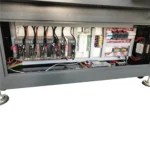
- Electrical schematic confirming 380V ± 10% wiring and breaker specifications
- Tool head configuration list matching oscillating knife, creasing wheel, and pen options
- HP-GL file format compatibility note signed against buyer’s CAD software version
- CE declaration covering mechanical safety and electromagnetic compliance
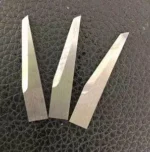
- Spare parts list with Swiss knife blade and conveyor belt replacement references
Installation, Commissioning & Support
- Requires level concrete floor supporting 3450 × 2300 mm footprint plus operator clearance
- Dedicated 380V ± 10% circuit rated for the 9 kW machine draw plus 7.5 kW vacuum pump
- Machine ships assembled with vacuum table and conveyor belt pre-mounted and tensioned
- First-run commissioning includes creasing depth calibration on buyer’s board samples
- Operator training covers HP-GL file import, nesting workflow, and tool head changeover
- Wear parts schedule for oscillating knife blades, creasing wheel, and synchronous belt inspection
Preparing Your Inquiry
Share the specific board grades, flute profiles, and ply constructions you run most often, along with typical sheet dimensions and daily sample volume. Confirm your facility voltage, frequency, and preferred control panel language so the electrical and interface configuration can be finalized before production begins.
Frequently Asked Questions
Q: What board thicknesses and flute profiles can this machine cut, and how is depth verified?
A: The RT-D2516/RT-S2516 handles corrugated paper board across common flute profiles and rigid grey board used in carton sample making. Cutting depth and crease pressure are verified during a factory sample test on the buyer’s actual board stock before shipment, with a written report confirming edge quality and fold behavior.
Q: Which voltage and plug configurations are available for export markets?
A: The standard configuration is 380V ± 10%, and alternative voltage setups can be specified to match the destination facility’s supply. Plug type and breaker requirements are confirmed during order processing so the machine arrives ready to connect without a third-party transformer.
Q: What file formats does the control system accept from packaging CAD software?
A: The instruction system is HP-GL compatible, accepting standard die-line output from common packaging design suites. File format compatibility is tested with the buyer’s own CAD files before dispatch to ensure the nesting and cutting workflow operates without conversion issues.
Q: Can we send our own corrugated board for a sample cutting test before purchase?
A: Yes. Buyers are encouraged to ship representative board samples to the factory so the tool head, cutting speed, and creasing depth can be dialed in against actual production material. The resulting sample cutting report accompanies the machine shipment.
Q: What documentation and support materials are included with the shipment?
A: Each machine ships with an operation and maintenance manual, electrical schematic, CE declaration, factory test record, software licence note, and spare parts list. Installation guidance and operator training are provided to ensure the CNC carton sample cutting machine manufacturer delivers a production-ready system.
You may also like

商品评价
Clear filtersThere are no reviews yet.