








-
 Courier delivery
-
 DHL Courier delivery
-
 Warranty 1 year
-
 Free 30-Day returns

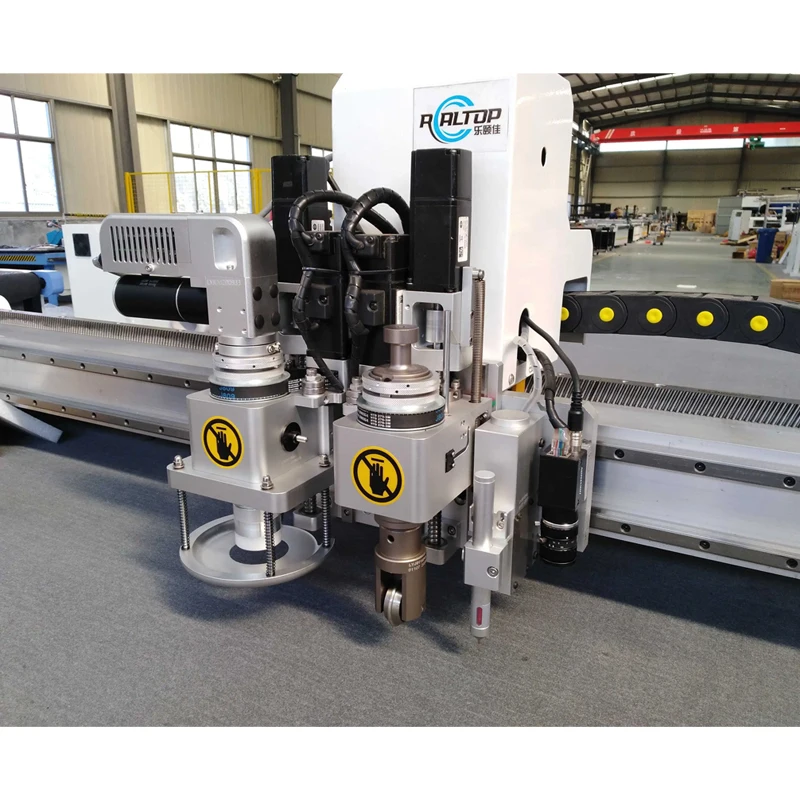
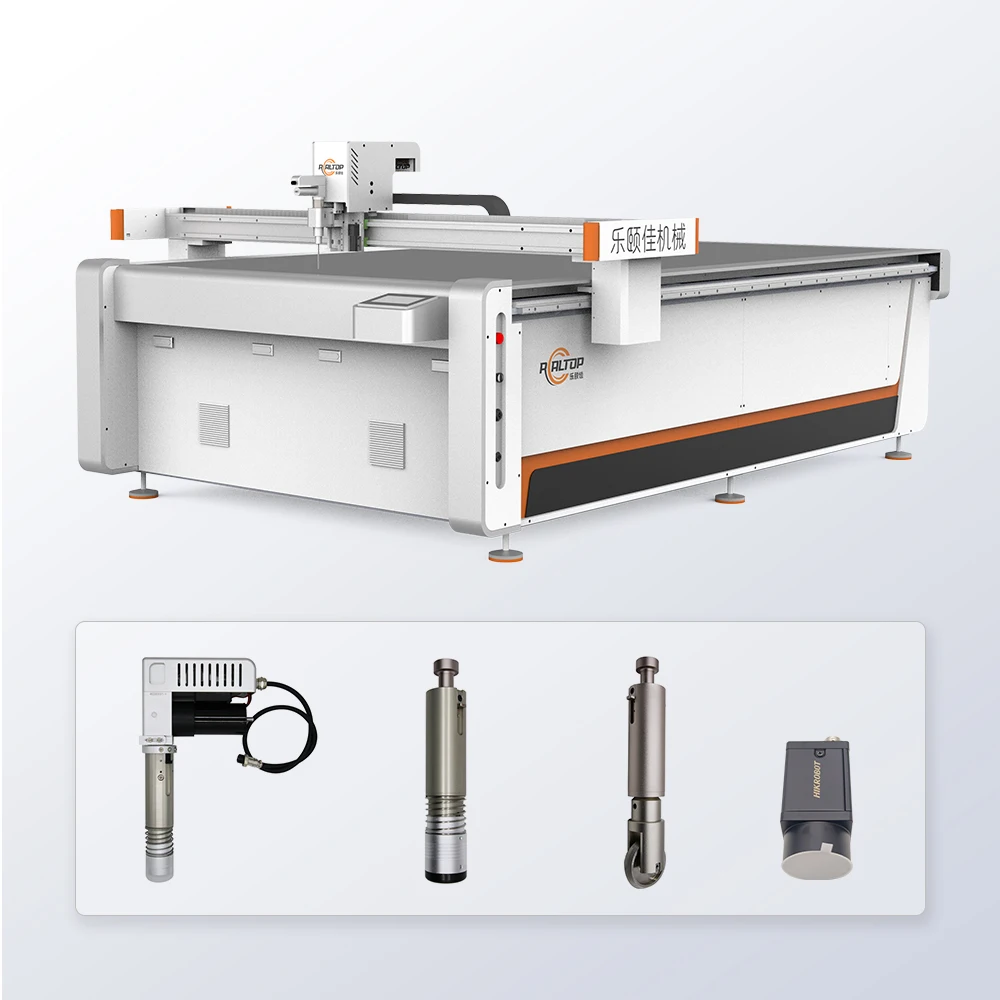
Tool head configuration matched to material — every RT-R2513, RT-D2516, and RT-S2516 table ships with oscillating knife, creasing wheel, kiss-cut, and punch tools selected against your actual corrugated stock, not a generic package.
Technical Specifications
| Parameter | Value |
|---|---|
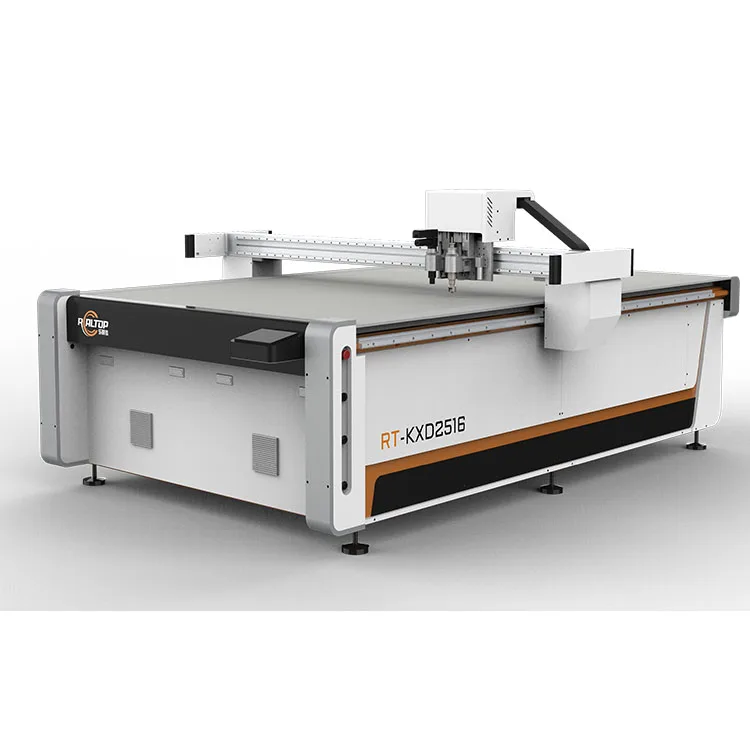
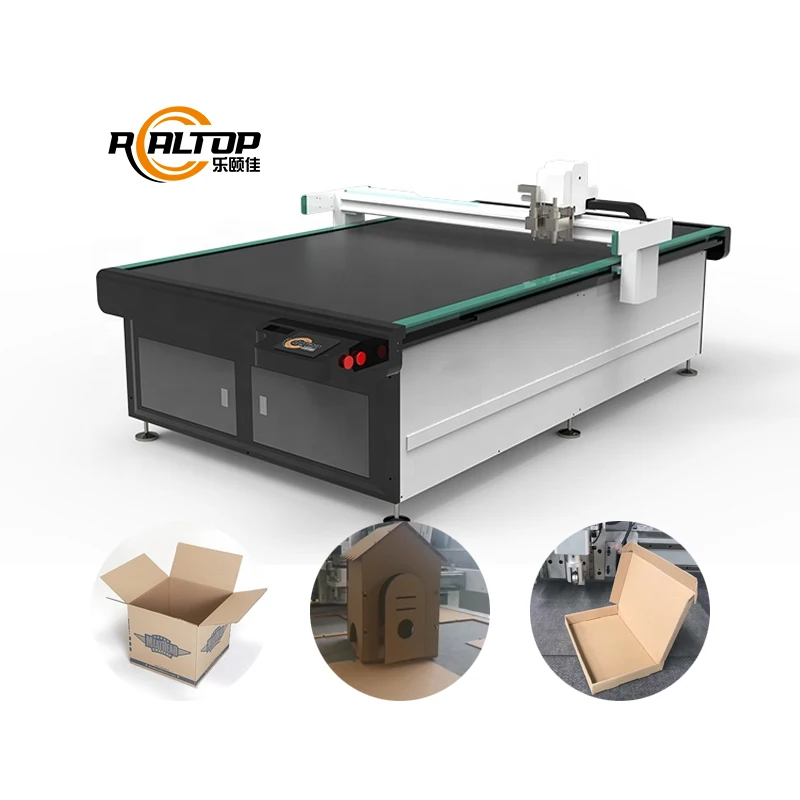
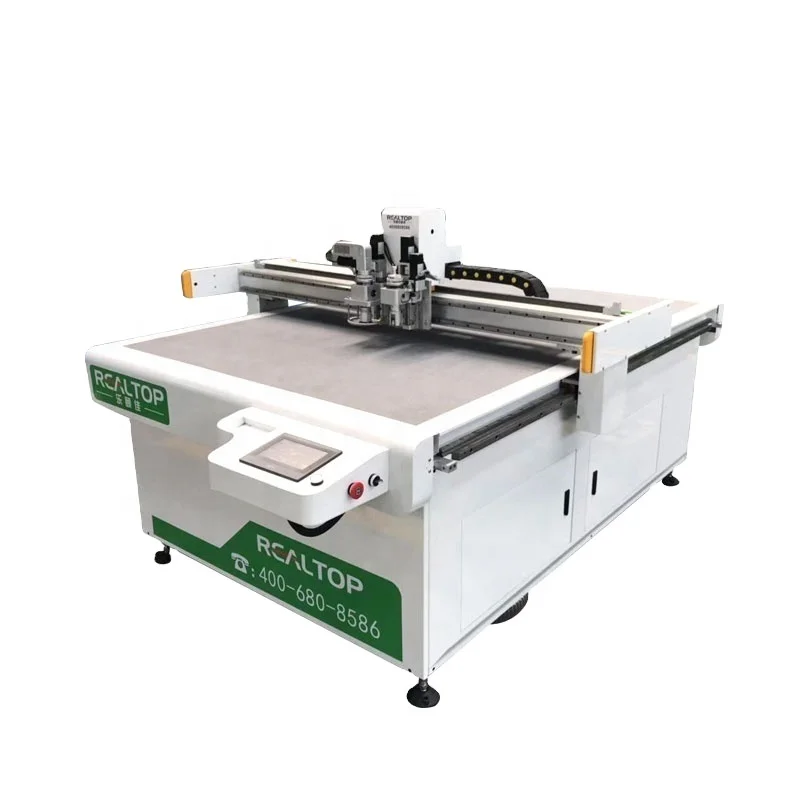
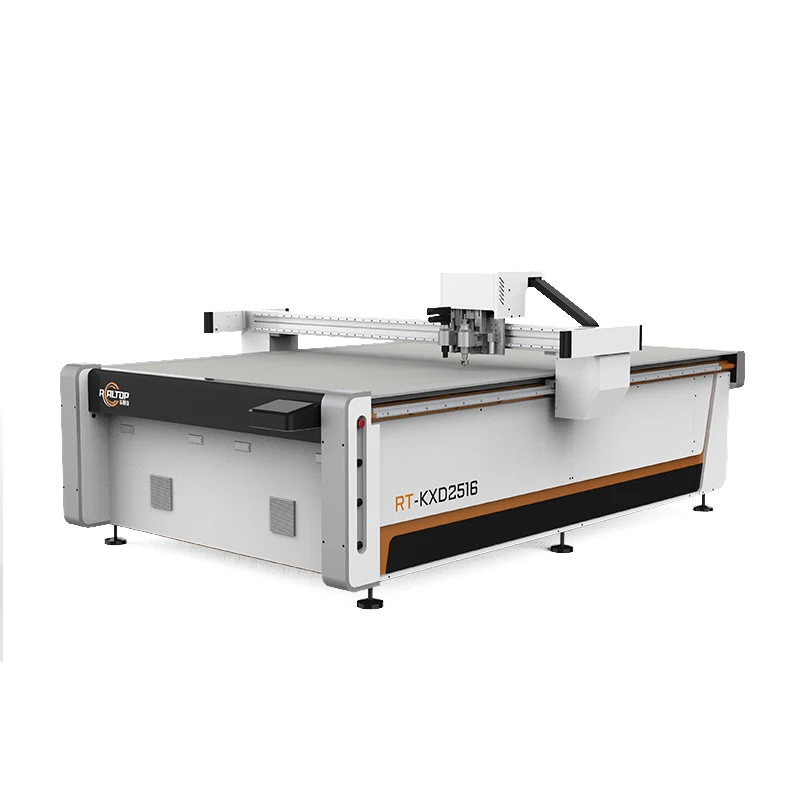
| Model | RT-R2513 / RT-D2516 / RT-S2516 |
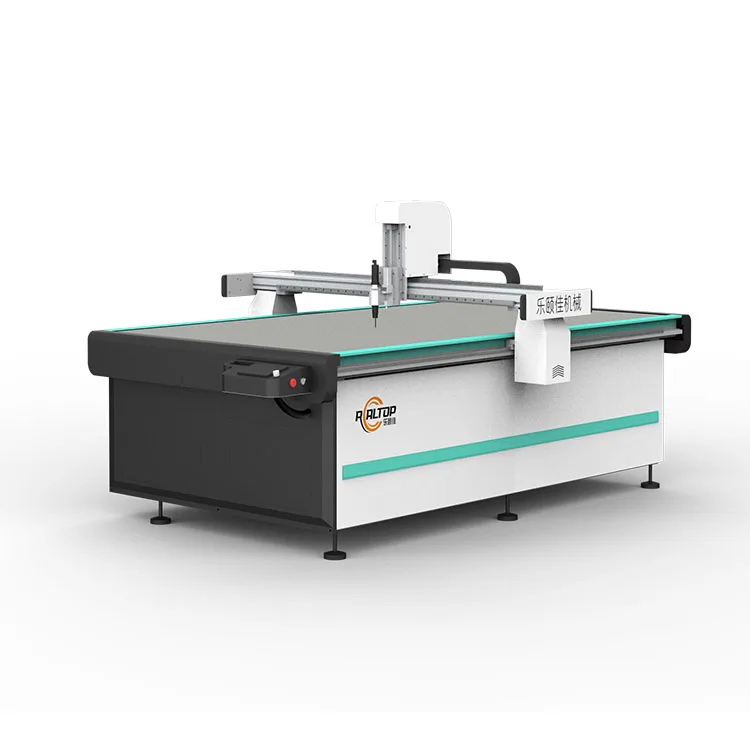
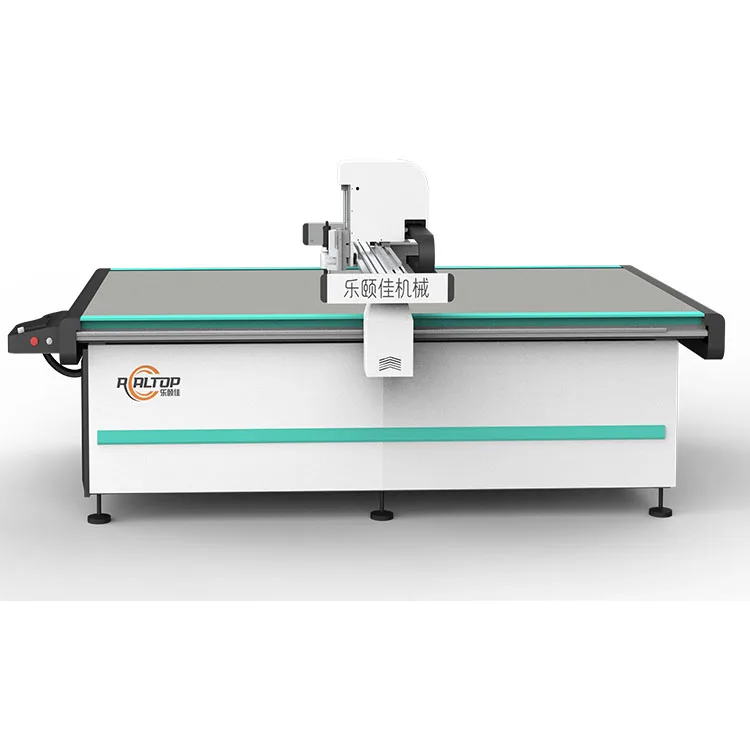
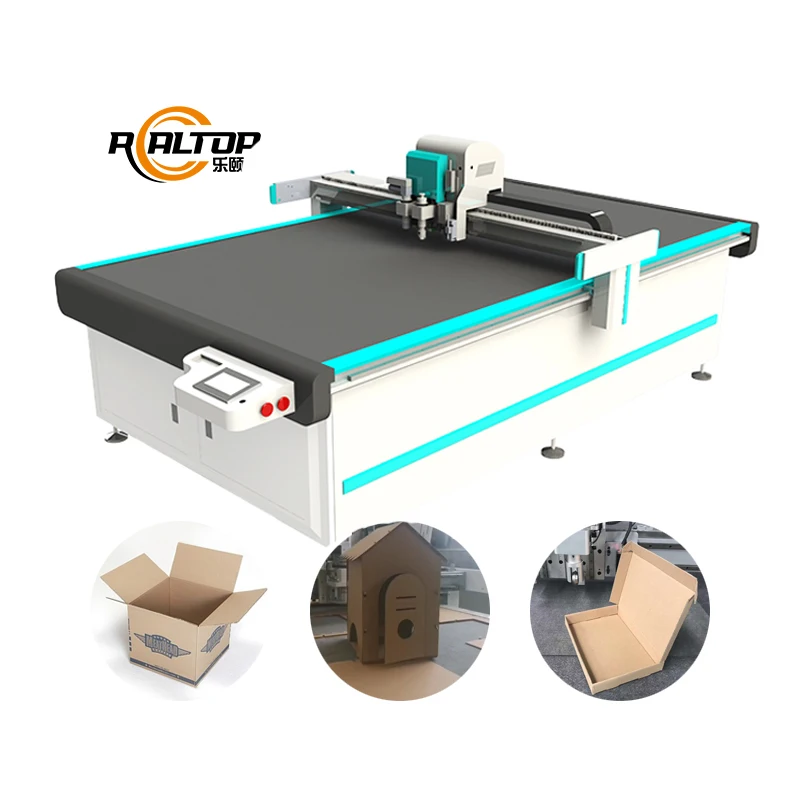
| Product Type | CNC Oscillating Knife Cutting Table |
| Working Area | 2500×1300 mm (RT-R2513) / 1600×2500 mm (RT-D2516, RT-S2516) |
| Machine Size | 3550×1910×1400 mm (RT-R2513) / 3450×2300×1250 mm (RT-D2516, RT-S2516) |
| Rated Power | 9 kW |
| Vacuum Pump | 7.5 kW |
| Voltage | 380V |
| Cutting Thickness | ≤18mm (basis not stated in source — confirm material type and density) |
| Cutting Tools | Oscillating knife, Creasing tool, Kiss-Cut Knife Tool, Round punch |
| Fixing Method | Vacuum system with aluminum alloy honeycomb structure platform |
| Repeated Accuracy | <0.05mm |
| Servo Motors | Dongling servo (verify against specific build configuration) |
| Guide Rail | Imported straight-line square guide rail |
| Frame Construction | Welded thick square seamless steel structure with high temperature treatment |
| Transmission | Ethernet port |
| Safety Devices | Infrared sensors, emergency stop devices |
| Software | Professional carton cutting software; supports DXF, OLT, PDF, AI formats |
| Language Options | Customizable (English, Russian, Italian, Chinese available) |
| Delivery Time | <30 working days |
| Warranty | 1 year (excluding felt and knife blades) |
Application Suitability
| Application | Material or Output |
|---|---|
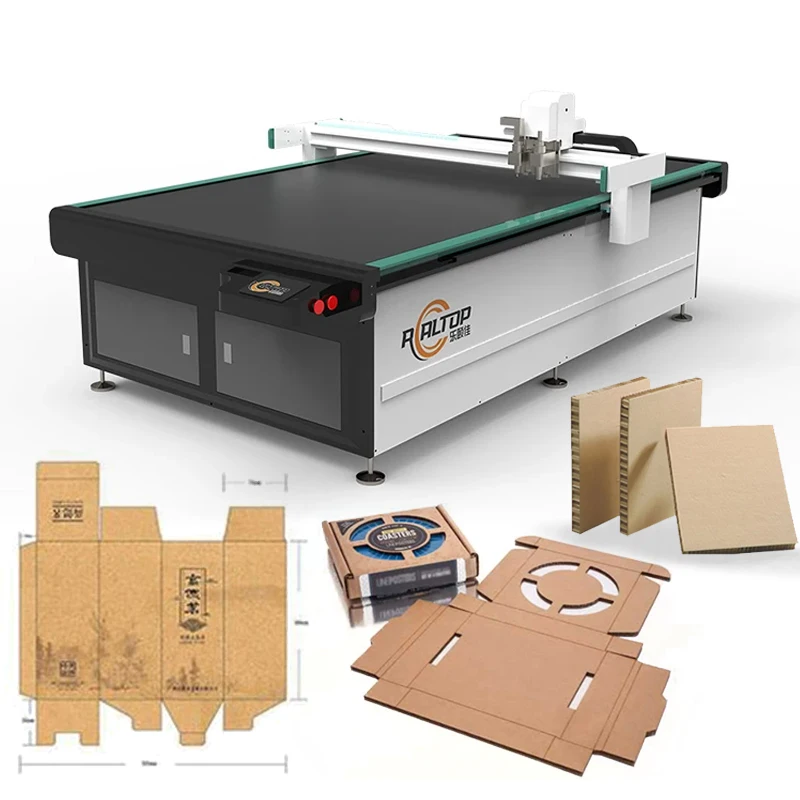
| Packaging carton sample making | Single, double, and triple-wall corrugated board |
| Cardboard box short-run production | Grey board, honeycomb board, and composite panels up to 18mm |
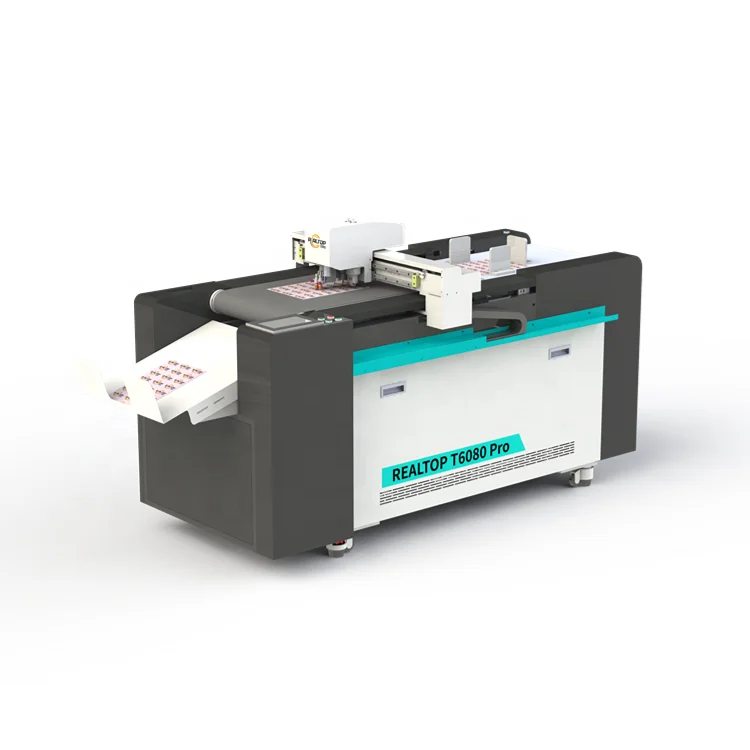
| Sticker and label contour cutting | Self-adhesive vinyl, PP paper, and coated paper stocks |
| Gasket and insert die-cutting | Foam inserts and protective packaging materials |
| Foldable packaging prototyping | Art board and coated carton stock requiring precision creasing |
Why Specified Cutting Depth Rarely Matches Actual Corrugated Stock
Always run sample cuts on your exact production material before finalizing tool head pressure and oscillation frequency settings.
A packaging sample maker once specified a machine based solely on working area and a generic 18mm cutting depth figure. The test sample used standard single-wall corrugated board and the cuts came out clean. Their actual production stock turned out to be high-glue-content honeycomb board that demanded significantly more knife pressure. The first production run crushed the top liner on every piece and the line stopped until replacement tooling arrived weeks later [NEED_CITE: material density effects on oscillating knife penetration depth]. This is why any CNC oscillating knife cutting table manufacturer worth talking to will insist on your real production material before quoting a configuration.
Tool Head Selection Defines Your Cut Quality on Corrugated
The oscillating knife handles full-depth through-cuts on corrugated and honeycomb board where a clean edge without crushed fluting matters. The creasing wheel scores fold lines without breaking the surface liner, which is essential for box prototypes that must fold cleanly by hand. The kiss-cut knife scores adhesive label stock down to the release liner without cutting through it. A round punch handles registration holes and ventilation slots. Specifying the wrong tool for a given packaging material produces ragged edges or crushed flute structures that fail visual inspection.
Vacuum Zoning and How It Holds Small Cartons Down
The aluminum alloy honeycomb vacuum platform on these tables provides holding force across the full cutting bed. When cutting small packaging components like box dividers or insert tabs, inadequate vacuum zoning lets pieces lift mid-cut and the knife drags the material instead of slicing it [NEED_CITE: vacuum hold-down requirements for small nested parts]. The automatic zone following system activates only the vacuum regions under the current cut path, concentrating suction where the material needs it most and reducing power waste on empty zones.
Reading the Spec Sheet Against Your Production Reality
The 9 kW rated power covers the servo drives, oscillation motor, and control systems during continuous cutting cycles. The separate 7.5 kW vacuum pump runs independently and must be wired on its own circuit to avoid voltage drops when both systems start simultaneously. The welded steel frame with high temperature treatment resists the deflection that causes accuracy drift over long production runs. Repeated accuracy below 0.05mm means registration marks on printed carton stock stay within tolerance across a full sheet, which matters when CCD positioning tracks contours for die-cut packaging with pre-printed graphics. Ethernet transmission of cut files keeps data transfer stable over longer cable runs from the design workstation to the machine.
What Happens When Voltage and Software Don’t Match Your Shop
Skipping voltage confirmation before shipment means a 380V machine arrives at a facility wired for a different standard, and the buyer faces transformer costs or rewiring before the table ever cuts its first sheet. Software incompatibility surfaces when the buyer’s design team works in a nesting platform that exports formats the machine software cannot import, forcing manual redraw of every carton template [NEED_CITE: file format compatibility in packaging prepress workflows]. Control language left as a factory default slows operator training and invites setting errors during the critical first weeks of production.
Why Buyers Source These Tables From This Build Line
In-house design covers both the knife cutting mechanism and the vacuum platform engineering, so tool head pressure and vacuum zoning are matched as a system rather than sourced from separate vendors. Each table ships with sample cutting performed on the buyer’s own corrugated or honeycomb stock, with a documented report confirming edge quality and creasing depth before the buyer commits to full production. Voltage, plug type, and control language are confirmed in writing and verified during factory testing. Software license documentation and file format compatibility notes ship with the machine so the buyer’s prepress team can validate workflow integration immediately. The frame undergoes high temperature treatment after welding to stress-relieve the structure, which prevents the gradual accuracy loss that untreated frames develop under continuous vibration.
Documentation & Verification
- Machine specification sheet with tool head and vacuum table configuration matched to your corrugated material type
- Sample cutting report on your actual board stock showing cut edge quality and creasing depth results
- Electrical schematic confirming 380V wiring and 7.5 kW vacuum pump circuit requirements
- Software license and DXF, OLT, PDF, AI file format compatibility note for your design workflow
- Factory test record demonstrating repeated accuracy below 0.05mm on your specified sheet size
Installation, Commissioning & Support
- Floor space planning must account for the 3550×1910 mm footprint of the RT-R2513 plus operator clearance on all sides
- Dedicated 380V circuit required for the 9 kW main system and a separate line for the 7.5 kW vacuum pump
- Tables ship partially assembled; frame, vacuum platform, and gantry require on-site alignment and leveling
- First-run calibration includes oscillation frequency tuning and vacuum zone mapping to your specific board thickness
- Spare oscillating knife blades, creasing wheel inserts, and felt pads ship with the machine for initial production runs
- Daily maintenance covers vacuum filter cleaning and guide rail lubrication per the operation manual schedule
Before Requesting a Quotation
Send samples of the exact corrugated, honeycomb, or carton stock you will run in production, including material thickness and flute type. Specify your local voltage standard, frequency, and plug type so the electrical system matches your facility wiring. Confirm which file format your design team currently exports from their packaging CAD software and what language your operators need on the control interface.
Frequently Asked Questions
Q: How do I choose the correct tool head for my packaging material?
A: The oscillating knife handles full-depth cuts on corrugated and honeycomb board. The creasing wheel scores fold lines without breaking the surface. The kiss-cut knife scores adhesive stock without cutting through the liner. We run sample cuts on your actual material to confirm which tool head and pressure setting produces acceptable edge quality before finalizing the configuration.
Q: Will the vacuum table hold small carton components during cutting?
A: The aluminum honeycomb platform with automatic zone following concentrates vacuum suction under the active cut path. This prevents small pieces like box dividers and insert tabs from lifting mid-cut. We verify hold-down performance on your smallest component geometry during the sample cutting phase.
Q: Can the software import files from our existing packaging CAD system?
A: The included carton cutting software accepts DXF, OLT, PDF, and AI formats. Before your order is finalized, we confirm file format compatibility with your current design workflow and provide a compatibility note documenting the verified export and import settings.
Q: What happens if my facility voltage does not match the machine?
A: Voltage, frequency, and plug type are confirmed in writing before production begins. The factory test runs the machine at your specified voltage to verify the 9 kW main system and 7.5 kW vacuum pump operate correctly. This prevents costly transformer additions or rewiring after delivery.
You may also like

商品评价
Clear filtersThere are no reviews yet.