




-
 Courier delivery
-
 DHL Courier delivery
-
 Warranty 1 year
-
 Free 30-Day returns

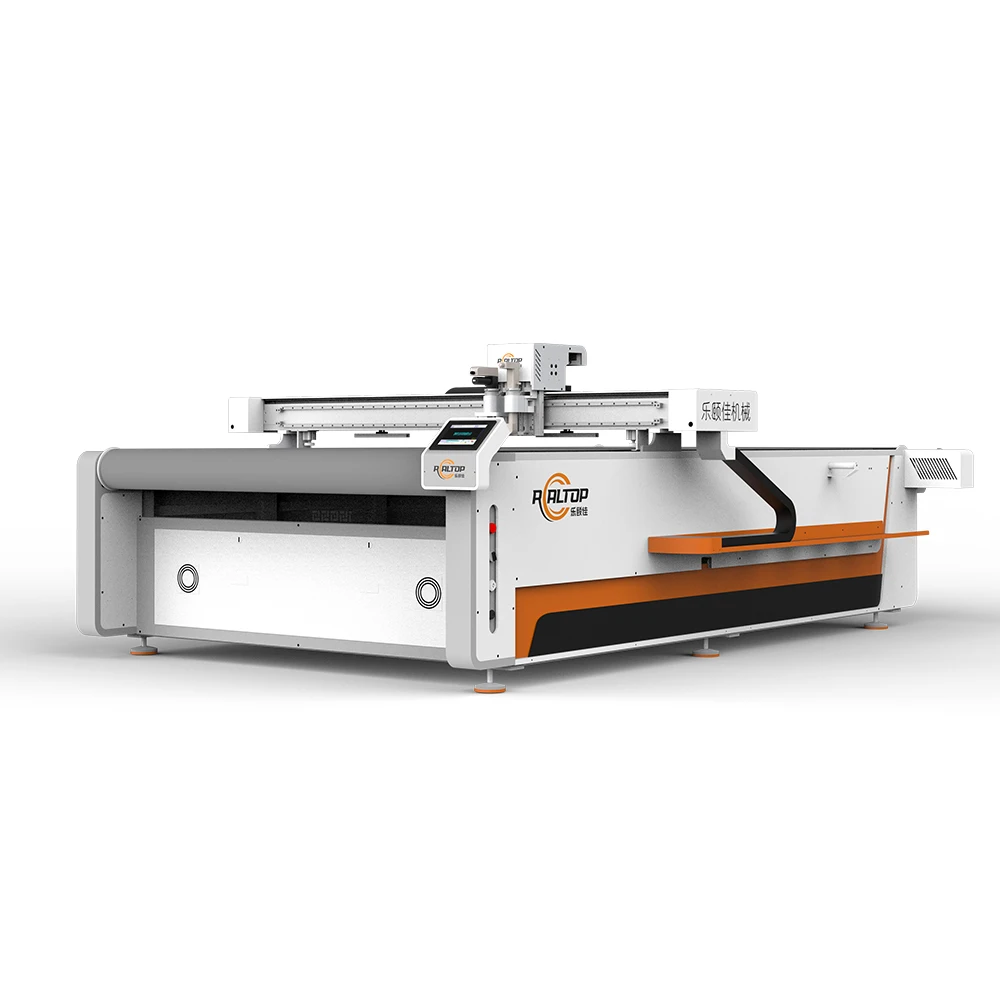
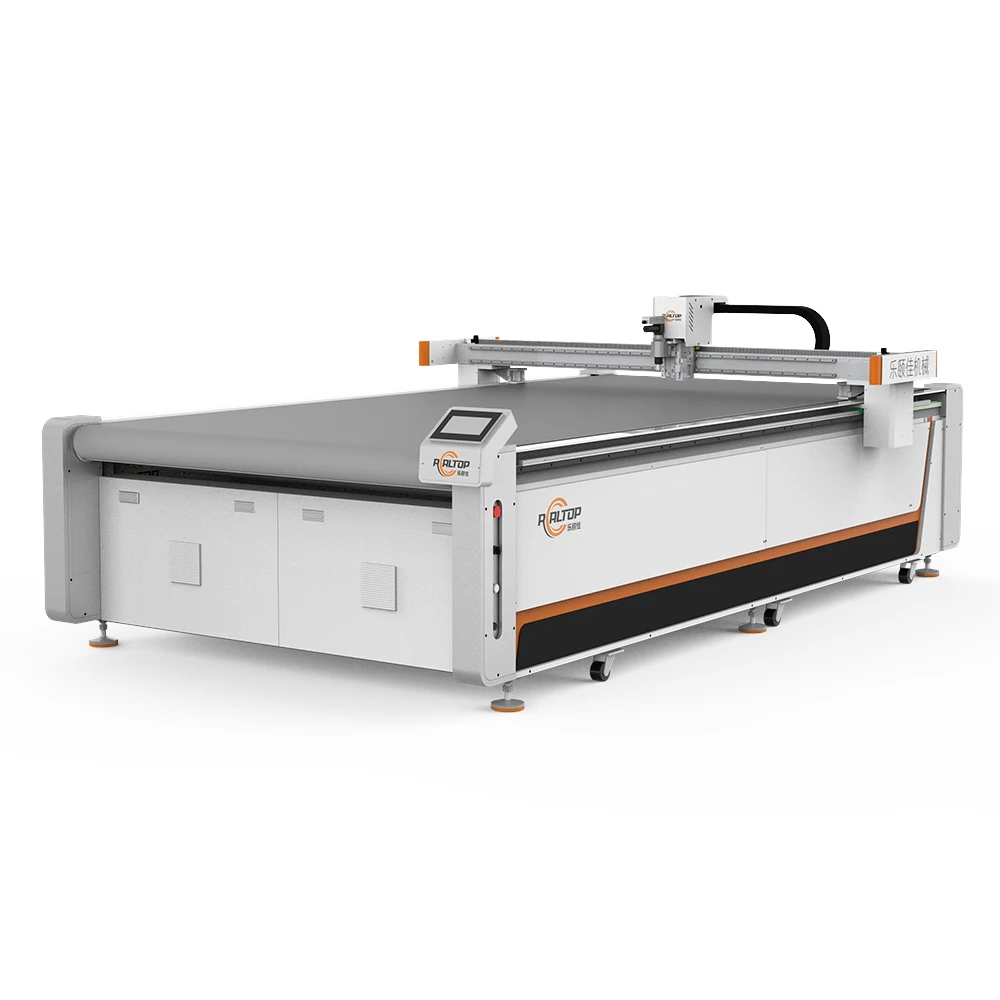
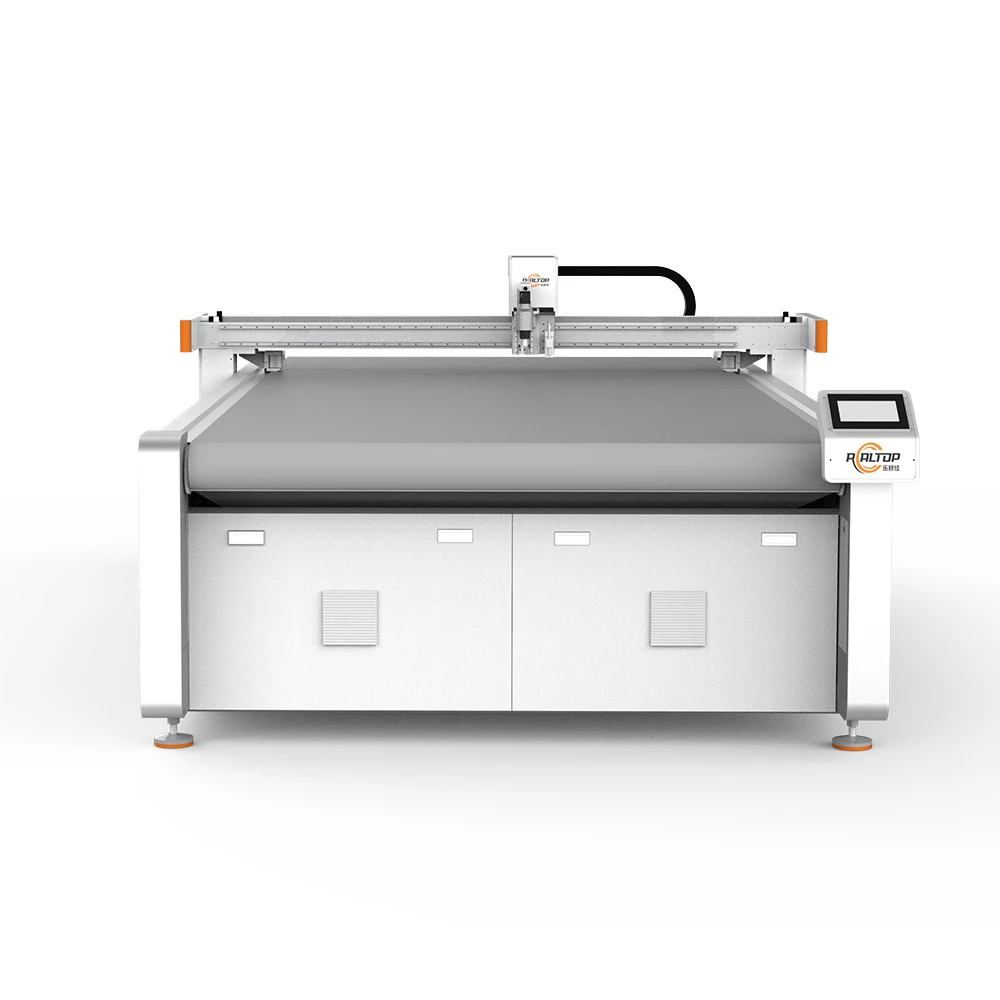
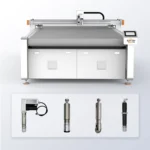
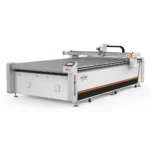
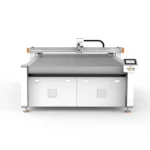
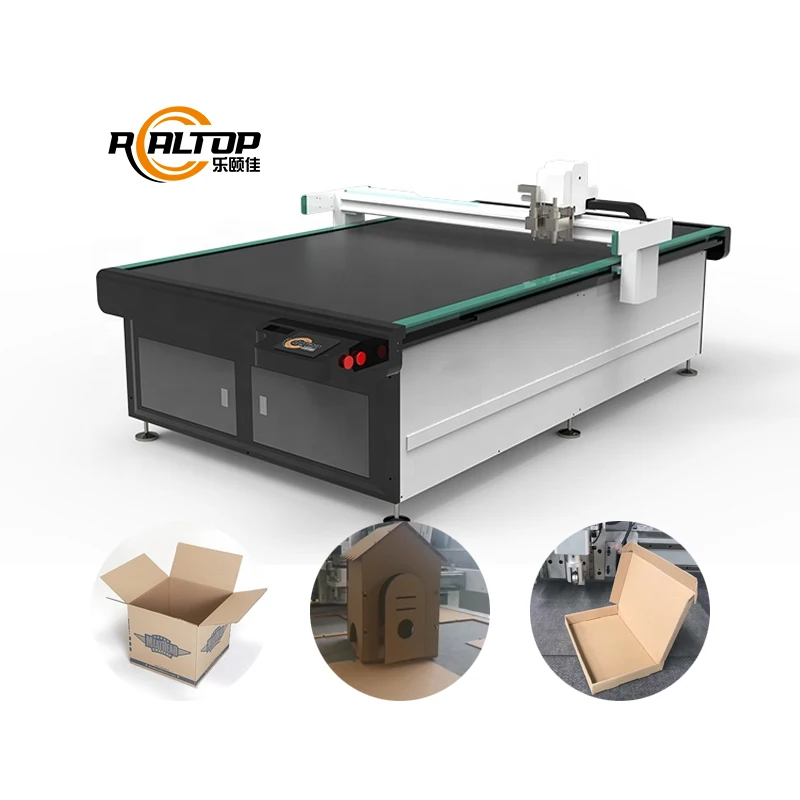
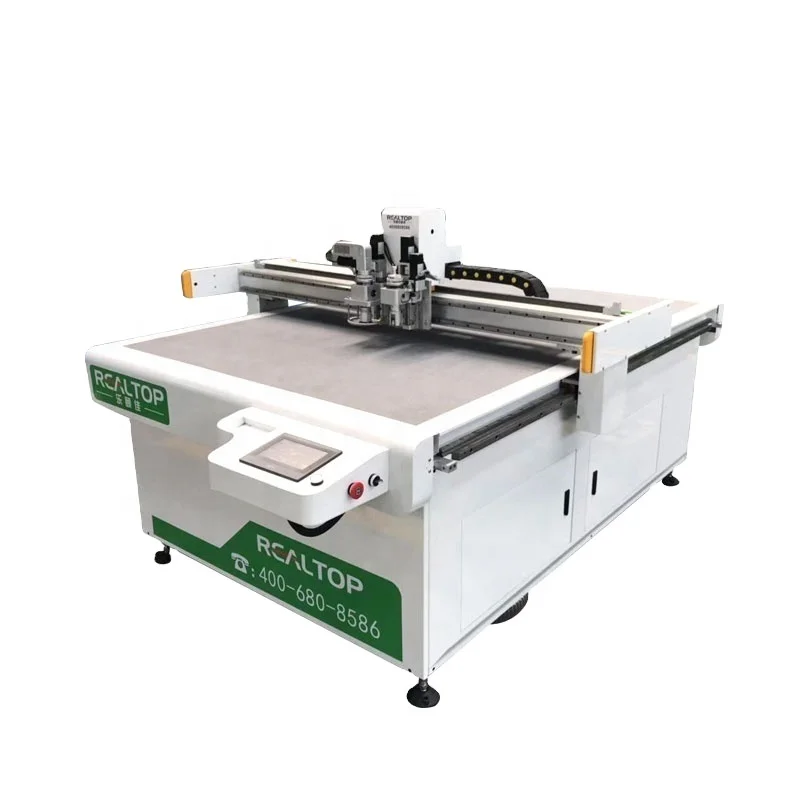
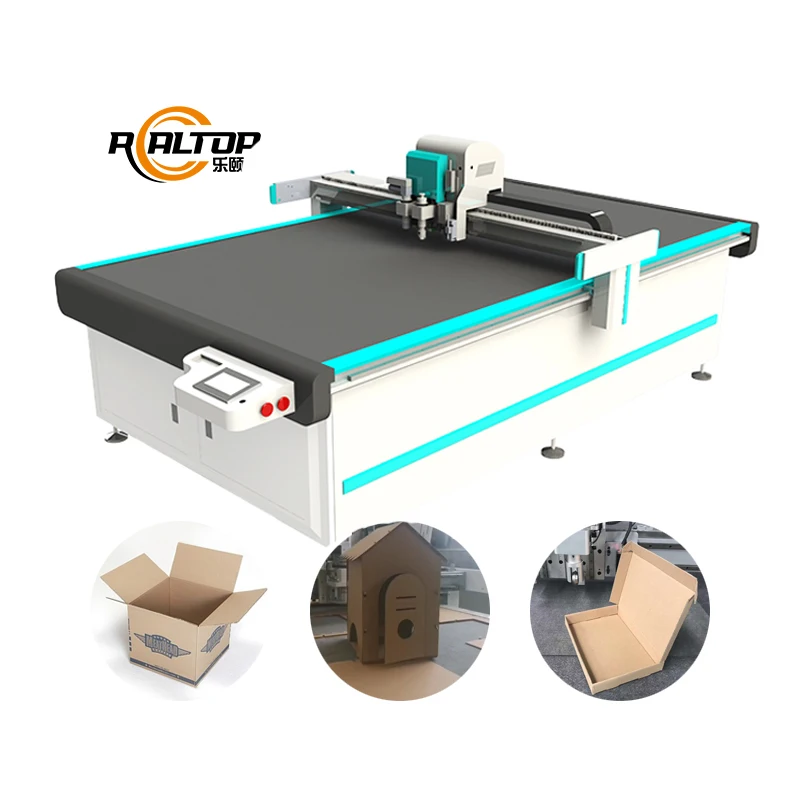
Precision-ground frame and motion assembly — the 1625 platform is engineered with a heavy-duty frame and aluminum bellows vacuum table, designed to hold flexible materials flat without localized lift during high-speed oscillating knife passes.
Technical Specifications
| Parameter | Value |
|---|---|
| Model | 1625 |
| Product Type | CNC Oscillating Knife Cutting Machine |
| Working Area | 1600 × 2500 mm |
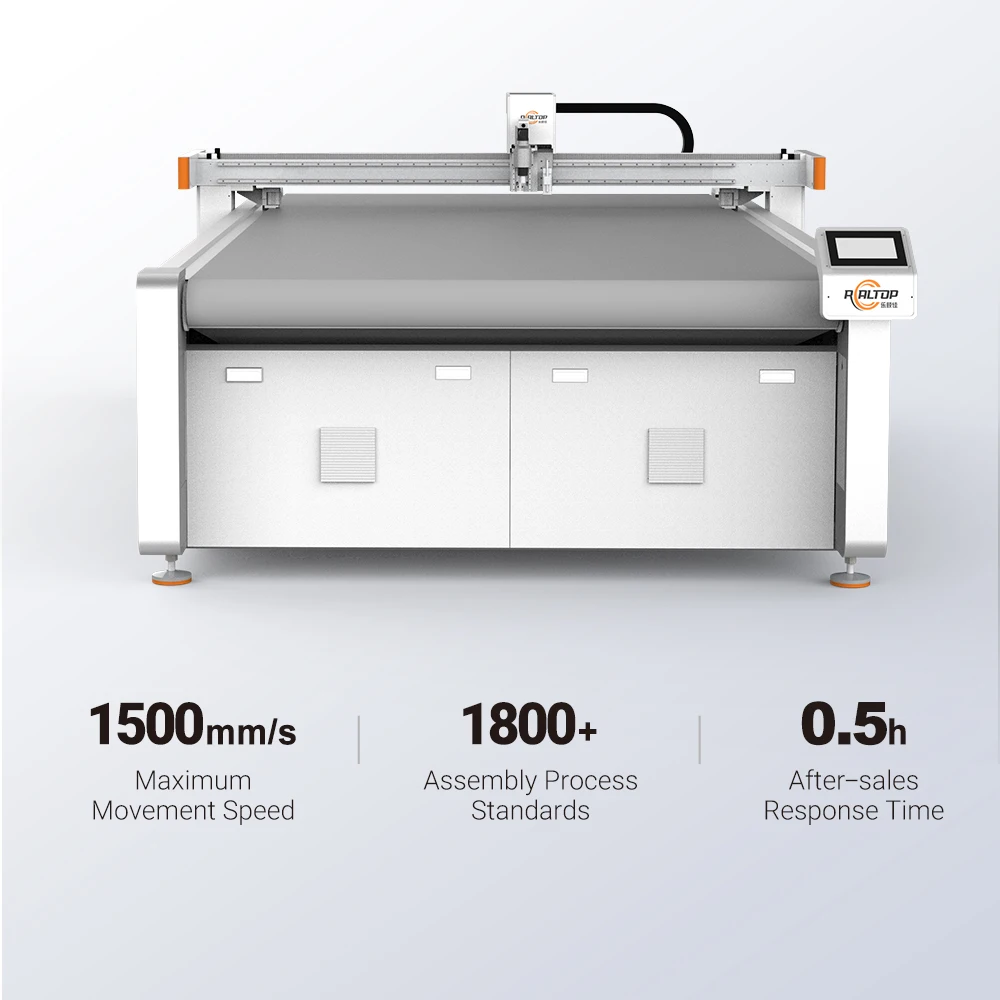
| Cutting Speed | 0–2000 mm/s |
| Cutting Thickness | ≤ 30 mm (basis not stated in source — confirm material and layer count) |
| Cutting Accuracy | ±0.1 mm |
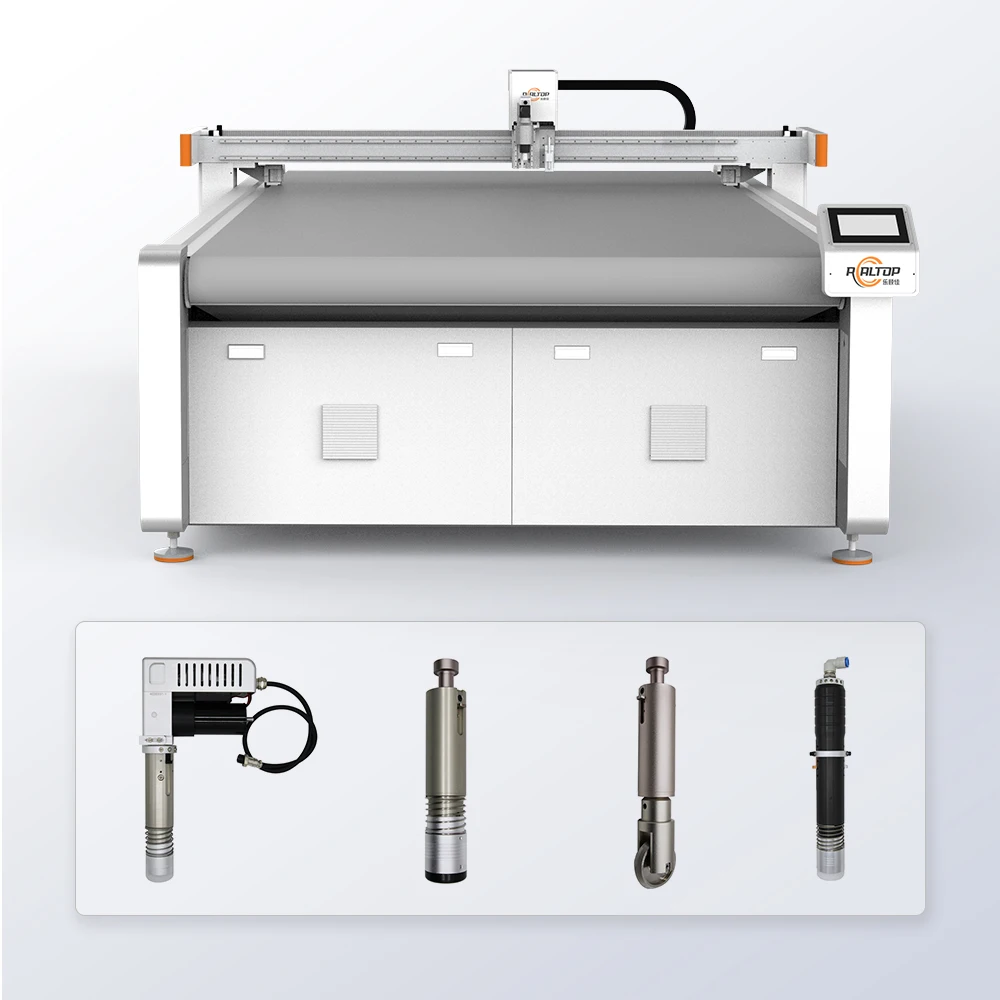
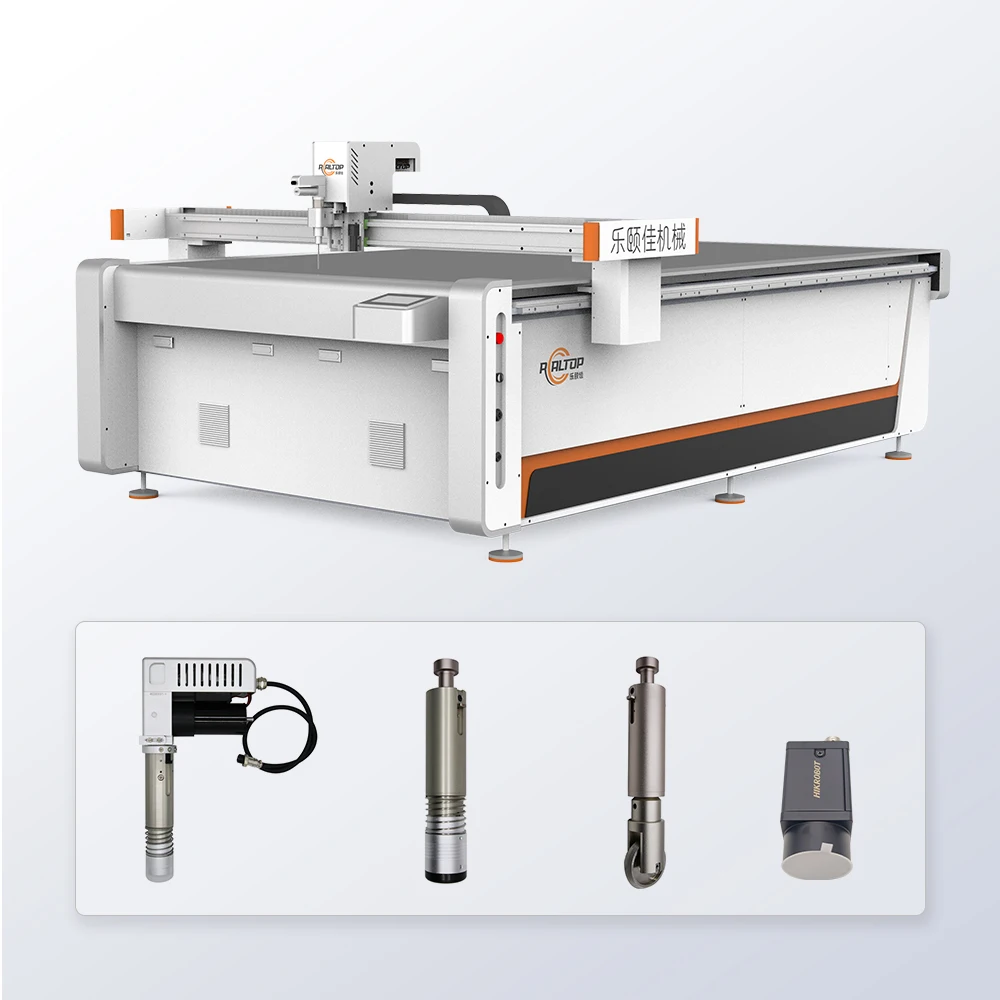
| Available Tool Heads | Oscillating knife, Driven rotary knife, Creasing wheel, Kiss cutting tool, Pneumatic knife, Milling tool, V-groove knife |
| Vacuum Pump | 9 kW |
| Vacuum Table | Aluminum bellows vacuum table |
| Control System | PLC control panel |
| Servo Motors | Panasonic, Delta, or Dorna options |
| Voltage Options | 110V, 220V, 380V |
| Profile Formats | PLT, DXF, AI, PDF |
| Safety Devices | Infrared sensor device, emergency stop |
| Machine Size | 3300 × 2100 × 1350 mm |
| Software Languages | English, Russian, Italian, Chinese (special languages customizable) |
| Compliance | CE |
Application Suitability
| Application | Material or Output |
|---|---|
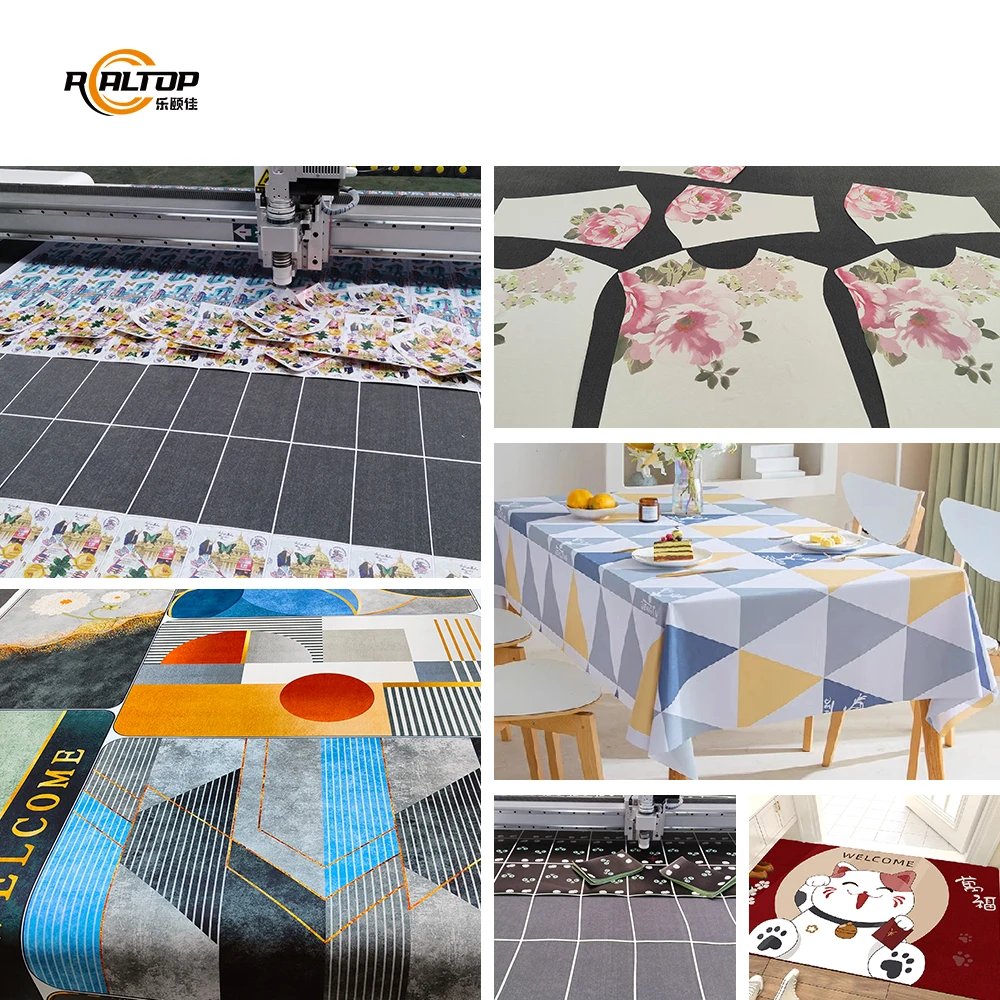
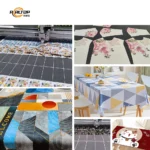
| Apparel manufacturing | Suits, knitwear, lace, complex multi-layer fabrics with nesting for yield |
| Automotive interiors | Seat fabrics, carpets, PVC mats requiring burr-free edges |
| Home textiles | Sofa fabrics, curtains, rugs on flexible roll or sheet stock |
| Composite processing | Carbon fiber prepreg, aramid without delamination or thermal damage |
Why Material Thickness Claims Fail on the Shop Floor
A CNC knife cutting machine manufacturer quoting a flat "≤ 30 mm" cutting depth without specifying the material leaves the buyer exposed. Cutting capacity depends on tool head selection, material density, and layer count — not a single number on a spec sheet.
I once watched a line go down because the oscillating knife frequency was set for standard cotton, but the actual stock was a multi-layer composite coating. The edges delaminated and frayed within the first hour. Two days on the floor adjusting blade angle and frequency taught me that real capacity is only proven on the buyer’s own roll [NEED_CITE: material-specific cutting parameters for composite textiles]. Without a sample cut report tied to your exact material, any thickness figure is a starting assumption, not a guarantee.
Tool Head Selection Determines Edge Quality
The 1625 offers seven interchangeable tool heads, and choosing the wrong one is the most common cause of rejected output. An oscillating knife handles dense woven fabric and foam cleanly, while a driven rotary knife suits continuous cuts on thin knits without fraying. A pneumatic knife tackles thicker, more abrasive stock where blade deflection would otherwise produce tapered edges. A CNC knife cutting machine manufacturer that ships a single default head without asking about your material is building a machine for the showroom, not your production floor.
Vacuum Zoning and Table Flatness
Flexible materials like lycra, thin leather, or prepreg carbon fiber lift off the table the moment the knife exits a cut if vacuum hold-down is uneven. The aluminum bellows vacuum table on this platform provides consistent sealing across the 1600 × 2500 mm work area, and zoning can be configured so small nested parts stay pinned rather than drifting into the blade path on the next pass. Flatness is precision-ground into the table surface — a warped table means inconsistent depth, and on a kiss-cut tool that means cutting through the backing liner [NEED_CITE: vacuum table flatness tolerances for digital cutting systems].
Reading the Specs That Matter
The 9 kW vacuum pump is sized to maintain suction across the full aluminum bellows table area even when cutting porous fabrics that leak air at the cut line. Servo motor options — Panasonic, Delta, or Dorna — determine long-term positional repeatability; at ±0.1 mm cutting accuracy, the servo response time directly affects corner fidelity on tight garment patterns. The PLC control panel supports multiple software languages and accepts PLT, DXF, AI, and PDF profiles, which avoids the common bottleneck of file format conversion at the nesting stage. Cutting speed is rated at 0–2000 mm/s, but actual traverse speed depends on material resistance and the complexity of the cut path.
The Hidden Cost of an Unverified Configuration
When voltage and plug type are not confirmed before the crate leaves Jinan, the machine arrives and sits idle while an electrician sources a step-down transformer. When the control language defaults to one your operators cannot read, training stretches from a day into a week. When the vacuum zoning is not matched to your typical part size, small gasket or pattern pieces lift mid-cut and the entire nest is scrapped. These are not warranty issues — they are specification failures that happen before the machine is built [NEED_CITE: common export machinery installation delays due to electrical mismatch].
Why Source This Platform from Realtop
In-house design covers both knife and laser cutting technologies, so the cutting method is matched to your material rather than forcing one approach across every job. Tool head and table configuration are specified per material type and production volume before the order is finalized. CCD camera positioning is available for printed contour work on branded textiles and signage. Software compatibility — including your existing nesting workflow and file formats — is confirmed before production begins. Sample cutting on your own material is standard practice, producing a cutting report you can review before committing to the build.
Documentation & Verification
- Machine specification sheet listing confirmed tool heads and vacuum zoning layout
- Electrical schematic with voltage and plug type matched to your facility
- Sample cutting report produced on your actual fabric or composite material
- Factory test record documenting accuracy and speed verification before crating
- Software licence and file format compatibility note for your nesting workflow
- Spare parts list with part numbers for blades, belts, and vacuum seals
Installation, Commissioning & Support
- Foundation must support 3300 × 2100 × 1350 mm footprint with level tolerance for the precision-ground frame
- Dedicated circuit required matching confirmed voltage (110V, 220V, or 380V) and the 9 kW vacuum pump draw
- Machine ships partially assembled; table and gantry require on-site alignment and belt tensioning
- First-run commissioning includes tool head calibration and vacuum zone balancing on your material
- Operator training covers PLC panel navigation in your chosen software language and file import workflow
- Spare blade inventory and vacuum seal kit included for initial maintenance cycles
Before You Request a Quote
Send us your material type, maximum thickness, sheet or roll dimensions, and the daily volume you need to sustain. Tell us your facility voltage and frequency, the language your operators will use at the control panel, and whether your current nesting software exports PLT, DXF, AI, or PDF. If your material is a composite or coated fabric, ship a sample roll so we can run a test cut and return a cutting report with tool head and parameter recommendations.
Frequently Asked Questions
Q: How is cutting thickness verified — does ≤30mm apply to single layer or multi-layer?
A: The ≤30 mm figure depends entirely on material density and whether you are cutting single or multi-layer stock. We verify actual capacity by running a sample cut on your specific material and document the result in a cutting report before the machine is built.
Q: Which tool head is correct for my material, and how is that confirmed?
A: Tool head selection is based on your material type, thickness, and edge quality requirement. We test multiple head options on your sample material during the pre-order cutting report stage, so the configuration is locked before production begins.
Q: How are voltage, plug type, and control language confirmed before shipment?
A: We collect your facility voltage, frequency, and plug standard during the inquiry stage and document it in the electrical schematic. Software language is confirmed in writing, and the PLC panel is configured before the factory test.
Q: Can you run a sample cut on my material and share the results?
A: Yes. Send a sample of your actual production material and we return a cutting report documenting tool head used, cutting speed, edge quality, and any parameter adjustments needed for clean output at your required volume.
Q: What OEM customization is available on this platform?
A: The 1625 frame size, vacuum table zoning, and tool head configuration can all be adjusted. Software interface language and specific file format compatibility are customizable. All modifications are documented in the specification sheet before production.
You may also like

商品评价
Clear filtersThere are no reviews yet.