




-
 Courier delivery
-
 DHL Courier delivery
-
 Warranty 1 year
-
 Free 30-Day returns

In-house knife and laser engineering — every tool head and vacuum zone is specified against your foam density and daily volume, not just the working area.
Technical Specifications
| Parameter | Value |
|---|---|
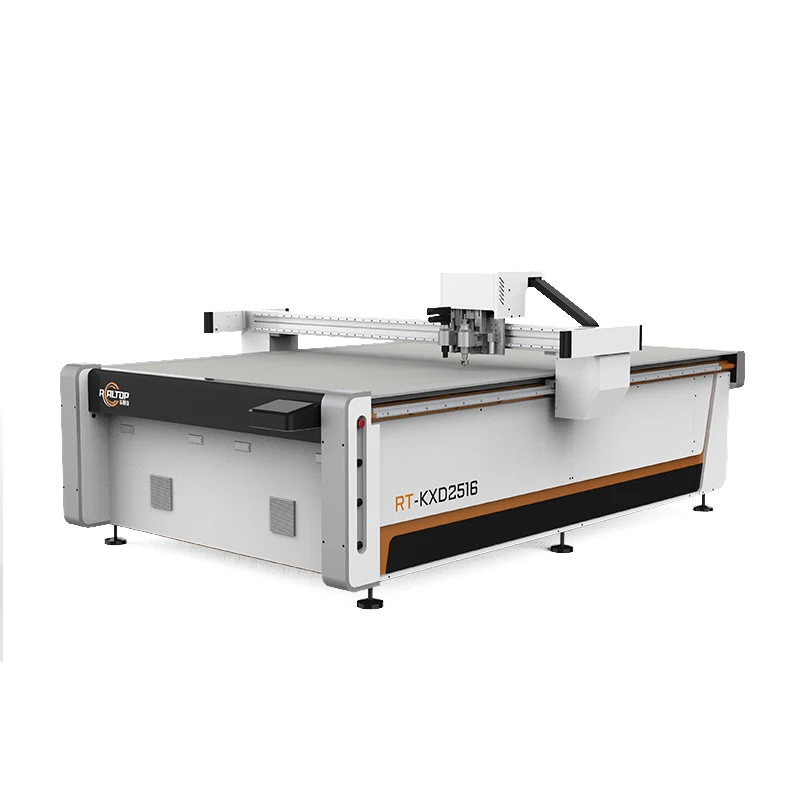
| Model | RT-D2516/RT-S2516 |
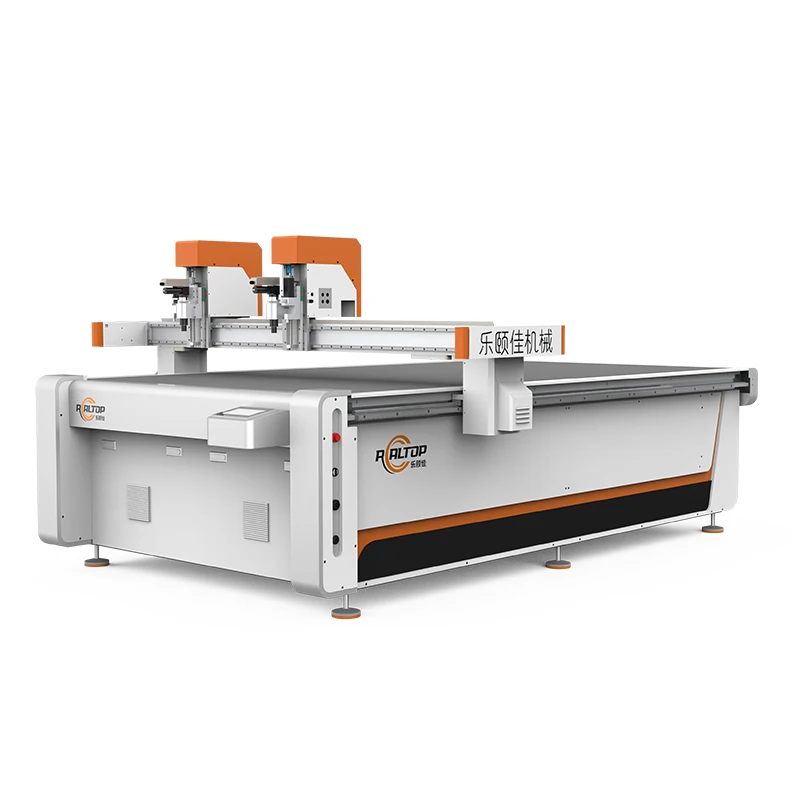
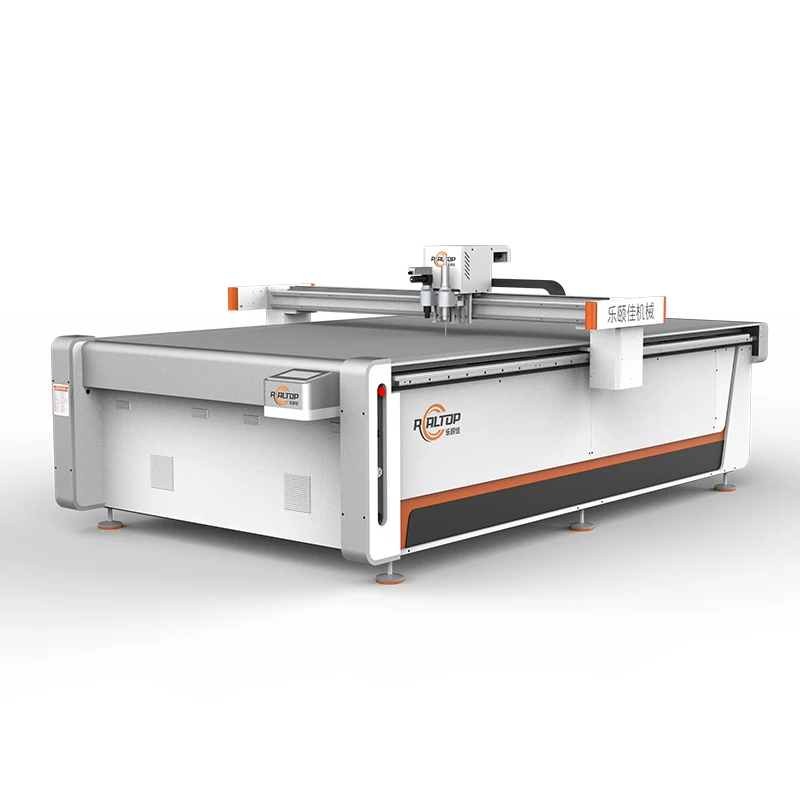
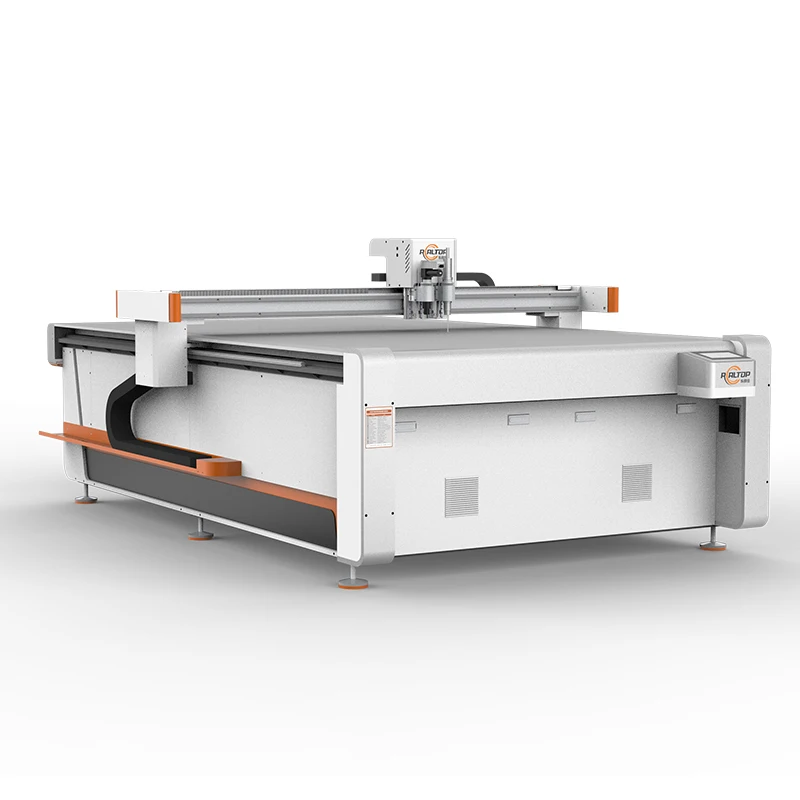
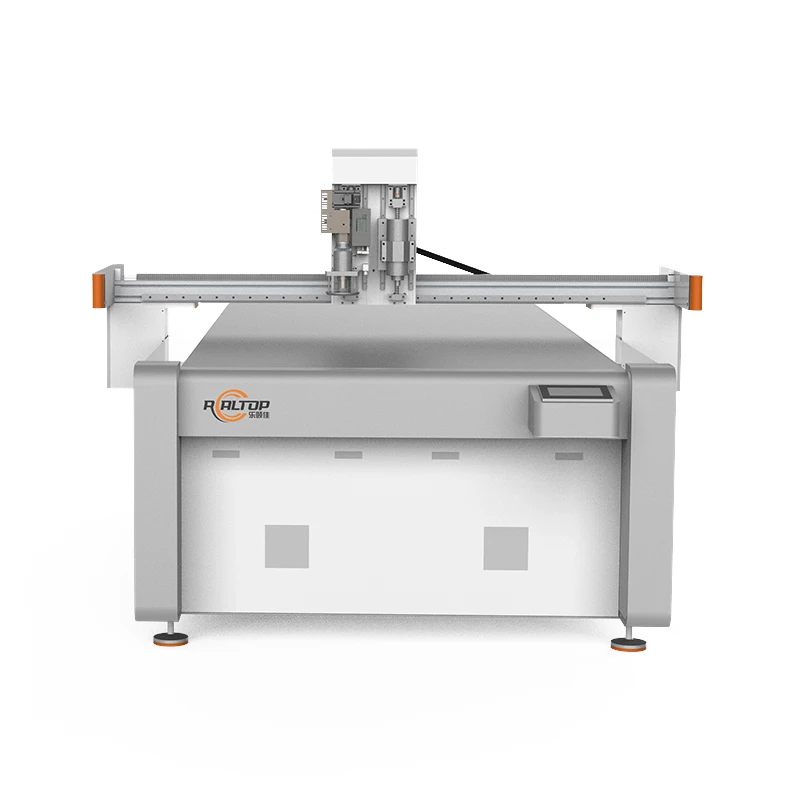
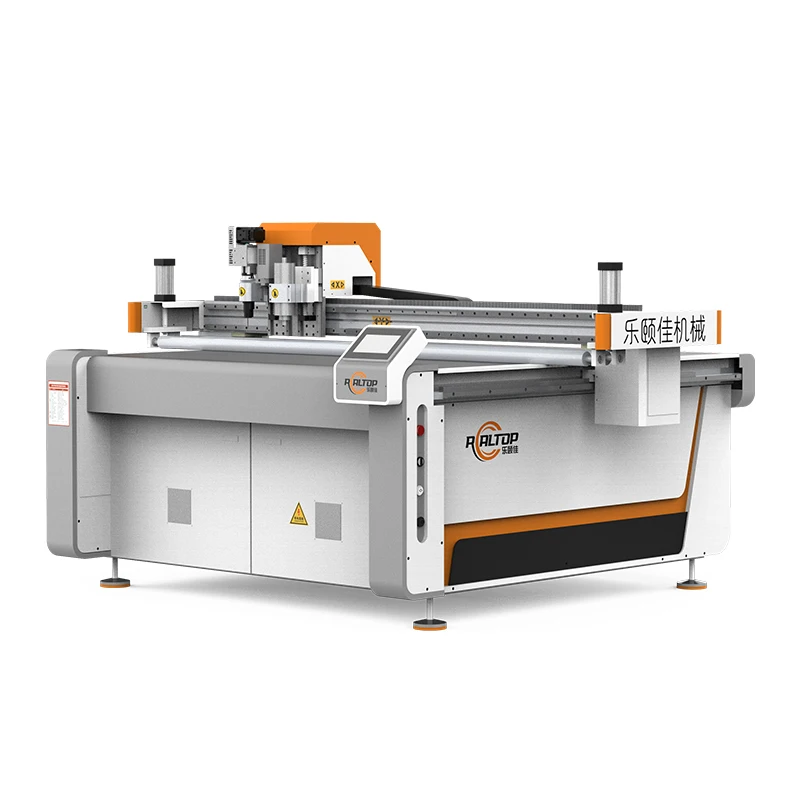
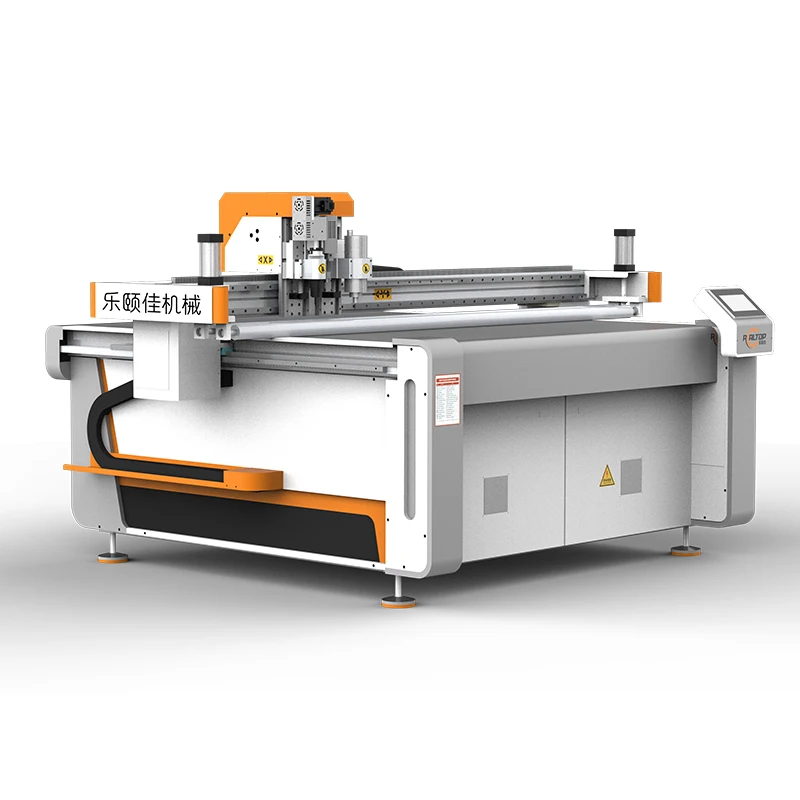
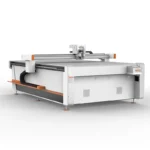
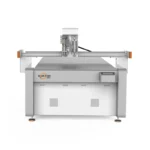
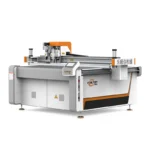
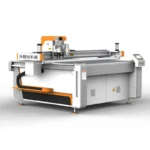
| Product Type | CNC Oscillating Knife Cutting Machine |
| Working Area | 1600×2500mm |
| Overall Dimensions (L×W×H) | 3450×2300×1250mm |
| Rated Power | 9kW |
| Voltage | 380V±10% (50Hz/60Hz confirmation required) |
| Working Table | Flat vacuum adsorption table, magnesium-aluminum alloy with PVDF coating |
| Multifunctional Tool Head | Swiss imported oscillating knife; options: pneumatic knife, drag knife, circular knife, V-cutting knife, creasing wheel, punching |
| Cutting Thickness Range | 20mm–80mm (material dependent — confirm per foam type) |
| Translational Velocity | 800–1200mm/s |
| Repeated Accuracy | ≤0.1mm |
| Transmission System | Digital servo motor, linear guide, synchronous belt, imported ball screw |
| Servo Motor Brand | Delta (optional Panasonic) |
| Vacuum Pump | 7.5kW, aviation aluminum shell with silencer sponge |
| Linear Rail | Taiwan Hiwin |
| Positioning System Options | CCD camera mark-point, panoramic camera recognition, projection positioning |
| Instruction System | HP-GL compatible format |
| Safety Devices | Infrared blocking, beam anti-collision sensors, emergency stop with in-situ resume |
| Control Language Options | English, Russian, Italian, Chinese; special languages customizable |
Application Suitability
| Application | Material or Output |
|---|---|
| Packaging insert fabrication | EPE foam, EVA, XPE, PU sponge for protective cushioning |
| Automotive interior component cutting | Multi-layer flexible composites, carpet and floor mat stock |
| Gasket and seal production | Rubber, PTFE, ETFE, composite sealing sheets |
| Signage and display component cutting | PVC foam board, corrugated cardboard, sticker film |
| Footwear and leather goods prep | Leather, textile, fabric, shoe material stacks |
Why Working Area Alone Is the Wrong Starting Point for a CNC Oscillating Knife Cutting Machine Manufacturer
The cutting method and tool head must be matched to your foam density and sheet format before the order is confirmed.
I once watched a production manager feed high-density EPE through a machine that had been specified purely by bed size. The drag knife that shipped as standard couldn’t generate enough downforce, and every edge came out crushed rather than sheared. An entire batch of packaging inserts was scrapped before anyone traced the problem back to the tool head selection [NEED_CITE: tool head selection criteria for high-density foam materials]. That is the gap a responsible CNC oscillating knife cutting machine manufacturer closes before metal is cut.
Design Authority Over Knife and Laser Platforms
Because the engineering team builds both oscillating knife systems and laser cutting machines under one roof, the decision of which technology fits your material is made on cutting physics rather than catalogue availability. For low-density sponge and PU, an oscillating knife delivers a clean sheared edge without the melt bead that a CO2 laser would leave. For printed contour work on thin PVC foam board, the same CNC oscillating knife cutting machine manufacturer can shift the conversation to laser sealing if edge fusion is preferable to blade contact.
Frame Construction and Machining Center Finishing
The bed starts as thick-walled seamless steel, welded into a single structure and then put through high-temperature tempering to relieve internal stress. Every mounting surface is finished on a CNC machining center, which is how the ≤0.1mm repeated accuracy is held across the full 1600×2500mm travel. When the gantry moves at 800–1200mm/s across a 2500mm stroke, that base flatness is what keeps the tool tip at the same Z-depth at every point on the table [NEED_CITE: CNC machining center finishing standards for machine tool frames].
Reading the Specs That Actually Determine Cut Quality
The 7.5kW vacuum pump specification matters more than peak cutting speed when you are holding small gasket blanks or narrow foam strips. The aviation aluminum pump housing with built-in silencer sponge reduces noise, but the real function is maintaining suction across the magnesium-aluminum PVDF-coated table when the cutting path opens a slot and breaks local vacuum. The Delta servo motors, riding on Taiwan Hiwin linear rails with imported ball screws, translate that held-down material into the ≤0.1mm repeated accuracy figure. Translational velocity of 800–1200mm/s is achievable only when the vacuum zoning keeps the workpiece immobile; without adequate hold-down, speed produces chatter marks rather than throughput. The Swiss imported oscillating knife handles full cutting, half cutting and cursor location in one head, and the modular mount accepts a pneumatic knife or V-cutting tool when the job shifts from foam profiling to creasing corrugated board.
The Cost of Skipping the Material Test
When the tool head is chosen from a default list rather than against a physical sample, the failure shows up as ragged edges on dense foam, incomplete cuts through multi-layer composites, or vacuum lift on small parts that ruins registration. These are not warranty claims — they are configuration errors that surface only under production conditions. A sample cut on your actual material at your specified thickness is the only reliable check before the machine enters build [NEED_CITE: material testing protocols for CNC cutting equipment procurement].
Why Buyers Source This Build Here
The design team covers both knife and laser cutting, so you receive a cutting method recommendation based on material behavior, not catalogue convenience. Every tool head and vacuum zone is specified against your foam type, thickness and part geometry before the order goes to production. Voltage, plug type, control language and software file format are confirmed in writing so nothing arrives mismatched to your workshop. The factory test record includes a cut sample on your material, not a generic demo sheet. CCD positioning options — mark-point, panoramic or projection — are selected to match your printed contour workflow, not quoted as a blanket feature.
Documentation & Verification
- Machine specification sheet listing confirmed tool head and vacuum zone configuration for your foam type
- Electrical schematic with voltage and frequency matched to your facility supply before build
- Sample cutting report on your material at production thickness, shipped with the machine
- Software licence note and HP-GL file format compatibility confirmation for your nesting workflow
- Spare parts list identifying oscillating knife blades, vacuum seals and servo-specific wear items
- CE declaration documents where applicable to your import market requirements
Installation, Commissioning & Support
- 9kW rated power requires a dedicated 380V circuit with confirmed frequency at your facility
- 3450×2300×1250mm overall dimensions need verified doorway and overhead clearance for placement
- Flat vacuum table leveling checked on-site against your floor tolerance before first power-on
- Servo motor parameters and vacuum pump pressure calibrated to your specific foam density during commissioning
- Tool head changeover and blade replacement procedure covered in operator training session
- CCD camera or projection positioning system aligned and tested with your printed material on-site
What to Include in Your Inquiry
Send the foam type, density and sheet dimensions you run most often, along with your typical daily volume and the part geometry you need to hold. Confirm your facility voltage, frequency and the control language your operators require. If your workflow depends on printed contour tracking, describe your mark type and spacing so the positioning system is specified correctly from the start.
Frequently Asked Questions
Q: Can you cut a sample on my foam or composite before I place the order?
A: Yes. Send your material at the thickness you plan to run, and the factory produces a sample cutting report showing edge quality, dimensional accuracy and cycle time on your specific stock. This report ships with the machine if you proceed, giving your operators a verified baseline for production settings.
Q: What OEM customization is available for frame, working area and configuration?
A: The in-house design team adjusts working area dimensions, tool head selection, vacuum zoning layout, voltage and control language to match your market requirements. Frame modifications are engineered and documented before production begins, not adapted on the assembly floor.
Q: How is build quality verified before the machine leaves the factory?
A: The steel frame is high-temperature tempered and finished on a CNC machining center for flatness. Motion components including Hiwin linear rails and imported ball screws are tested under load. A full factory test record with your material sample is completed before crating.
Q: What documentation ships with the machine?
A: You receive the specification sheet, electrical schematic with confirmed voltage, tool head and table configuration list, sample cutting report, operation and maintenance manual, software licence note, spare parts list and CE declaration where applicable to your market.
Q: How does CCD positioning handle printed contour recognition at production speed?
A: The system is specified as mark-point CCD, panoramic camera or projection positioning depending on your print format and mark spacing. Each option is tested on your printed material during the factory run to confirm tracking accuracy at the translational velocity your volume requires.
You may also like

商品评价
Clear filtersThere are no reviews yet.