



-
 Courier delivery
-
 DHL Courier delivery
-
 Warranty 1 year
-
 Free 30-Day returns

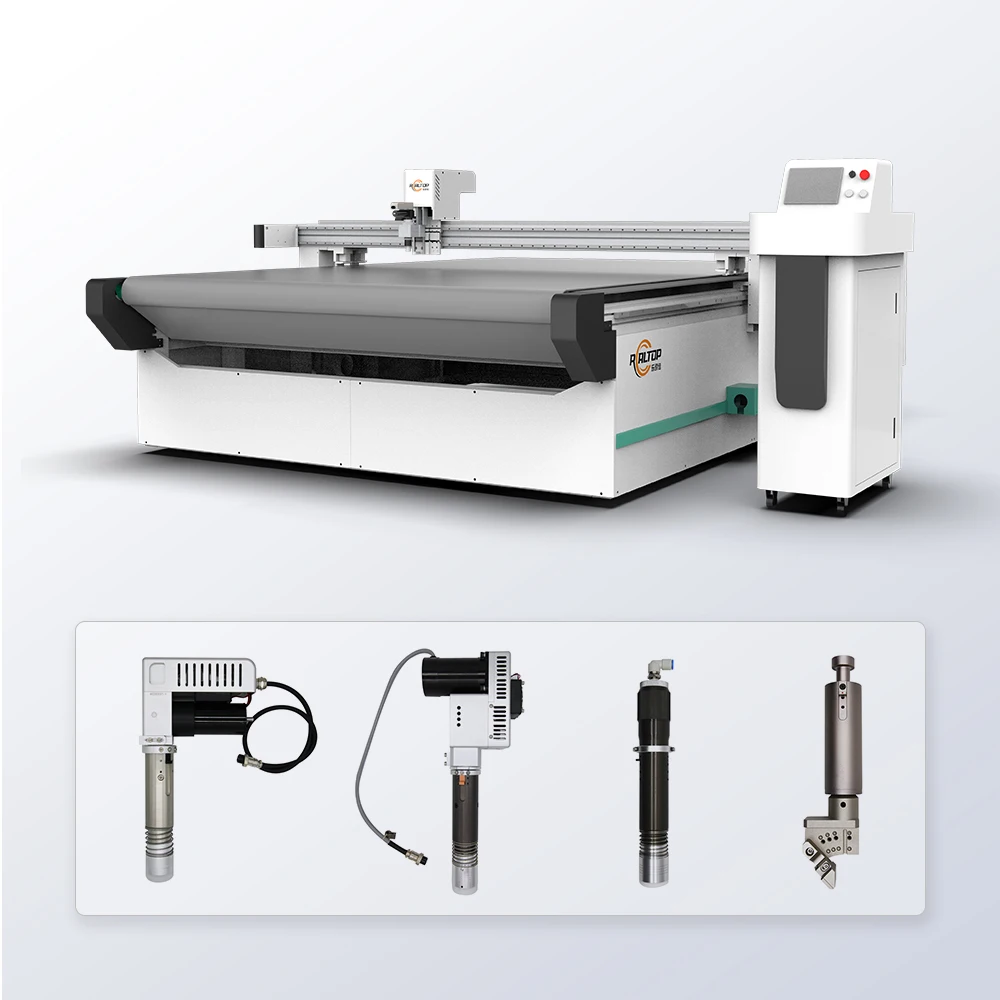
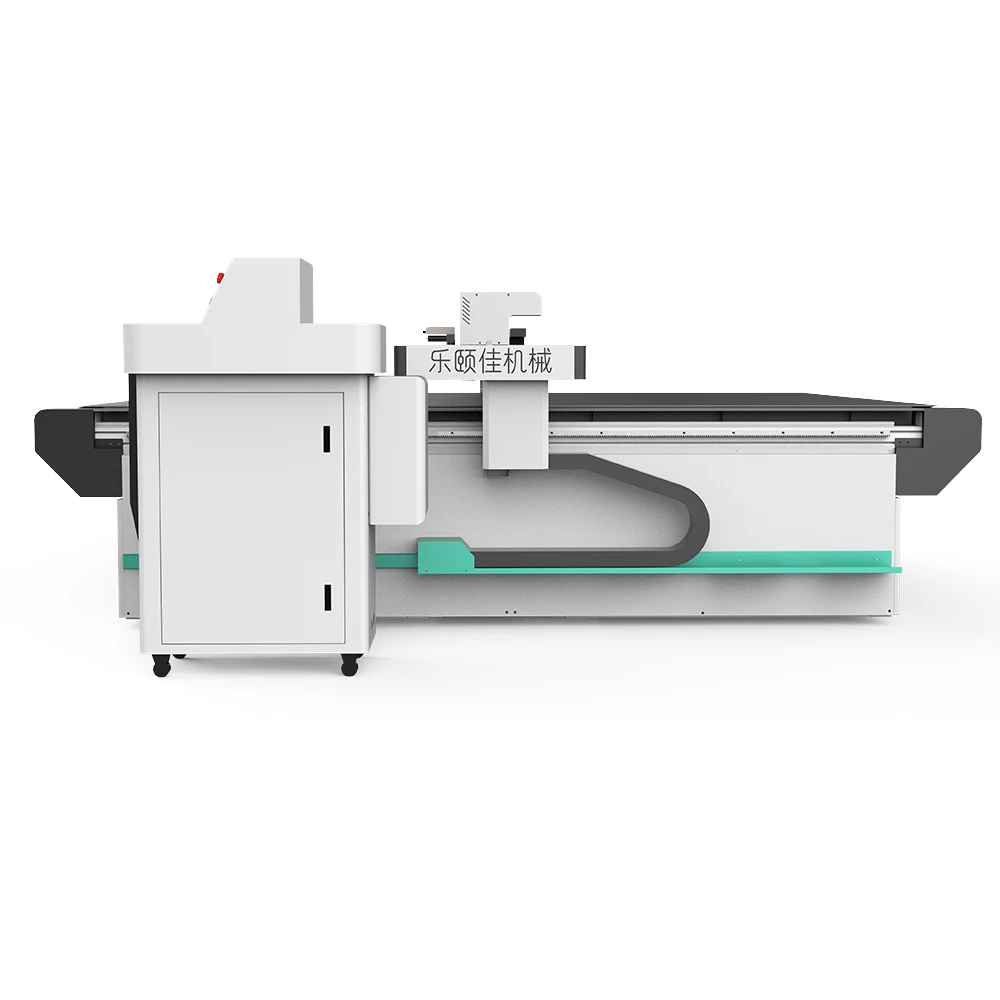
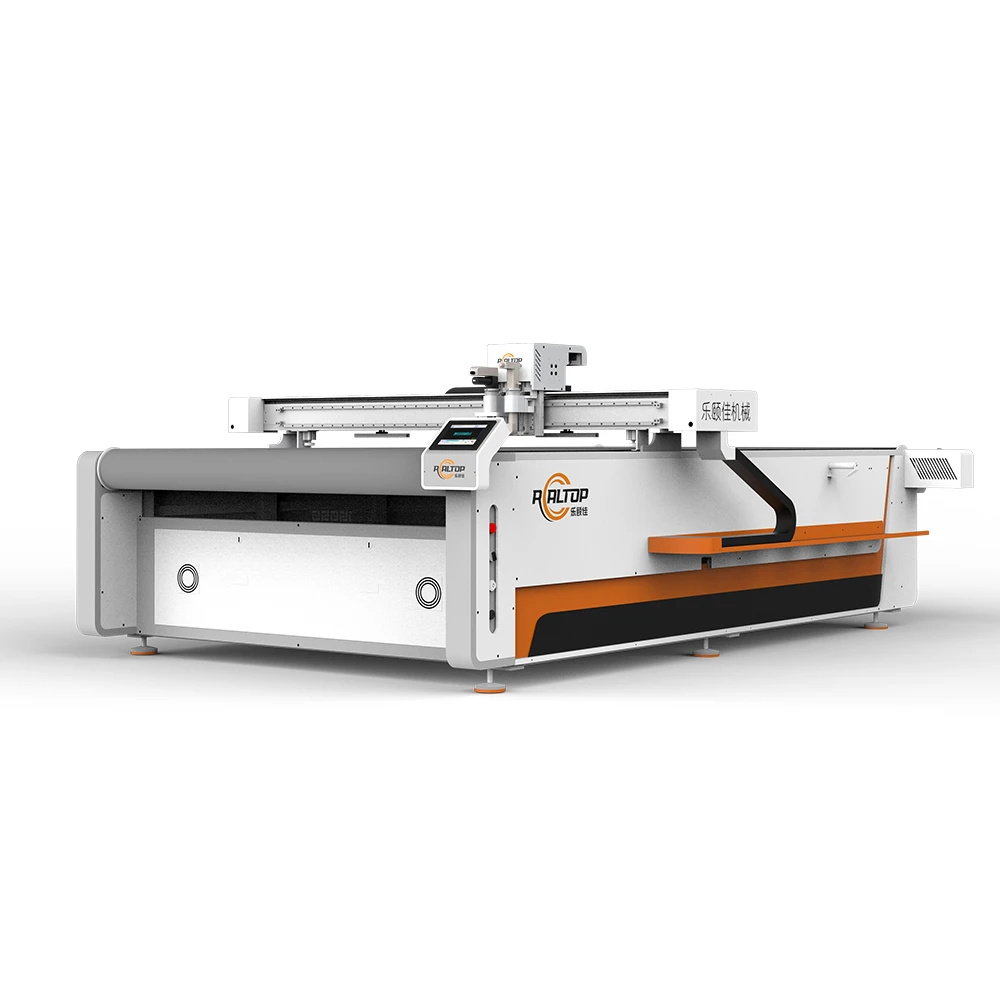
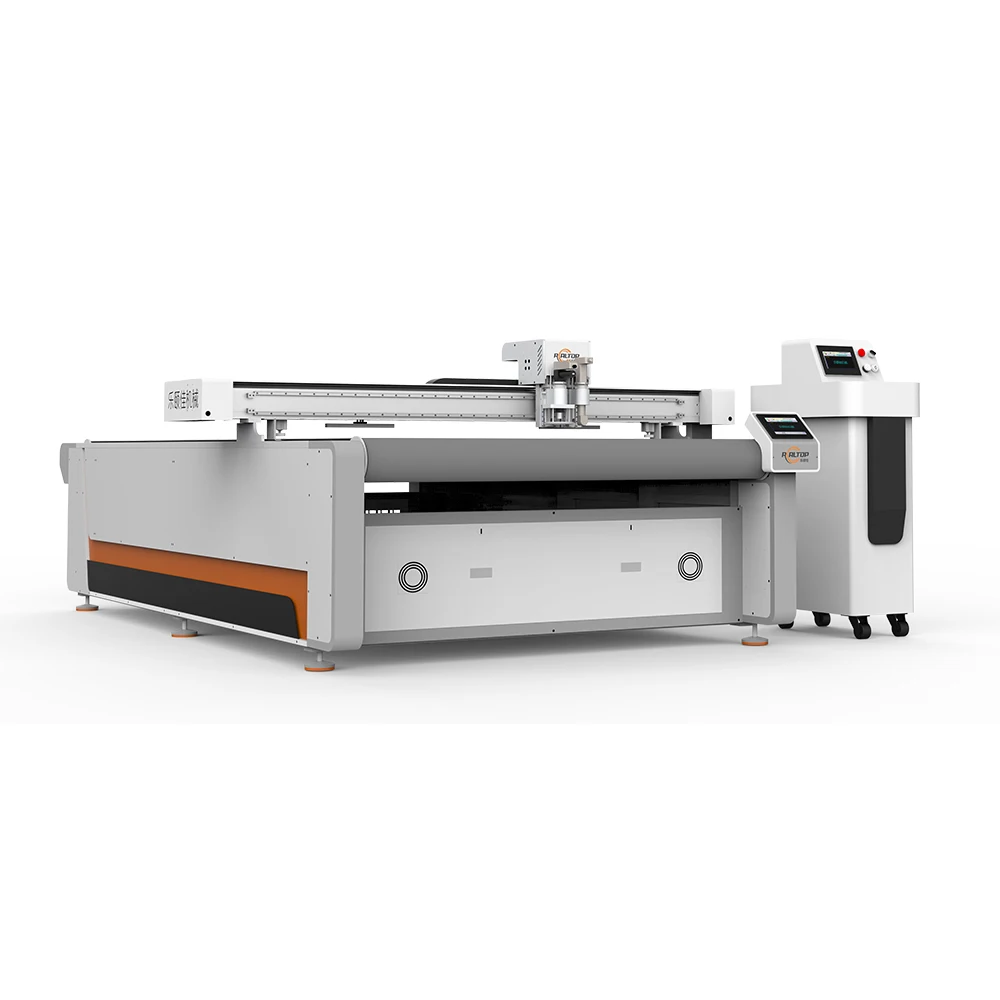
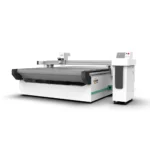
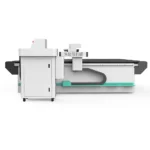
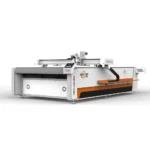
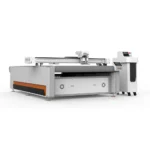
Fabric-Matched Configuration — Every cloth CNC cutting machine from Realtop is specified with tool head and vacuum zoning matched to the buyer’s actual ply count and weave, not just the working area dimension.
Technical Specifications
| Parameter | Value |
|---|---|
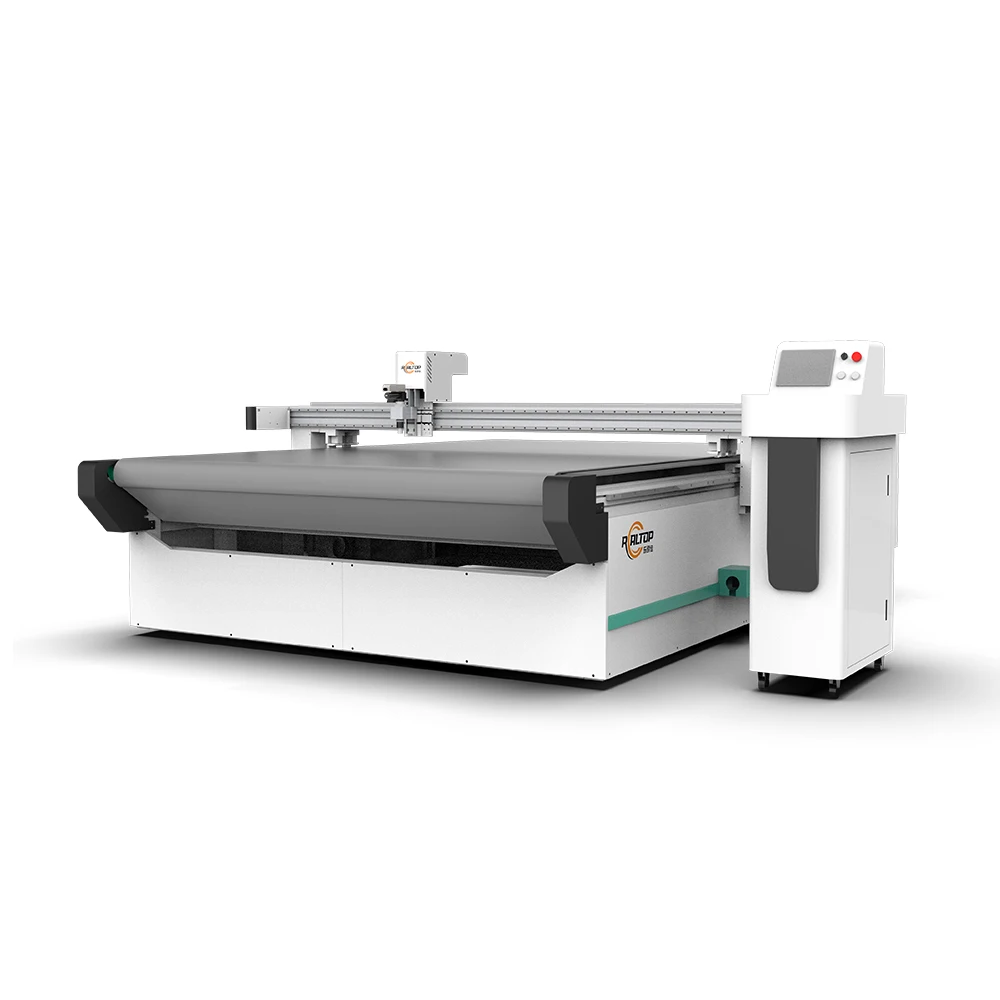
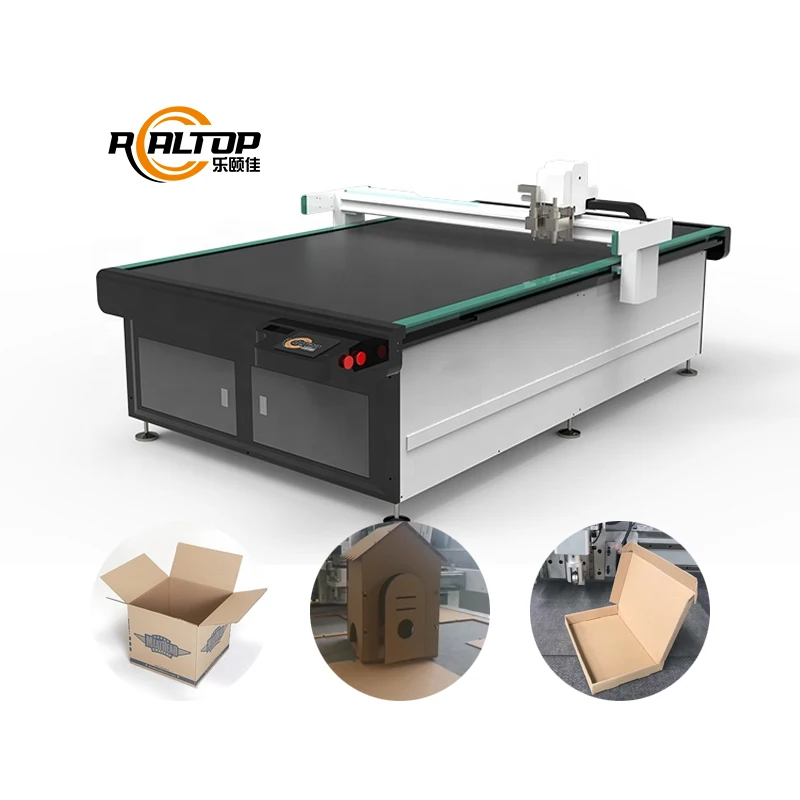
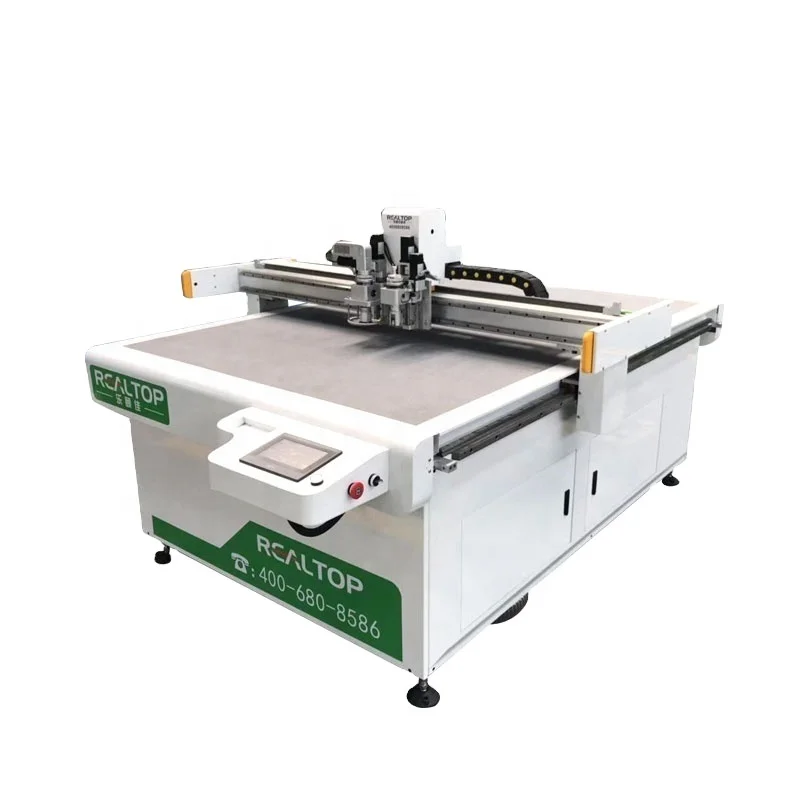
| Product Type | CNC Oscillating Knife Cutting Machine |
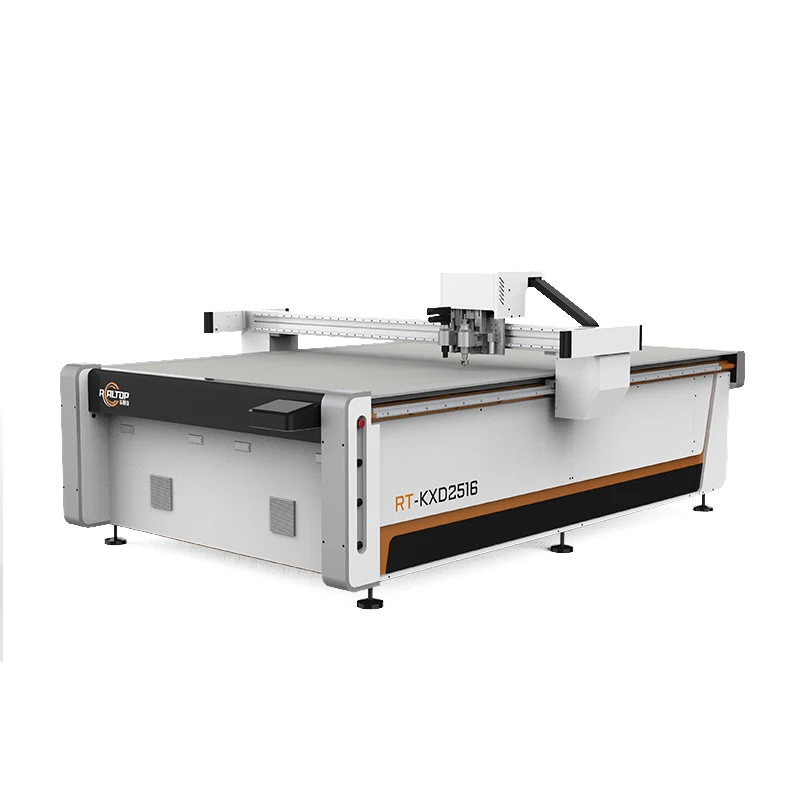
| Working Area | 1600 × 2500 mm |
| Machine Size | 3450 × 2300 × 1250 mm |
| Rated Power | 9 kW |
| Translational Velocity | 800–2000 mm/s |
| Cutting Speed | 200–800 mm/s (basis not stated in source — confirm block format / material / thickness) |
| Repeated Accuracy | ≤ 0.1 mm |
| Voltage | 380V ± 10% |
| Instruction System | HP-GL compatible format |
| Fixed Model | Flat working table / Auto feeding table |
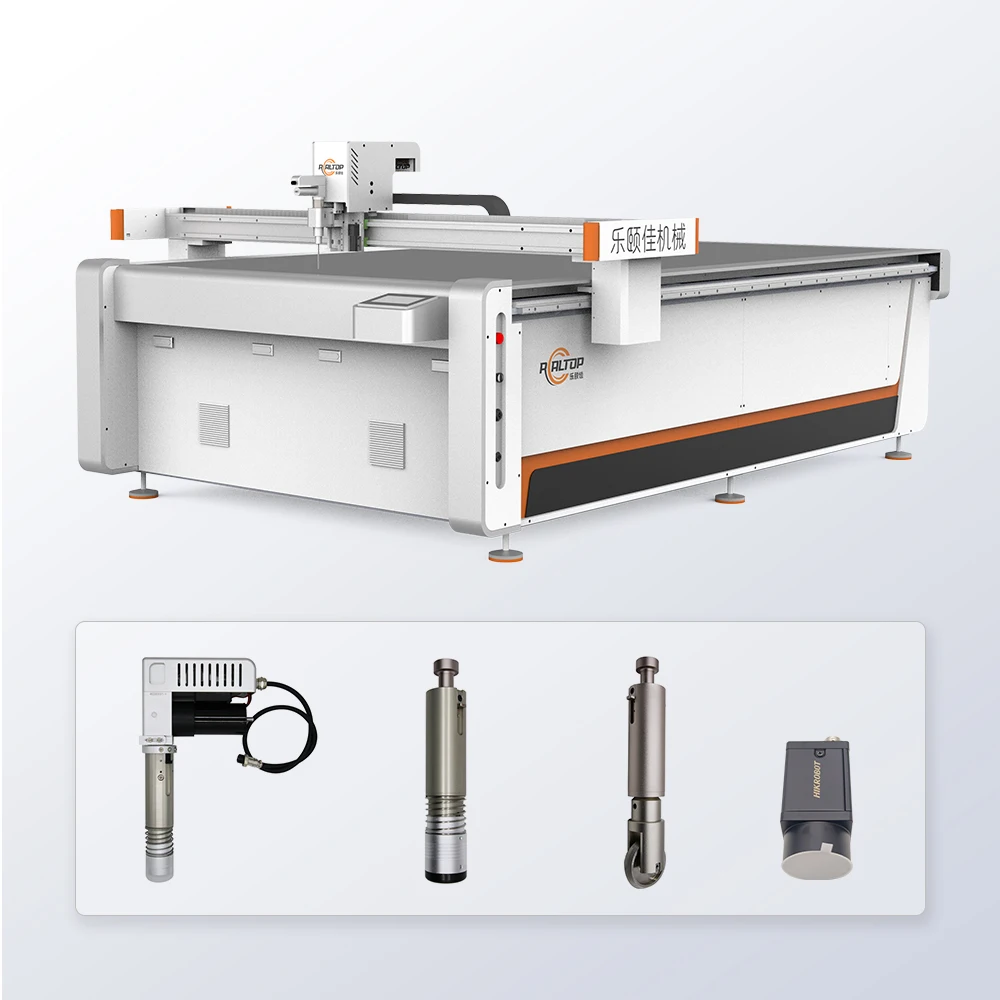
| Tool Head Options | Oscillating knife, pneumatic knife, high-power vibrating knife, circular knife, V cutting knife, drag knife, creasing wheel, dotted line knife, punching, brush |
| Visual Positioning Options | Small CCD camera mark point positioning, panoramic camera recognition positioning, projection positioning |
| Servo Motor Options | Delta (Taiwan) or Panasonic (Japan) |
| Vacuum Table | Magnesium-aluminum alloy, fluorocarbon PVDF powder spraying, anodic oxidation, hard oxidation |
| Vacuum Pump | 7.5 kW, integrated aviation aluminum shell with built-in silencer sponge |
| Safety Devices | Infrared induction blocking, anti-collision beam sensors, emergency stop |
| Control Panel | Touch screen, multiple language supported |
| Software | Auto typesetting software (PLT, DXF, AI formats) |
| Conveyor Belt | Germany imported |
| Linear Guide | Taiwan Hiwin rail |
| Frame Construction | Thick-walled seamless steel structure, high-temperature tempering, CNC machining center finished |
| Language Options | English, Russian, Italian, Chinese (special languages customizable) |
| Cutting Thickness | ≤ 100 mm (varies with material; basis not stated in source — confirm material and density) |
| Certification | CE (declaration where applicable) |
Application Suitability
| Application | Material or Output |
|---|---|
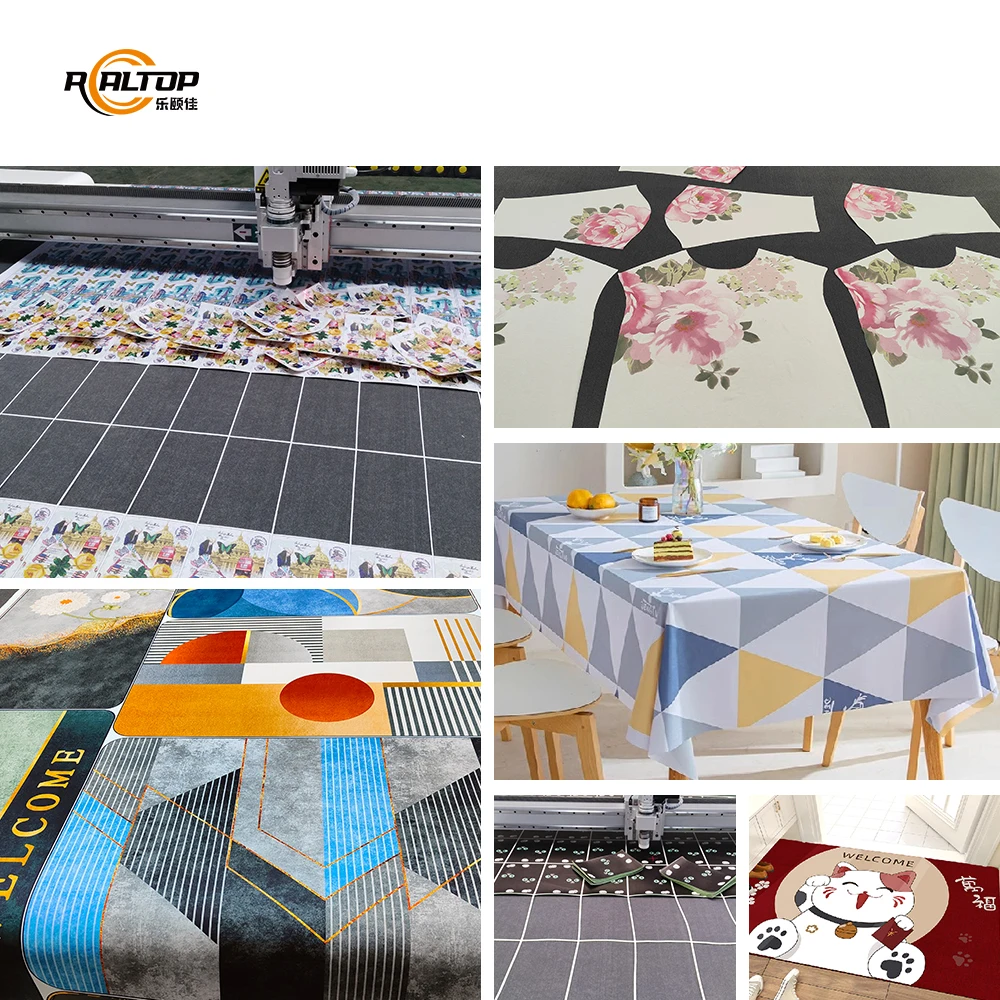
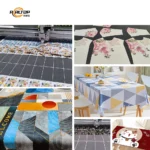
| Garment and footwear manufacturing | Single-ply and multi-ply woven fabric, knit textile, lining, shoe upper material |
| Automotive interior production | Seat fabric, headliner textile, carpet, trunk lining |
| Soft furnishing and upholstery | Sofa fabric, curtain material, non-woven interlining, cushion textile |
| Luggage and bag production | Coated fabric, synthetic leather, nylon, canvas |
| Technical textile processing | Non-woven fabric, sponge, composite insulation layers |
Why Cutting Thickness Claims Vary So Wildly Across Quotes
Maximum cutting depth means nothing without the material density and ply count attached to it.
When sourcing a cloth CNC cutting machine, buyers often see thickness figures stated as a single number. A machine might slice through 100 mm of loose sponge easily but stall on a 30 mm stack of dense coated canvas. I have seen workshops discover this mismatch after the machine arrives, standing in front of a table that cannot hold their actual lay height. That discovery usually happens when the first test cut produces fused edges on the bottom plies or the knife deflects mid-stroke [NEED_CITE: material density effect on oscillating knife penetration]. The honest approach is to send fabric samples and lay plans before any specification is locked in.
How Tool Head Selection Drives Edge Quality
The knife head is where the cutting method meets the material. For single-ply woven fabrics used in garment cutting, a high-frequency oscillating knife delivers a clean edge without fraying. Multi-ply stacks, particularly those mixing knit and woven layers, often require a pneumatic knife with downward pressure to prevent the bottom layers from shifting. Circular knives work well for continuous straight-line cuts on roll goods, while V-groove knives handle creasing and partial-depth scoring on packaging interliners. The cloth CNC cutting machine manufacturer should recommend the head based on your fabric weight and weave, not default to a single oscillating head for every textile order.
Vacuum Zoning and Small Pattern Pieces
Garment pattern pieces range from full jacket backs down to collar stays and pocket flaps. A vacuum table with only two or three large zones cannot hold small pieces flat when the knife lifts at the end of a cut. The magnesium-aluminum alloy table on this platform uses zoned adsorption, allowing the operator to activate only the sections under active cutting. This prevents the vacuum from pulling air through empty areas and losing suction on the pieces that matter [NEED_CITE: vacuum zone configuration for small textile parts]. The fluorocarbon PVDF powder-sprayed surface also resists adhesive buildup from fusible interlinings that accumulate on bare aluminum tables over months of use.
Reading the Specification Sheet for What It Actually Means
The 7.5 kW vacuum pump paired with the 9 kW rated machine power tells you the system can run cutting and adsorption simultaneously without tripping a standard 380V industrial circuit. The Taiwan Hiwin linear guide rails and digital servo motors — available in Delta or Panasonic configurations — govern how closely the knife follows tight curves on collar and cuff patterns. Repeated accuracy at ≤ 0.1 mm matters most when cutting nested marker layouts where a deviation on one piece cascades into misalignment on adjacent pieces. The auto typesetting software accepts PLT, DXF, and AI files, which covers most marker-making outputs from Gerber, Lectra, and Optitex systems, but file format compatibility should always be tested with your actual nesting files before shipment [NEED_CITE: nesting software file format interoperability]. The auto-feeding conveyor option, fitted with a Germany-imported belt, supports roll-to-sheet workflows where continuous fabric feeding eliminates manual lay-up between cuts.
The Cost of Skipping Material Verification Before Order
A buyer who specifies a cloth CNC cutting machine on working area alone risks two failures at installation. First, the tool head shipped may be the standard oscillating knife while the buyer’s material — say, a dense automotive headliner — actually needs the high-power vibrating knife to penetrate without deflection. Second, a flat table shipped without auto-feed means the operator manually unrolls and repositions fabric every cycle, turning what was quoted as a continuous cutting system into a batch process. I have stood in a factory where the material roll diameter exceeded the standard cradle, and the team spent a week fabricating a custom bracket before the machine could run. That delay is entirely preventable with a material spec conversation before the order is finalized.
What the Build Process Looks Like From the Inside
Realtop operates an in-house design team and core factory, which means frame welding, CNC machining of the table surface, and servo calibration all happen under one roof rather than being outsourced to separate subcontractors. The thick-walled seamless steel frame undergoes high-temperature tempering before final machining, reducing the risk of bed warping after months of vacuum load and cutting vibration. Tool head and table configurations are documented per order, so the machine leaving the factory matches the buyer’s material profile rather than a generic stock build. CCD camera positioning and panoramic vision options are integrated during assembly and tested with printed registration marks, not bolted on after the frame is finished. Voltage, plug type, and control language are confirmed against the destination market’s electrical standards before the control panel is wired [NEED_CITE: voltage and frequency standards by export market]. The assembly is completed at the factory with split-box adsorption platform support for container loading, so reassembly at the buyer’s site is a matter of reconnecting verified modules rather than aligning untested subassemblies.
Documentation & Verification
- Machine specification sheet listing tool head and vacuum zone configuration matched to your fabric type
- Electrical schematic with voltage, frequency, and plug type confirmed for your facility
- Sample cutting report on your own material, noting ply count, edge quality, and achieved cut speed
- Software licence with file format compatibility note covering your nesting output
- Factory test record documenting servo calibration and CCD mark recognition on printed textile
- Spare parts list identifying consumable blades, vacuum seals, and belt segments by part number
Installation, Commissioning & Support
- 3450 × 2300 mm footprint requires a level concrete floor with clearance for auto-feed roll loading on the infeed side
- 9 kW rated power plus 7.5 kW vacuum pump should run on a dedicated 380V three-phase circuit with proper earthing
- Split-box platform design allows container transport and on-site module reconnection without full table realignment
- First-run commissioning includes servo tuning, vacuum zone mapping, and CCD registration test on your printed fabric
- Operator training covers touch-screen language selection, tool head changeover, and nesting file import workflow
- Consumable blade inventory and vacuum seal replacements identified in the spare parts list shipped with the machine
What We Need to Quote Accurately
To match the correct tool head, table configuration, and feeding system to your production, share your fabric type, typical ply count, and maximum roll diameter. Confirm your facility voltage and frequency, preferred control panel language, and the nesting software you currently use. If your workflow involves printed contour cutting, send a sample of the printed registration mark so the CCD system can be tuned before dispatch.
Frequently Asked Questions
Q: How is cutting thickness verified for my specific fabric type and ply count?
A: We run sample cuts on your actual material before the order is finalized. The test records the maximum ply count, edge quality at each layer, and the cutting speed achieved. This report becomes the basis for selecting the tool head and confirming whether the standard oscillating knife or the high-power vibrating knife is the right fit for your production volume.
Q: Which tool head is recommended for woven versus knit versus coated textile?
A: Woven fabrics typically cut cleanly with a standard oscillating knife, while knit materials often benefit from a drag knife or circular knife to avoid stretching the edge. Coated textiles and synthetic leathers generally require a high-power vibrating knife to penetrate the coating without delaminating. The recommendation is confirmed during the sample cutting stage on your specific material.
Q: Can the CCD camera track printed registration marks at full production speed?
A: The CCD and panoramic vision systems are designed for contour recognition on printed and sublimated textiles. Tracking accuracy at production speed depends on mark contrast, size, and spacing. We test the camera with your actual printed fabric sample before shipment to confirm reliable mark detection across the full 1600 × 2500 mm working area.
Q: How is vacuum table zoning configured for small garment pattern pieces?
A: The magnesium-aluminum table is divided into independently controlled adsorption zones. The operator activates only the zones under active cutting, maintaining strong hold-down on small pieces like collars and pockets without losing vacuum pressure across empty table sections. Zone layout is confirmed during the configuration stage based on your typical marker layout.
Q: What voltage, plug type, and control language are confirmed before shipment?
A: Your facility voltage, frequency, and plug standard are verified against the machine’s 380V ± 10% electrical system before the control panel is wired. The touch-screen control language is set to your preference from the available options — English, Russian, Italian, Chinese, or a custom language agreed during the order process.
You may also like

商品评价
Clear filtersThere are no reviews yet.