



-
 Courier delivery
-
 DHL Courier delivery
-
 Warranty 1 year
-
 Free 30-Day returns

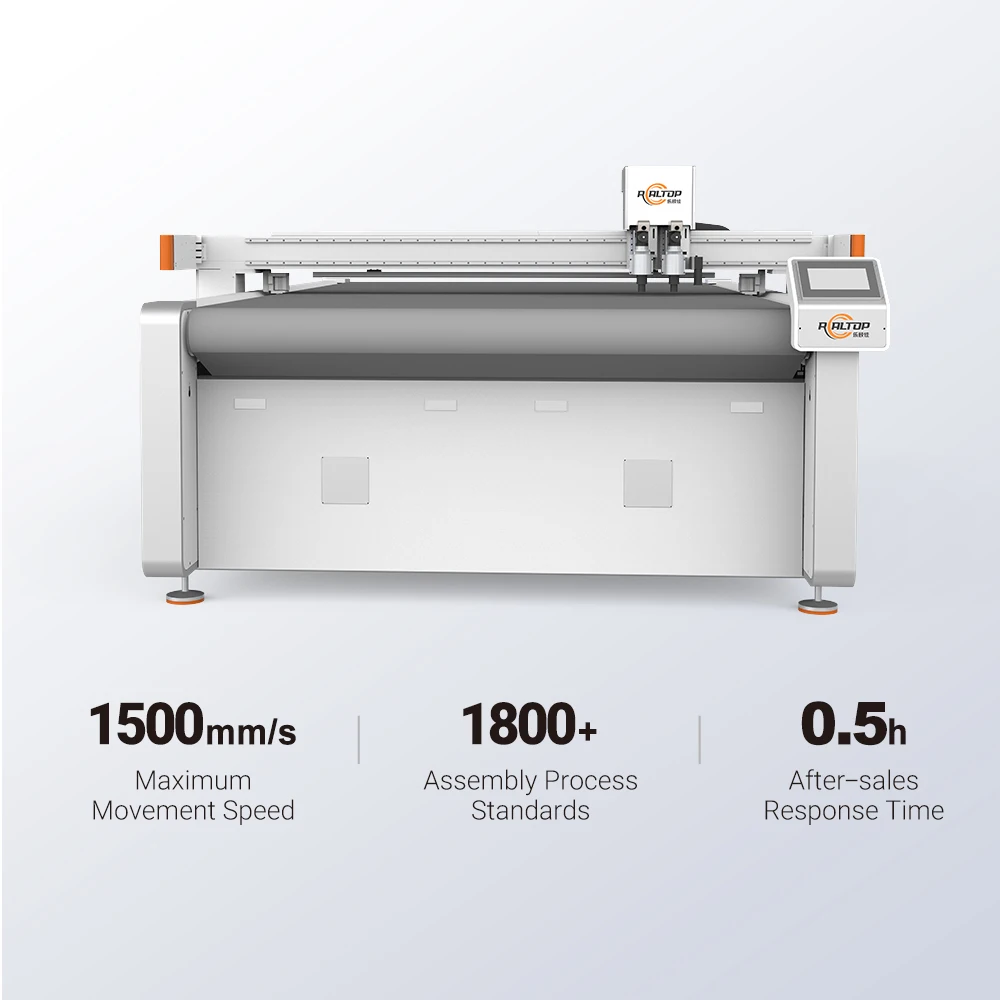
In-house tool head and table engineering — we match oscillating knife, creasing wheel and vacuum zoning to the buyer’s actual flute, greyboard or foam sample before the machine leaves our Jinan workshop.
Technical Specifications
| Parameter | Value |
|---|---|
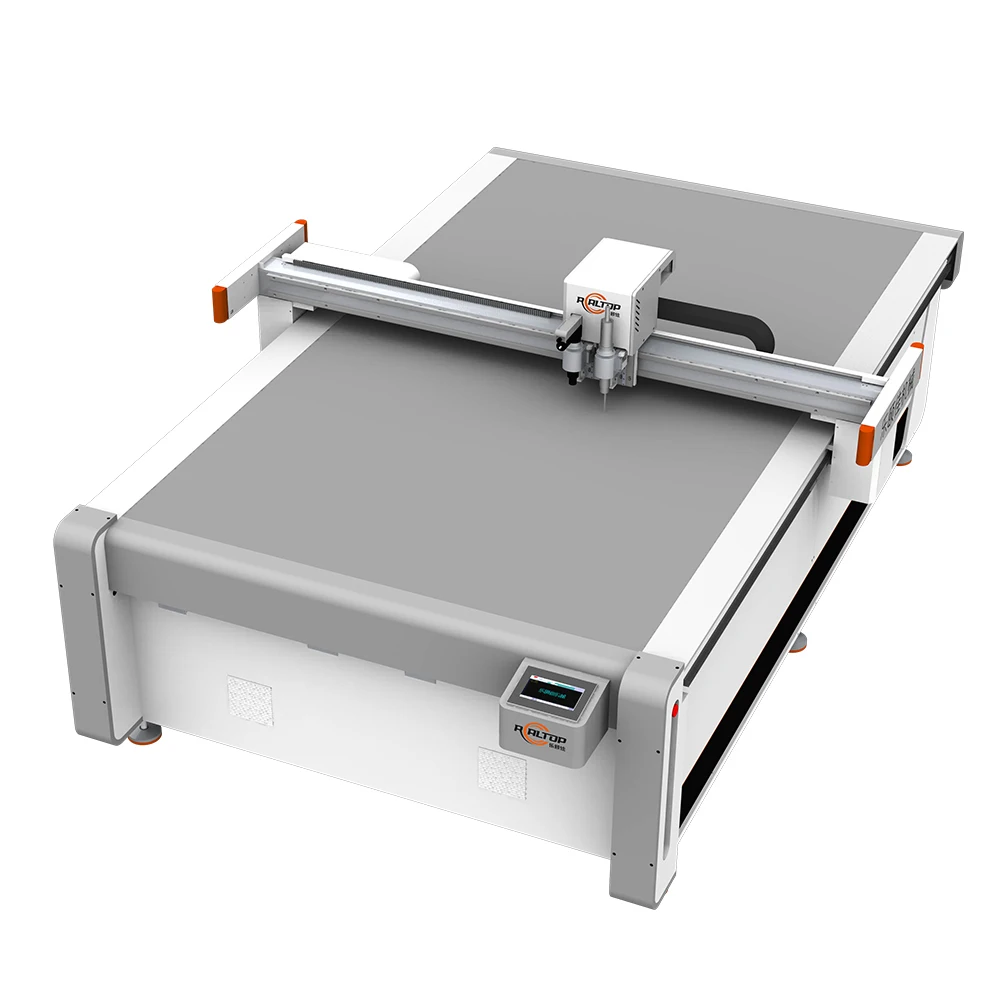
| Product Type | CNC Oscillating Knife Cutting Machine |
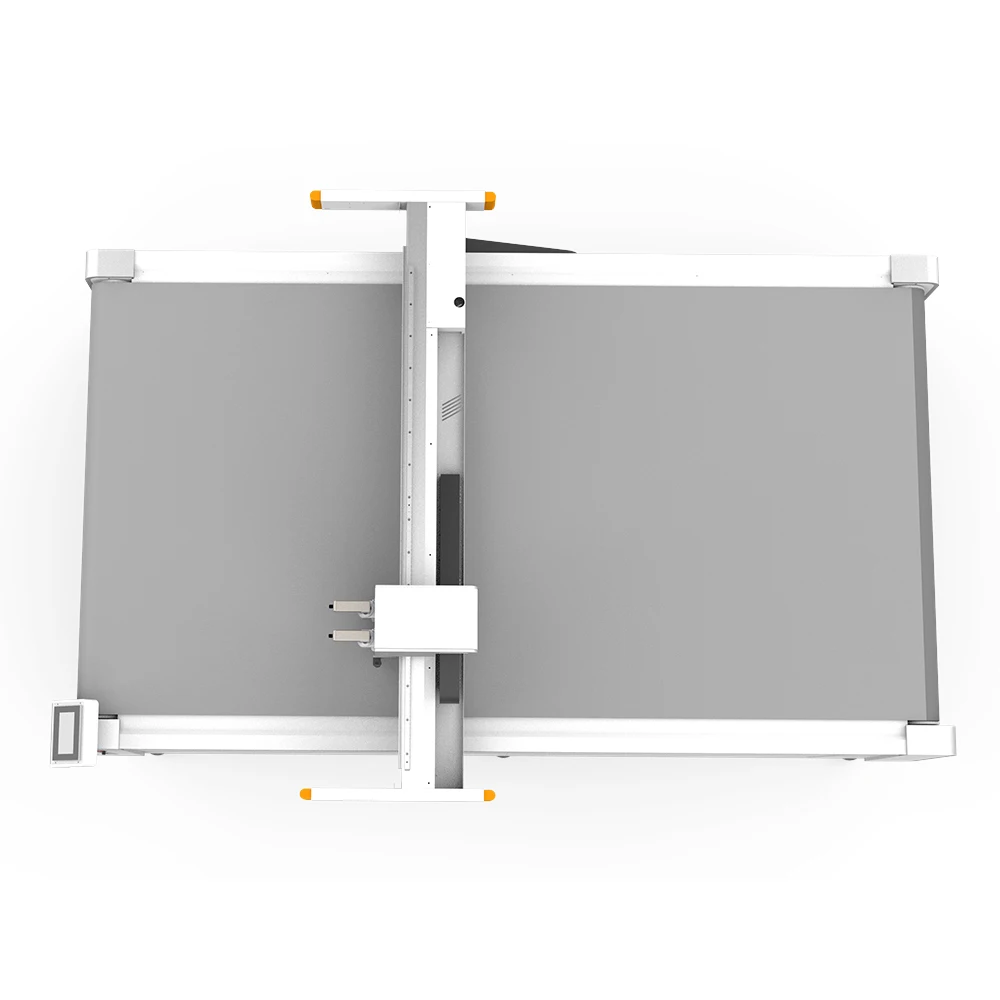
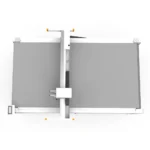
| Working Area | 1600 × 2500 mm |
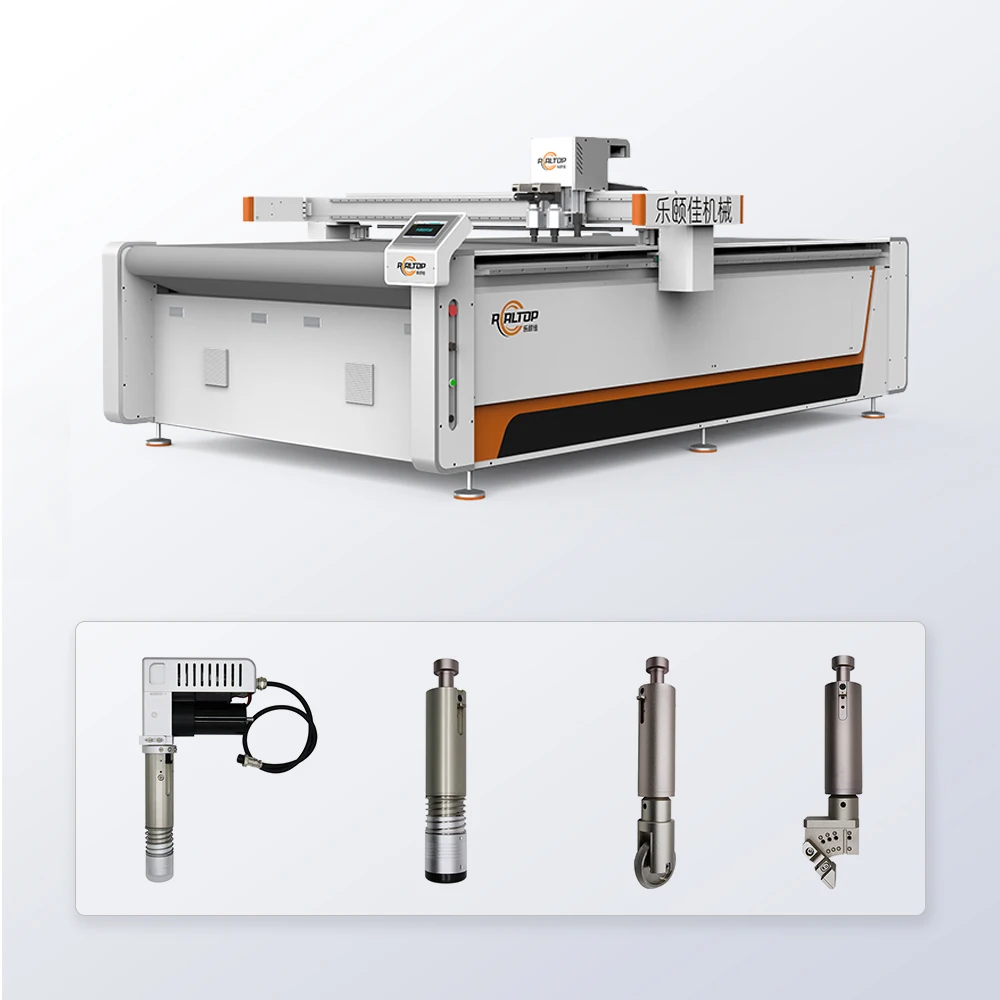
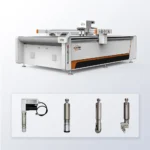
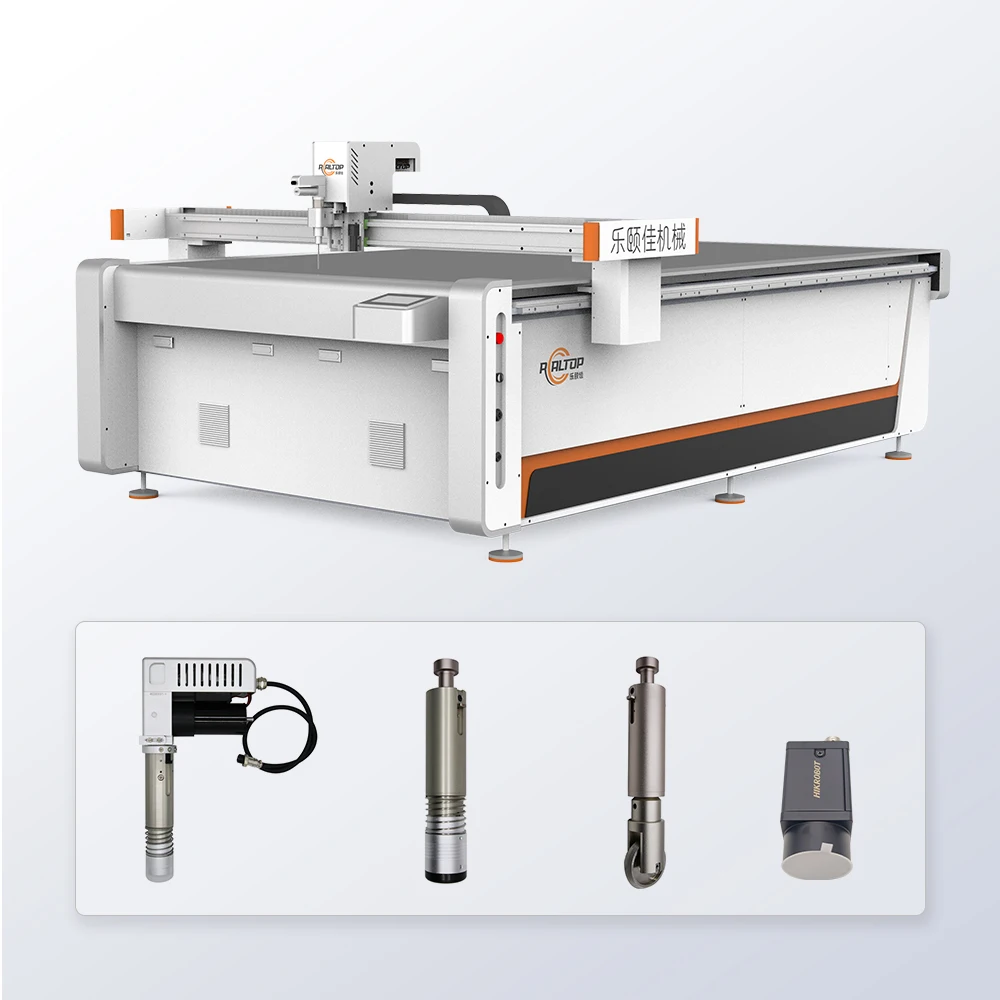
| Tool Heads Available | Oscillating knife, driven rotary knife, creasing wheel, kiss cutting tool, pneumatic knife, milling tool, V groove knife |
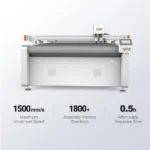
| Cutting Speed Range | 0–1500 mm/s |
| Cutting Thickness Capacity | ≤ 40 mm (basis not stated in source — confirm material type and density) |
| Positioning Accuracy | ±0.1 mm |
| Vacuum Pump Power | 9 kW |
| Vacuum Table Type | Aluminum bellows vacuum table |
| Control System | PLC control panel with intuitive interface |
| Servo Motor Options | Panasonic, Delta, Dorna |
| Voltage Options | 110V, 220V, 380V (frequency to be confirmed per market) |
| Supported File Formats | PLT, DXF, AI, PDF |
| Software | Dedicated packaging box structure design software |
| Safety Devices | Infrared sensor device, emergency stop |
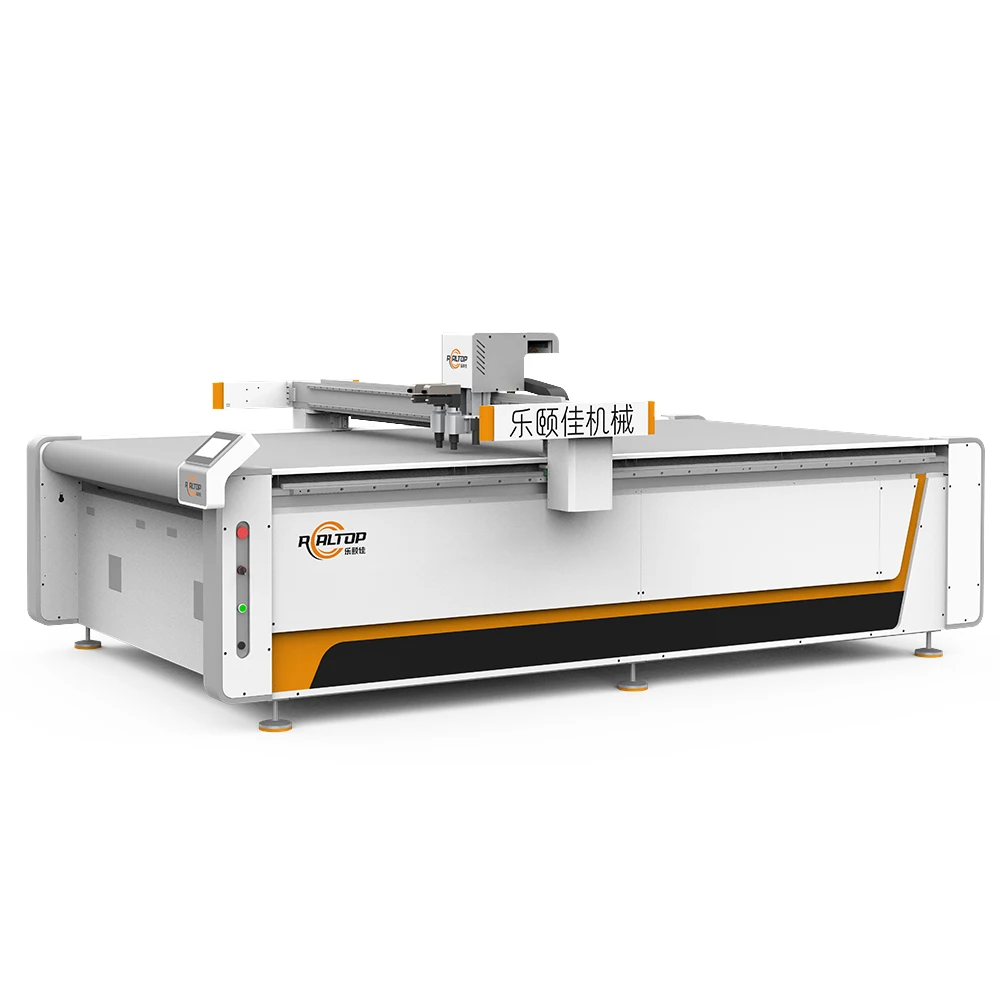
| Machine Dimensions | 3300 × 2100 × 1350 mm |
| Language Options | English, Russian, Italian, Chinese, custom available |
| Certification | CE |
Application Suitability
| Application | Material or Output |
|---|---|
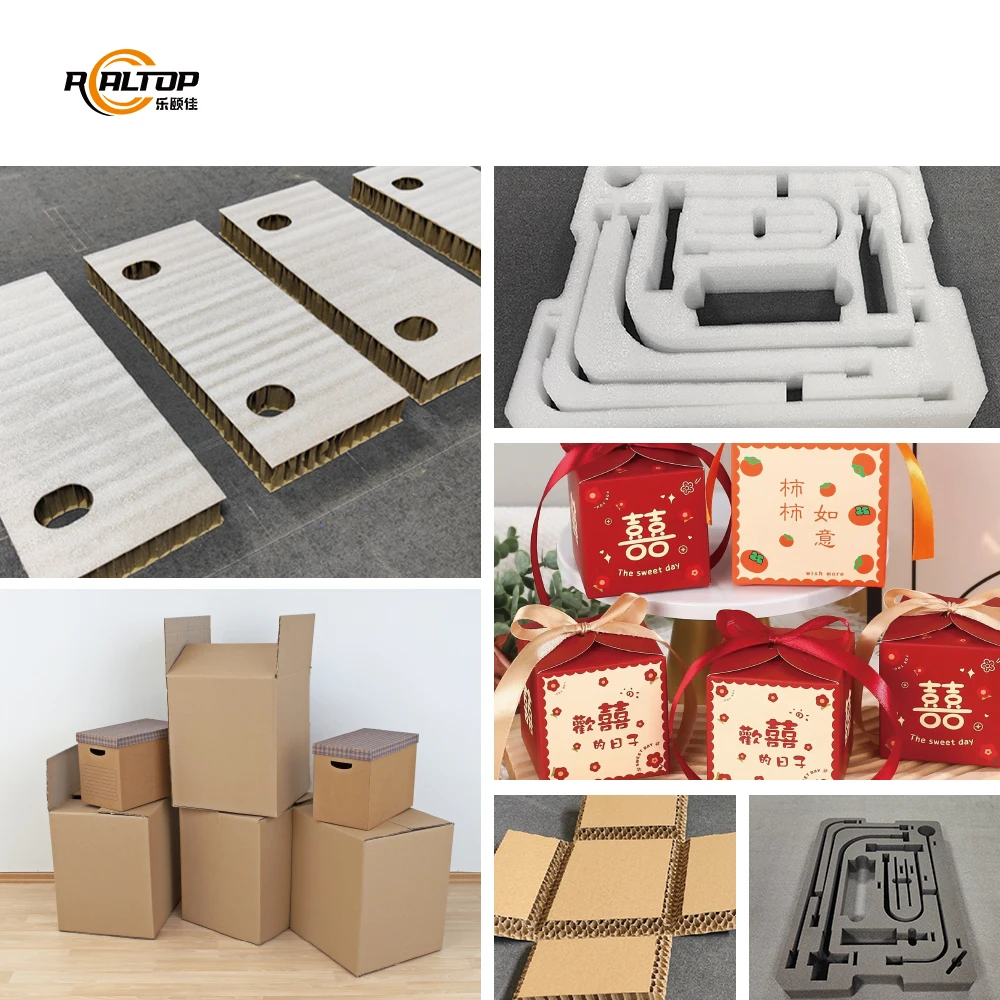
| Packaging sample making and short-run box production | Corrugated cardboard (E-flute, B-flute, BC-flute), greyboard, cardstock, art paper, specialty paper |
| Foam insert and protective cushioning fabrication | EVA foam, EPE foam, PU foam, rubber mats |
| Interior lining and gasket cutting | Velvet/fleece fabric, non-woven fabric, leather, synthetic leather |
| Thin plastic and composite part cutting | PVC sheets, PET sheets, adhesive-backed materials, composite panels |
Why Material Thickness Alone Is Not Enough to Specify a CNC Oscillating Knife Cutting Machine
We run your actual stock on our floor before finalizing any tool head or vacuum configuration.
A buyer once sent us a spec sheet asking for a machine based purely on a 1600 × 2500 mm working area and a single cardboard thickness number. When their real production involved triple-wall BC-flute corrugated board, the oscillating knife they initially selected could not penetrate the full depth cleanly, leaving crushed flutes and ragged edges on every sheet [NEED_CITE: cutting force requirements for multi-wall corrugated board]. That line sat idle for two days while we shipped a replacement tool head. Specifying a CNC oscillating knife cutting machine on table size and a single thickness figure ignores the layered density, adhesive content, and flute geometry that actually determine which knife stroke, blade angle, and vacuum zone layout will hold the sheet flat.
Tool Head Selection Drives Edge Quality Across Flute Types
The seven interchangeable heads on this platform are not optional extras — each one solves a different failure mode. An oscillating knife handles single and double-wall corrugated with a high-frequency vertical stroke that shears through the flute without crushing the face liner. A creasing wheel follows the same tool path to score fold lines without cutting through, which is essential for box prototypes that must fold cleanly. A V groove knife removes material to create a channel for rigid greyboard boxes where a 90-degree fold is required. Choosing the wrong head for the substrate is the single most common reason packaging sample machines produce scrap instead of sellable output [NEED_CITE: tool head selection criteria for corrugated and rigid board].
Vacuum Table Zoning and Flatness Determine Whether Small Parts Stay Put
The aluminum bellows vacuum table is built with multiple independent zones so that a small gasket or short-run insert piece does not lift off the bed while the knife completes its final pass. A 9 kW vacuum pump generates the hold-down force, but flatness across the full 1600 × 2500 mm surface is what prevents the blade from catching a warped edge. When cutting adhesive-backed foam or thin PVC sheets, any localized lift causes the knife to drag rather than shear, producing a torn edge that ruins the part [NEED_CITE: vacuum hold-down principles for flatbed digital cutters].
Reading the Specs That Actually Matter on the Production Floor
The ±0.1 mm cutting accuracy figure is achieved through the PLC-controlled servo system, where buyers can select from Panasonic, Delta, or Dorna motors depending on existing service networks in their market. Cutting speed ranges from zero to 1500 mm/s, but the usable speed on triple-wall corrugated will be considerably lower than on single-face cardstock — the PLC allows operators to store speed profiles per material so changeover between jobs is a parameter recall rather than a manual recalibration. The dedicated packaging box structure design software accepts PLT, DXF, AI, and PDF imports, which means a sample maker can receive a client’s artwork file and begin nesting without re-drawing the box structure from scratch. Voltage is configurable across 110V, 220V, and 380V, but frequency must be confirmed separately because a 60 Hz market running on a 50 Hz motor will see reduced vacuum pump output and slower servo response.
What Happens When the Configuration Is Wrong
A machine specified on working area alone, then found unable to handle the material thickness, does not just produce bad parts — it stops the entire sample room while the buyer waits for replacement tooling to ship overseas. A vacuum table with insufficient zoning for small parts causes lift during the final cut, and the operator spends time re-taping sheets instead of feeding the next job. Software that cannot import the buyer’s existing file format forces every new box design to be redrawn, adding hours to each sample approval cycle [NEED_CITE: hidden costs of misconfigured digital cutting tables].
Why Buyers Source This Machine Directly from the Factory
Our Jinan workshop handles both knife and laser cutting platforms under one roof, so a packaging buyer who also needs acrylic display stands can match the cutting method to each material rather than forcing one machine to do both. Every tool head and table configuration is documented in writing against the buyer’s material specification before production begins. We cut the buyer’s own stock — shipped to our floor — and provide a sample cutting report showing edge quality, creasing depth, and cutting speed before the order is confirmed. Voltage, plug type, control language, and software license are all verified on the electrical schematic before the machine is crated. The in-house design team adjusts frame geometry, vacuum zoning, and tool head selection based on production volume and the specific flute or foam density the buyer runs daily.
Documentation & Verification
- Machine specification sheet listing every configured tool head and vacuum zone
- Electrical schematic with voltage and frequency matched to buyer’s facility
- Sample cutting report produced on buyer’s shipped material before order confirmation
- Software license and file format compatibility note for PLT, DXF, AI, PDF workflow
- Factory test record documenting accuracy verification across full 1600 × 2500 mm table
- Spare parts list covering blades, creasing wheels, and vacuum seals
Installation, Commissioning & Support
- Floor space of at least 3500 × 2300 mm required around the 3300 × 2100 × 1350 mm frame for material loading
- Dedicated electrical circuit matching confirmed voltage (110V / 220V / 380V) with frequency verified before dispatch
- Machine ships as single assembled frame; vacuum pump and PLC panel connect on site
- First-day commissioning includes vacuum zone calibration and servo tuning on buyer’s material
- Operator training covers tool head changeover, PLC parameter storage, and file import from packaging design software
- Spare blade and creasing wheel kit included; replenishment intervals depend on daily cutting volume
Before You Request a Quote
Send us the specific materials you cut — flute type, board weight, foam density, and the thickest sheet in your regular rotation. Tell us your daily sample or short-run volume so we can size the vacuum zoning and recommend tool head combinations. Confirm the voltage and frequency at your facility, the control language your operators need, and whether your existing design files are in PLT, DXF, AI, or PDF format.
Frequently Asked Questions
Q: How do you confirm the machine can handle my material thickness and flute type before shipment?
A: We ask you to ship a sample of your actual production material to our Jinan workshop. We run cutting and creasing tests on it, document edge quality, penetration depth, and achievable speed, and send you the sample cutting report before you commit to the order. This eliminates guesswork on flute density or foam compression behavior.
Q: What voltage and frequency options are available, and how is plug type confirmed for my market?
A: The platform supports 110V, 220V, and 380V configurations. We confirm both voltage and frequency with you before production, then match the plug type and prepare the electrical schematic accordingly. A 60 Hz market on a 50 Hz motor would see reduced vacuum performance, so frequency is verified at the quotation stage.
Q: Can the software import my existing packaging design files and nesting workflow?
A: The dedicated packaging box structure design software accepts PLT, DXF, AI, and PDF formats. We confirm file compatibility during the pre-order stage by testing your actual design files on our system, so you know the import and nesting workflow functions before the machine arrives.
Q: How do you select the right tool head combination for corrugated cardboard versus foam versus greyboard?
A: Corrugated board typically requires an oscillating knife for clean flute shearing and a creasing wheel for fold lines. Greyboard often needs a V groove knife for 90-degree folds. Foam uses an oscillating knife with adjusted stroke frequency. We document the recommended combination per material in your configuration list before production.
Q: What is the OEM capability and custom configuration range for packaging cutting machines?
A: Our in-house design team adjusts vacuum zone layout, frame reinforcement, control language, and tool head selection based on your production requirements. Custom language interfaces and specialized tool holders can be integrated during build. All modifications are documented in the specification sheet before manufacturing begins.
You may also like

商品评价
Clear filtersThere are no reviews yet.