




-
 Courier delivery
-
 DHL Courier delivery
-
 Warranty 1 year
-
 Free 30-Day returns

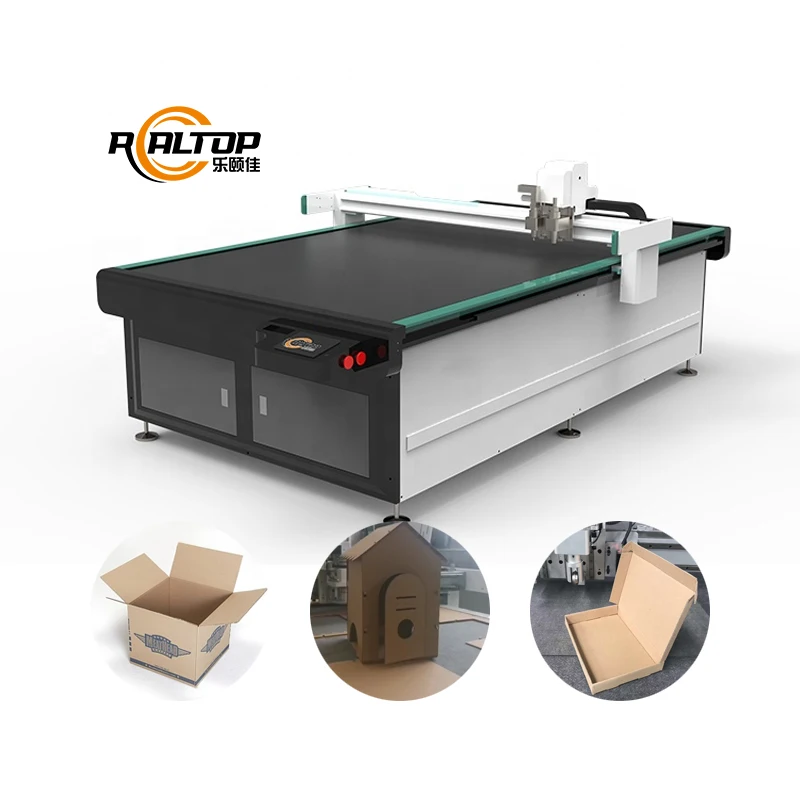
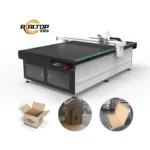
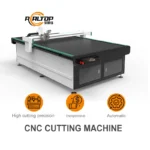
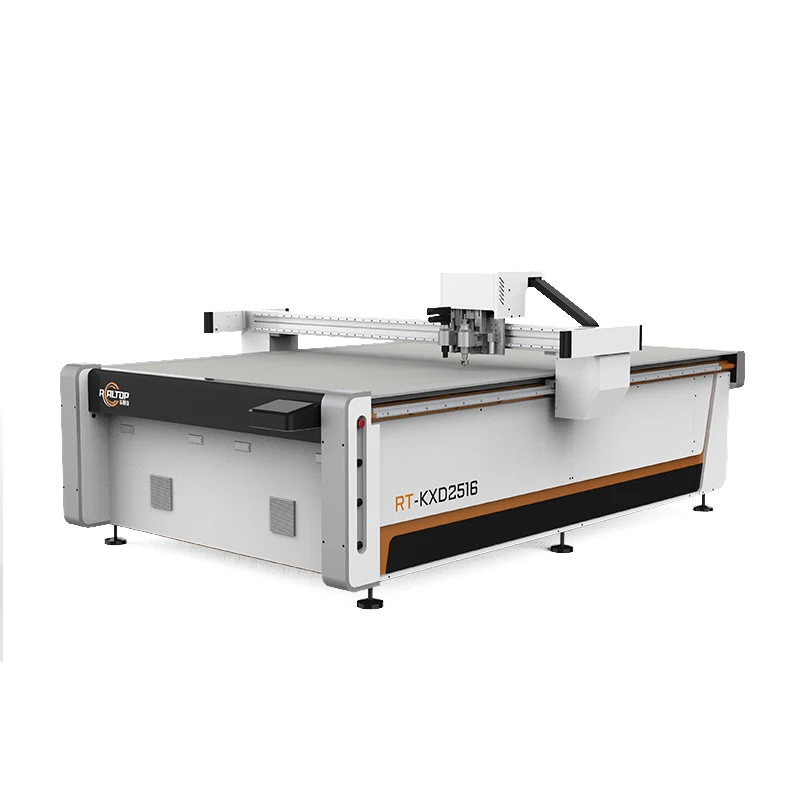
Material-Matched Configuration — the RT-D2516/RT-S2516 is specified per buyer’s material thickness and daily volume rather than sold on working area alone, backed by in-house design and factory test records.
Technical Specifications
| Parameter | Value |
|---|---|
| Model | RT-D2516/RT-S2516 |
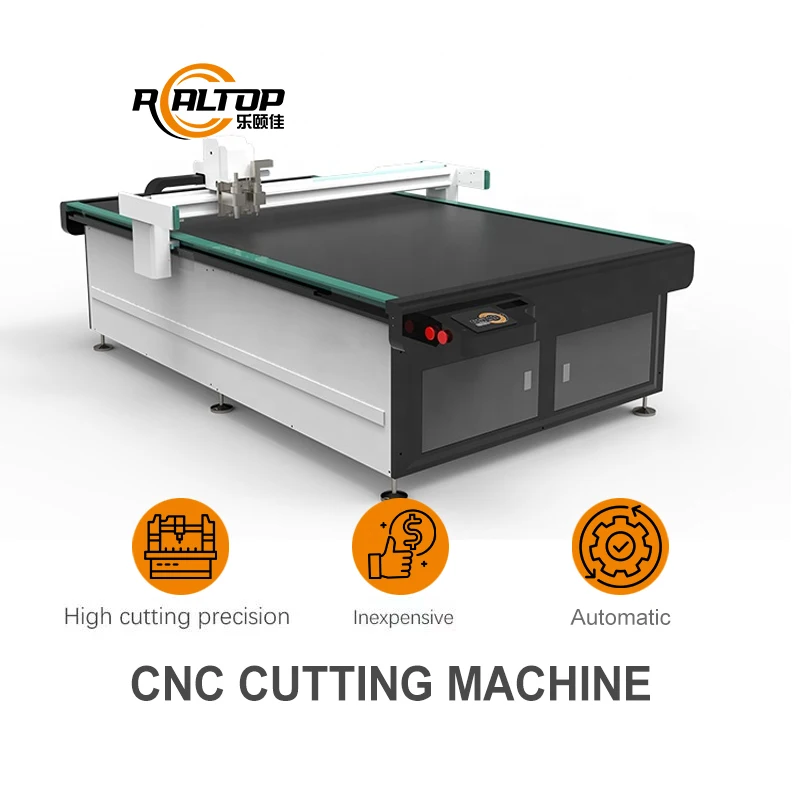
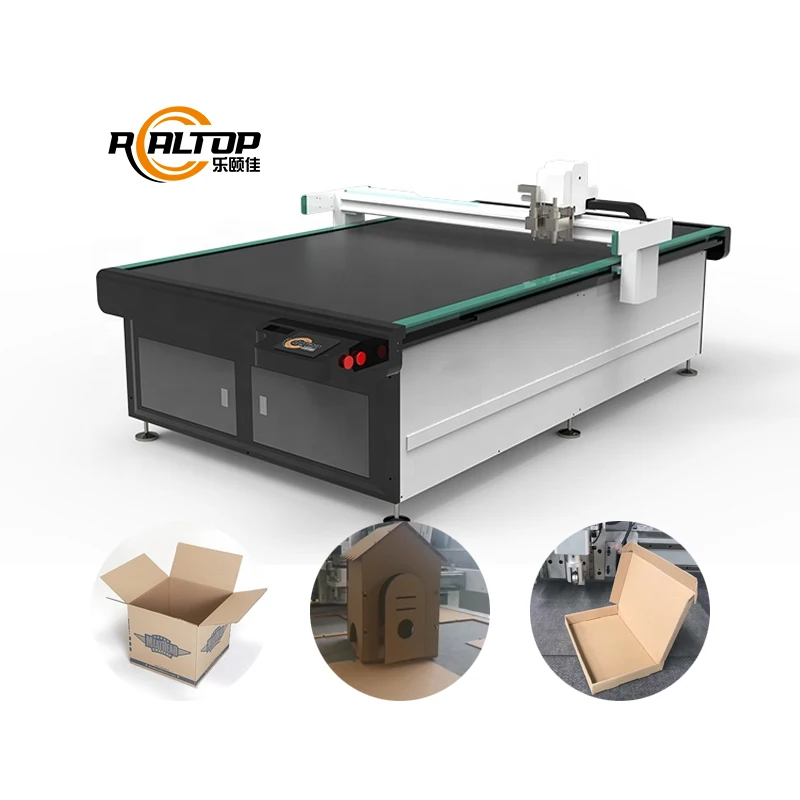
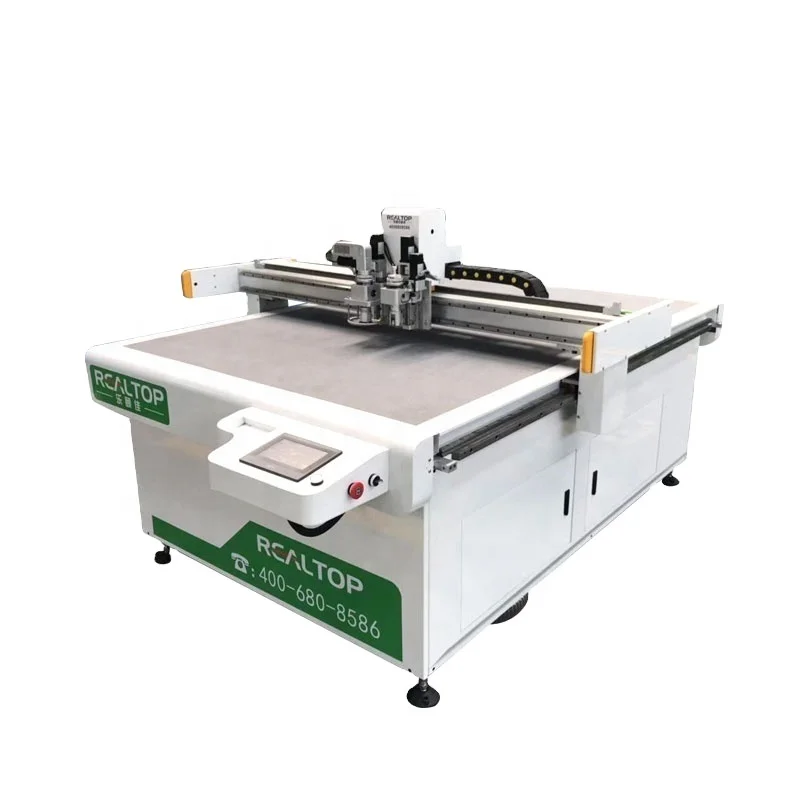
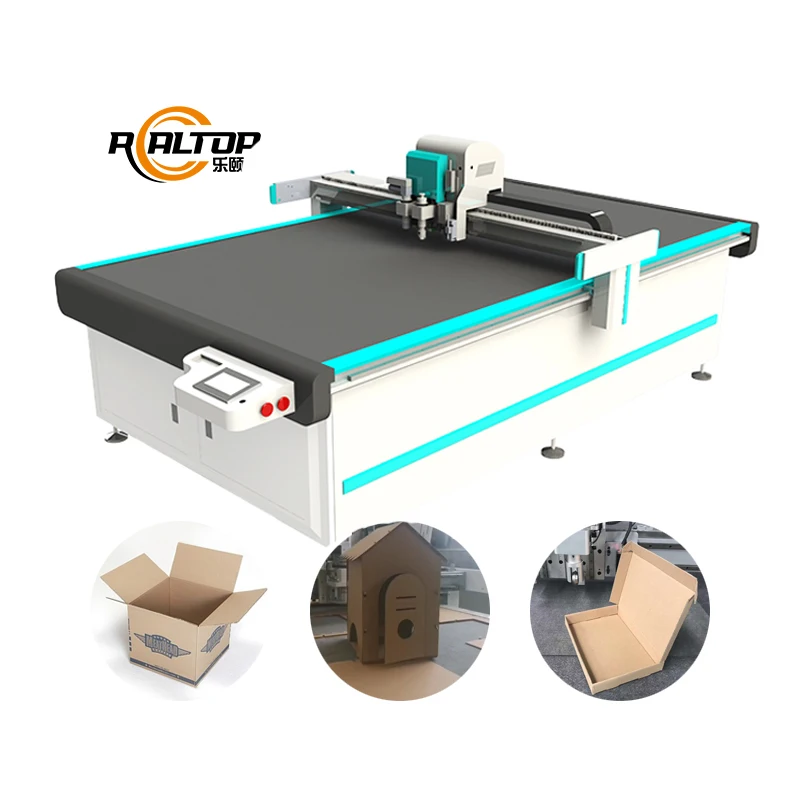
| Product Type | CNC Oscillating Knife Cutting Machine |
| Working Area | 1600 × 2500 mm |
| Machine Size | 3450 × 2300 × 1250 mm |
| Rated Power | 9 kW |
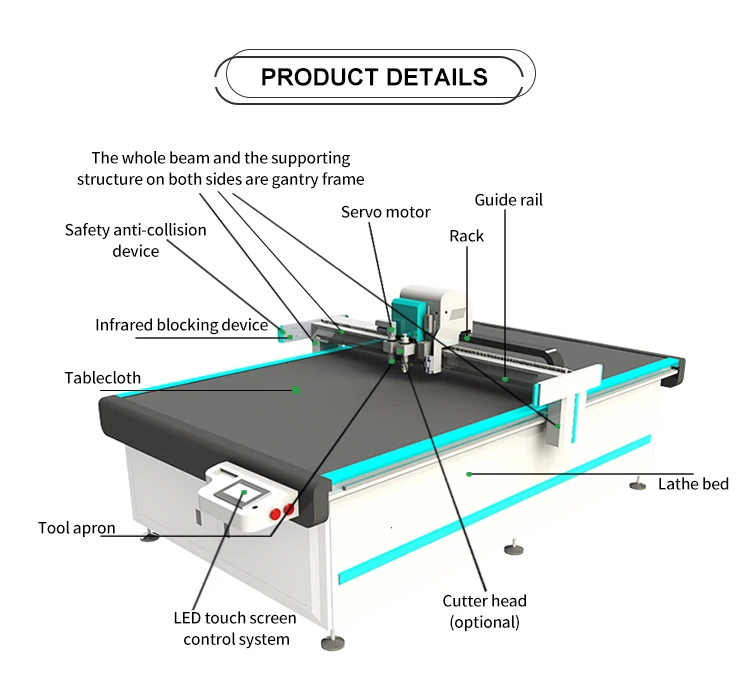
| Table Type | Flat working table with magnesium-aluminum alloy and fluorocarbon PVDF treatment |
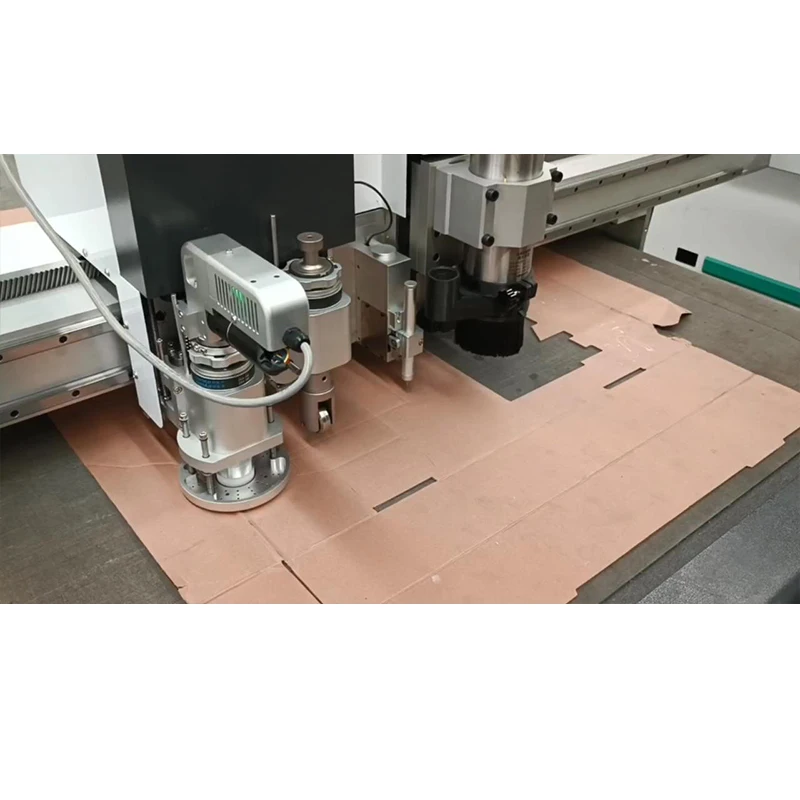
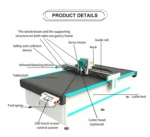
| Multifunctional Head | Swiss imported knife: full cutting, half cutting, cursor location |
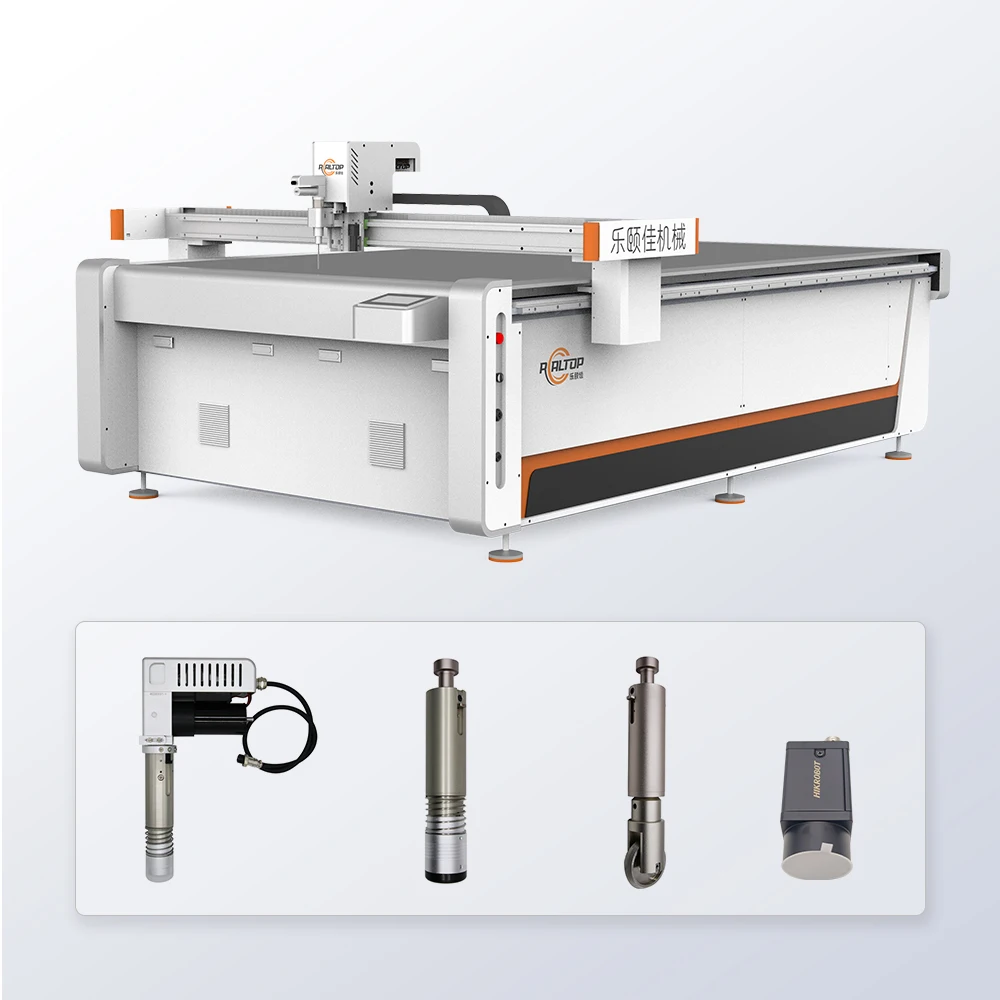
| Tool Head Options | Oscillating knife, pneumatic knife, high-power vibrating knife, circular knife, V cutting knife, drag knife, creasing wheel, dotted line knife, punching, brush |
| Safety Device | Infrared sensors with anti-collision beam and emergency stop |
| Translational Velocity | 800–1200 mm/s |
| Cutting Thickness | 20–80 mm depending on material (basis not stated in source — confirm block format / material / thickness) |
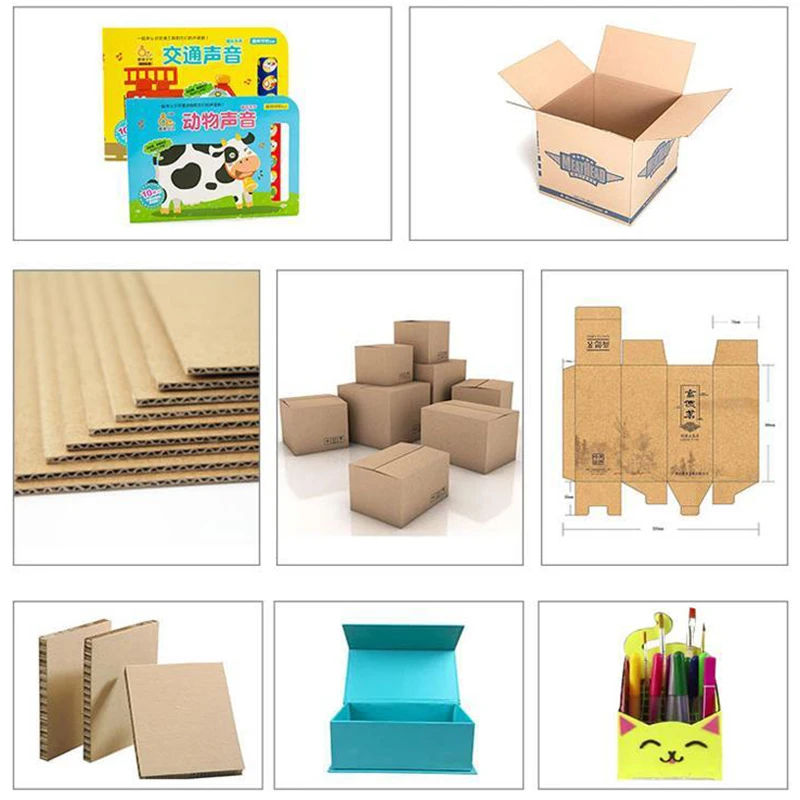
| Compatible Materials | Leather, fabric, textile, cardboard, fiberglass, corrugated cardboard, sticker, film, foam board, rubber, gasket, non-woven, sponge, PU, EVA, XPE, PVC, PP, PE, PTFE, ETFE, composites |
| Repeated Accuracy | ≤0.1 mm |
| Transmission System | Delta digital servo motor, linear guide, synchronous belt, ball screw, Taiwan Hiwin rail |
| Instruction System | HP-GL compatible format |
| Voltage | 380V ± 10% |
| Vacuum System | 7.5 kW vacuum pump, zoned adsorption table |
| Feeding System | Germany imported conveyor belt with auto feeding |
| Visual Positioning | Small CCD camera mark point positioning, panoramic camera recognition, projection positioning |
| Control Language | English, Russian, Italian, Chinese (special languages customizable) |
Application Suitability
| Application | Material or Output |
|---|---|
| Packaging and carton sample making | Corrugated cardboard, plastic box sheet, gray board |
| Garment and footwear production | Leather, clothing cloth, shoe material, sponge composite, PU, EVA |
| Automotive interior and gasket fabrication | Composite materials, foam board, sealing pads, rubber |
| Soft home furnishings and carpets | Carpet, non-woven fabric, textile, floor mat material |
| Graphic advertising and printing | Sticker, film, PVC, soft glass, vinyl |
Why "Cutting Thickness 80 mm" Can Mislead a Buyer
Actual depth capability depends on material density and tool head pairing, not a single printed number.
A CNC oscillating knife cutting machine manufacturer often quotes a thickness range without tying it to a specific material or blade type. Buyers see "up to 80 mm" and assume the same head that slices 2 mm fabric will also push through dense foam or double-wall corrugated. I have watched machines arrive on site only to find the knife stalls halfway through the actual stock. That mismatch forces a complete tool seat swap after delivery [NEED_CITE: tool head load capacity relative to material density].
In-House Design Team Meets Factory Floor Reality
Our design group and assembly team share the same facility, so a CNC oscillating knife cutting machine manufacturer can revise tool head selection and vacuum zoning based on what the shop floor actually observes during sample runs. When a gasket producer sends in 4 mm cork-rubber sheet, we do not ship the default oscillating head — we test drag knife and high-power vibrating knife side by side, document edge quality, and attach the report to the purchase order.
Visual Positioning for Printed Contour Work
The RT-D2516/RT-S2516 offers small CCD mark point positioning, panoramic camera recognition, and projection positioning as selectable options. Printed graphics on corrugated or textile shift slightly after each feed. A panoramic camera captures the full sheet in one pass and adjusts the cutting path before the knife touches the material. This matters when registration tolerance must stay within a millimeter across a 2500 mm table length [NEED_CITE: CCD registration accuracy on flexible printed substrates].
Reading the Spec Sheet Against Your Material
The Swiss imported multifunctional head supports full cutting, half cutting, and cursor location, but each function demands a different blade profile and oscillation frequency. Cutting 3 mm double-wall corrugated at 800 mm/s translational velocity requires a high-amplitude oscillating knife and sufficient vacuum hold-down to prevent sheet lift. The 7.5 kW vacuum pump with zoned adsorption on the magnesium-aluminum table lets you isolate suction to the active cutting area, which is critical when small die-cut shapes would otherwise drift under the blade. Repeated accuracy at ≤0.1 mm is achievable only when vacuum zoning matches part geometry.
What Happens When Tool Head and Material Do Not Agree
Picking the wrong head produces ragged edges on leather or crushed cells in EVA foam. A pneumatic knife that works on single-layer PVC will tear through multi-layer composite because the downstroke force is insufficient for the combined thickness. The buyer discovers this only after the first production run, and remedial tool seats cost extra lead time [NEED_CITE: edge quality failure modes by tool head and material pairing].
Why Buyers Come Back After the First Machine
In-house design and production covering both knife and laser technologies means we can redirect a buyer to the correct cutting method instead of forcing one platform. Tool head and table configuration are documented per material type and thickness before the order is signed. Sample cutting on the buyer’s own stock is a standard step — not an optional add-on — so edge quality, cutting depth, and cycle behavior are confirmed in a signed report. Voltage, plug type, and control language are verified against the destination market before production starts. Software compatibility with the buyer’s HP-GL workflow is tested with actual files, preventing nesting or import failures at commissioning.
Documentation & Verification
- Machine specification sheet listing every configured tool head and table zone
- Electrical schematic confirming voltage, plug type, and breaker rating for your site
- Sample cutting report on your exact material with edge quality photographs
- Tool head and table configuration list matched to your material and thickness
- Software licence with file format compatibility note for HP-GL workflows
- Factory test record signed against your specified production material
Installation, Commissioning & Support
- Foundation must be level within 2 mm across the 3450 × 2300 mm footprint
- Dedicated 380V ± 10% circuit with breaker rated above 9 kW inrush current
- Machine ships as single assembly; conveyor belt and vacuum pump bolt on site
- First-day commissioning includes vacuum zone mapping and blade depth calibration
- Operator training covers tool head changeover and CCD camera registration setup
- Spare parts list includes Swiss blades, conveyor belt segments, and vacuum seals
Before You Request a Quote
Tell us the exact material type, thickness, and maximum sheet size you run daily. Share your local voltage and frequency, preferred control language, and whether your existing nesting software outputs HP-GL. If your production involves printed contour cutting, send a sample sheet so we can test CCD and panoramic camera registration at your target speed.
Frequently Asked Questions
Q: How is cutting thickness verified for my specific material and what is the basis for the stated range?
A: The 20–80 mm range depends on material density and tool head pairing. We run your actual stock on the RT-D2516/RT-S2516 and record cutting depth, edge quality, and cycle time in a sample report before you commit. No generic thickness claim replaces that test.
Q: How do I select the correct tool head to avoid ragged edges or crushed foam?
A: We test oscillating, drag, pneumatic, and vibrating knife heads on your material. The sample report documents which head produces clean edges at your required thickness, and that exact configuration is locked into your order specification.
Q: Can CCD contour recognition track printed marks at my production speed?
A: Panoramic and small CCD options are tested with your printed sheets at your target translational velocity. We document registration accuracy in the sample report so you know before shipment whether the camera keeps pace with your feed rate.
Q: What voltage, plug, and control language options are confirmed before shipment?
A: We verify 380V ± 10% or your local standard, confirm plug type for your market, and set the control interface to English, Russian, Italian, Chinese, or a custom language. All three are documented on the electrical schematic before production begins.
Q: How is vacuum table zoning configured for small parts to prevent lift during cutting?
A: The magnesium-aluminum table with PVDF coating is divided into suction zones controlled independently. We map zones to your typical part layout during commissioning so small pieces remain flat under the knife at full 800–1200 mm/s speed.
You may also like

商品评价
Clear filtersThere are no reviews yet.