



-
 Courier delivery
-
 DHL Courier delivery
-
 Warranty 1 year
-
 Free 30-Day returns

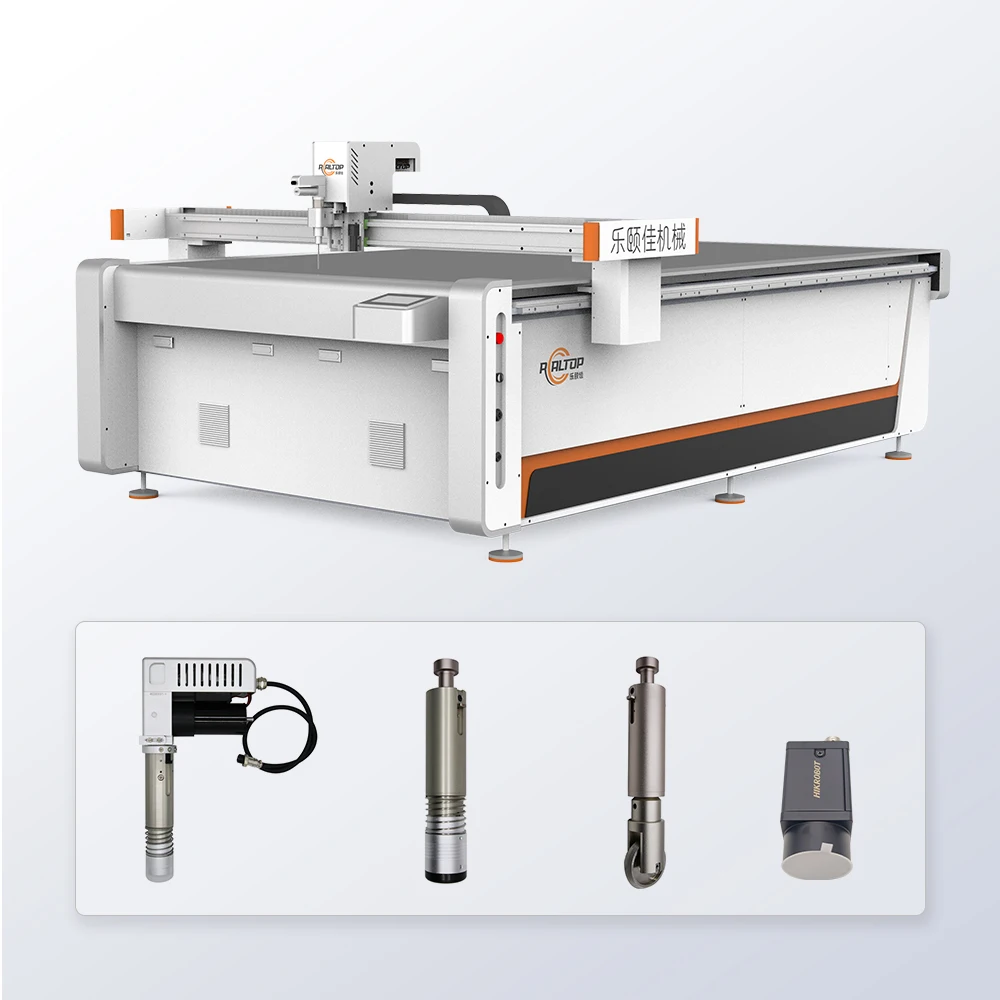
Built from the core factory — In-house design and production of oscillating knife systems matched to your specific fabric weight and stretch profile, not forced from a catalog page.
Technical Specifications
| Parameter | Value |
|---|---|
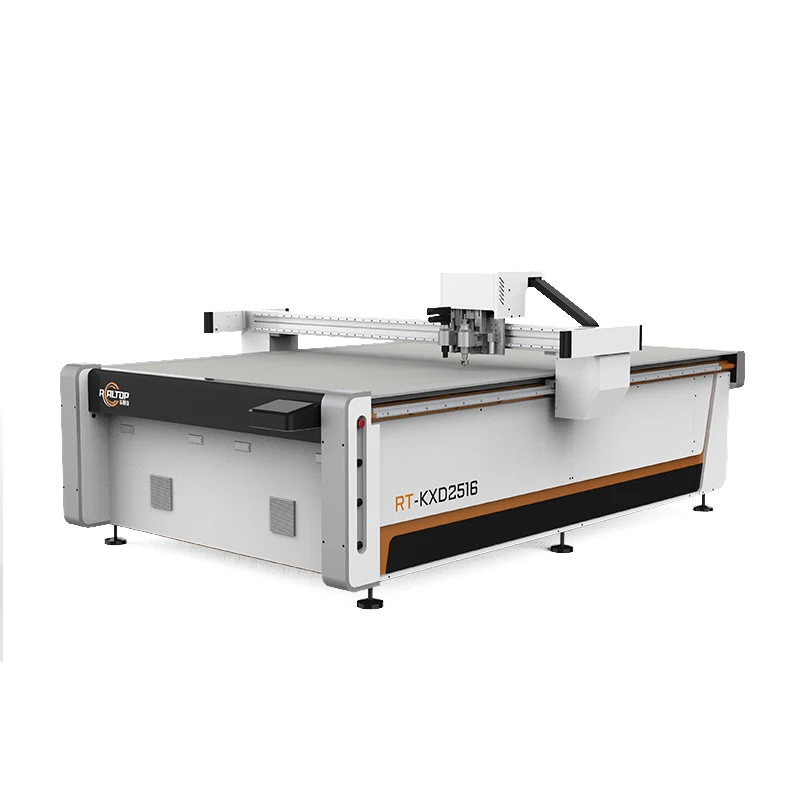
| Model | RT-D2516 / RT-S2516 |
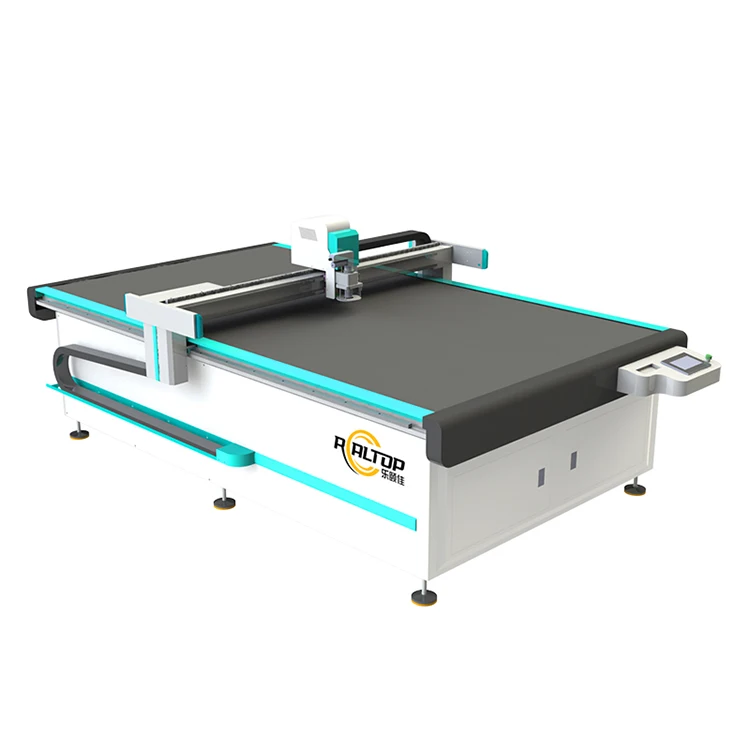
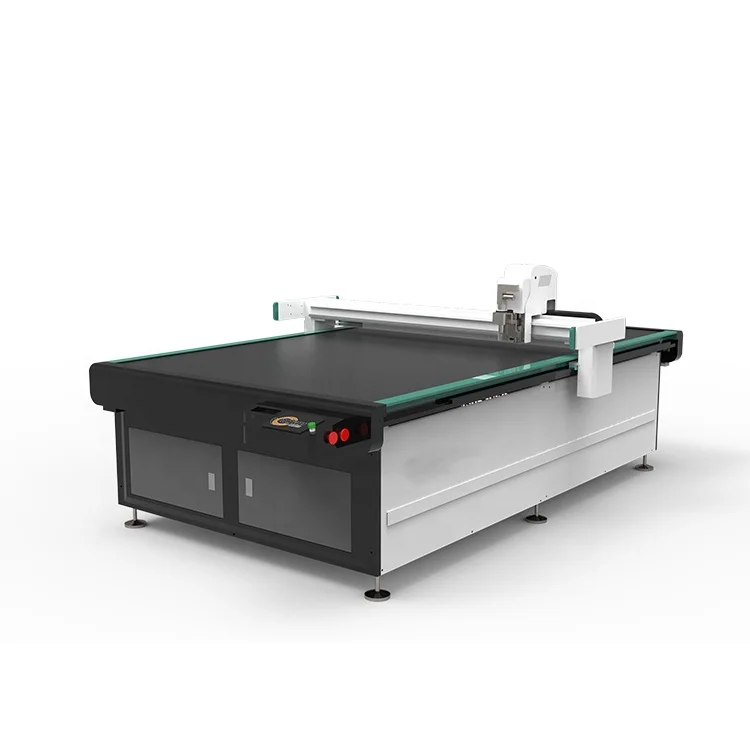
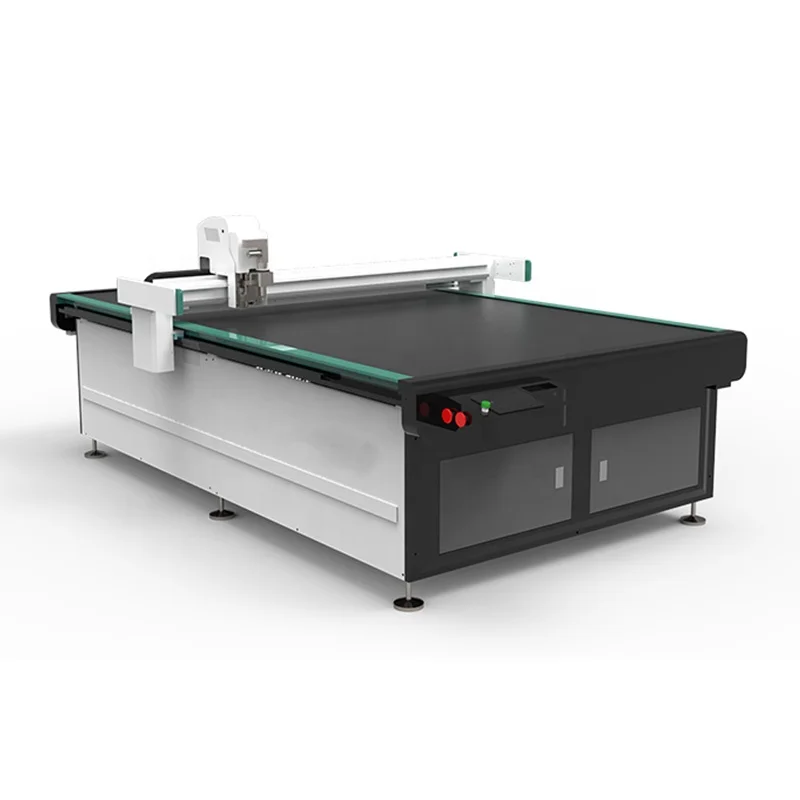
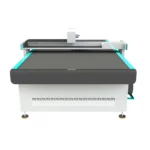
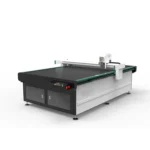
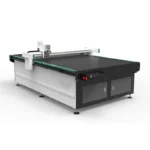
| Product Type | CNC Oscillating Knife Cutting Machine |
| Working Area | 1600 × 2500 mm |
| Overall Dimensions | 3450 × 2300 × 1250 mm |
| Rated Power | 9 kW |
| Translational Velocity | 800–1200 mm/s |
| Cutting Speed | 200–800 mm/s (basis not stated in source — confirm material / thickness) |
| Repeated Accuracy | ≤0.1 mm |
| Work Table | Flat working table with vacuum hold-down |
| Vacuum Pump | 7.5 kW |
| Tool Head | Swiss imported knife with vibration full cutting, vibration half cutting, cursor location |
| Transmission System | Digital servo motor, linear guide, synchronous belt, ball screw |
| Core Components | Yaskawa servo motor, Germany imported conveyor belt, Taiwan Hiwin rail |
| Instruction System | HP-GL compatible format |
| Voltage | 380V ±10% |
| Safety Device | Infrared sensors |
| Standards | ISO Certified |
Application Suitability
| Application | Material or Output |
|---|---|
| Baby clothes and rompers production | Cotton knit, modal blend, interlock jersey |
| Children’s apparel and jeans cutting | Denim, twill, lightweight canvas |
| Garment and textile manufacturing | Woven and knit fabrics in single or multi-layer lay |
| Flexible material processing | Sponge composite leather, PVC, soft glass, silicon, rubber |
| Leather goods and footwear uppers | Genuine and synthetic leather sheets |
Why "Working Area" Is Not a Cutting Specification
A flatbed size tells you how much fabric fits on the table — it tells you nothing about edge quality on a 180 gsm modal knit.
Every season I see buyers who sourced a machine purely on table dimensions, only to discover the oscillating frequency and knife geometry were never matched to their actual lay. A standard vibration blade tears through denim cleanly but leaves a rolled, frayed edge on stretch jersey if the stroke rate and downward pressure are not calibrated for that fiber. When you are cutting infant rompers where seam allowance is measured in millimeters, a ragged edge means recutting and wasted yardage [NEED_CITE: fabric cutting edge quality standards in garment production].
Knife Selection for Knit versus Woven Layups
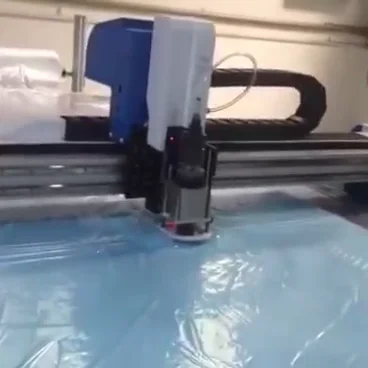
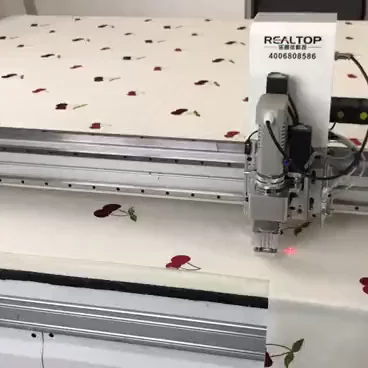
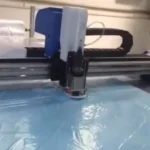
The Swiss imported knife system on this unit offers both vibration full cutting and vibration half cutting modes, which matters when you switch between woven twill for kids jeans and a high-stretch interlock for baby rompers. Full vibration drives the blade through denser stacks at the 200–800 mm/s cutting speed range, while half cutting scores kiss-cut layers without penetrating the conveyor belt beneath. Matching tool head behavior to your fabric prevents the crushed edges that show up as defects at the sewing station.
Vacuum Zoning Across a 1600 × 2500 mm Bed
A 7.5 kW vacuum pump pulling through a flat table must hold small pattern pieces — sleeve caps, collar stands, pocket flaps — without lifting during the knife pass. Zoning the vacuum into independent sectors lets you isolate suction to the active cutting zone, which is important when processing narrow lay widths on the full bed. Without adequate localized hold-down, lightweight knit pieces shift under lateral blade force and throw off the ≤0.1 mm repeated accuracy specification [NEED_CITE: vacuum table zoning practices for flexible material cutting].
Servo Drive and Rail Precision in Continuous Cutting
The Yaskawa digital servo motors paired with Taiwan Hiwin linear rails maintain positional repeatability across long cutting runs. For a full marker of baby romper pieces nested across the 1600 × 2500 mm area, the synchronous belt and ball screw transmission must hold tolerance from the first piece to the last without drift. This is where cheaper motion systems degrade over a production shift — cumulative positioning error compounds, and by the fortieth marker the notches no longer align at the sewing line.
The Cost of Wrong Tool Head Configuration
Selecting a drag knife when your production runs on multi-layer knit fabric leads to dragged fibers and distorted edges, especially on bias-cut pieces. If the vacuum zoning is not set for your typical pattern piece size, small components like binding strips or appliqué shapes lift off the table mid-cut, producing scrap that is caught only at the bundling station downstream. These errors compound silently across hundreds of markers before anyone traces the root cause back to machine configuration [NEED_CITE: root cause analysis of cutting defects in garment manufacturing].
What Building In-House Changes for Your Order
Designing and assembling oscillating knife and flatbed systems under one roof means the tool head, vacuum table, and motion platform are specified together for your material rather than sourced independently and bolted together. The RT-D2516 and RT-S2516 are configured with your fabric type, lay height, and daily volume in mind before production begins. Voltage is confirmed against your facility supply — 380V ±10% as standard, with customization available. The HP-GL compatible instruction system is verified against your existing nesting software before the machine ships, not after it arrives on your floor. Sample cutting on your actual fabric roll is completed and documented so you see edge quality before commitment.
Documentation & Verification
- Factory test record on your specific fabric type, weight, and layer count
- Electrical schematic and voltage confirmation matching your facility supply
- Tool head and vacuum table configuration list for your material profile
- Software licence and HP-GL file format compatibility note for your CAD system
- Sample cutting report on buyer-supplied material showing edge and dimension results
Installation, Commissioning & Support
- Floor space planning for 3450 × 2300 mm footprint plus material feed clearance
- Dedicated 380V circuit with adequate amperage for 9 kW rated power draw
- Table leveling and vacuum seal check on the 1600 × 2500 mm flat working surface
- Servo tuning and knife stroke calibration against your production fabric samples
- Operator training on tool head changeover between full and half vibration cutting
- Spare knife blades and conveyor belt section included with initial shipment
Before You Request a Quote
Tell us the fabrics you run — fiber content, weight in gsm, and whether they are woven or knit — along with your typical lay height and daily marker volume. Confirm your facility voltage and frequency, and let us know which nesting software you currently use so we verify file import compatibility. If your production includes stretch blends or delicate knits, send a sample roll so we cut and document results before we quote a configuration.
Frequently Asked Questions
Q: How is cutting thickness verified for different fabric types and layer counts?
A: We run sample cuts on your actual material at your specified lay height, documenting edge quality and dimensional accuracy. The vibration stroke rate and downward pressure are adjusted for knit versus woven behavior, and results are shared in a cutting report before the machine configuration is finalized.
Q: What tool head options match woven versus knit materials?
A: The Swiss imported knife system supports vibration full cutting for dense woven stacks and half cutting for scoring delicate knits. We specify the blade geometry and oscillation parameters based on your fabric samples to prevent fraying on jersey or crushing on foam-backed composites.
Q: How is vacuum table zoning configured for small garment pieces?
A: The 7.5 kW vacuum pump feeds independent zones across the flat table. We map your typical marker layout and configure suction zones so small pieces like collars and pocket bags stay flat under the knife, preventing lift and misalignment during high-speed passes.
Q: What software file formats are supported for garment nesting?
A: The instruction system accepts HP-GL compatible formats, covering DXF and PLT exports from most garment CAD platforms. We confirm import compatibility with your specific nesting software before the order is finalized to avoid workflow disruption at installation.
Q: What is the lead time for custom voltage and language configurations?
A: Custom voltage, control interface language, and working area adjustments require additional configuration time beyond standard production. We confirm the schedule after your specifications are locked, with typical multi-week lead times depending on the scope of customization.
You may also like

商品评价
Clear filtersThere are no reviews yet.