


-
 Courier delivery
-
 DHL Courier delivery
-
 Warranty 1 year
-
 Free 30-Day returns

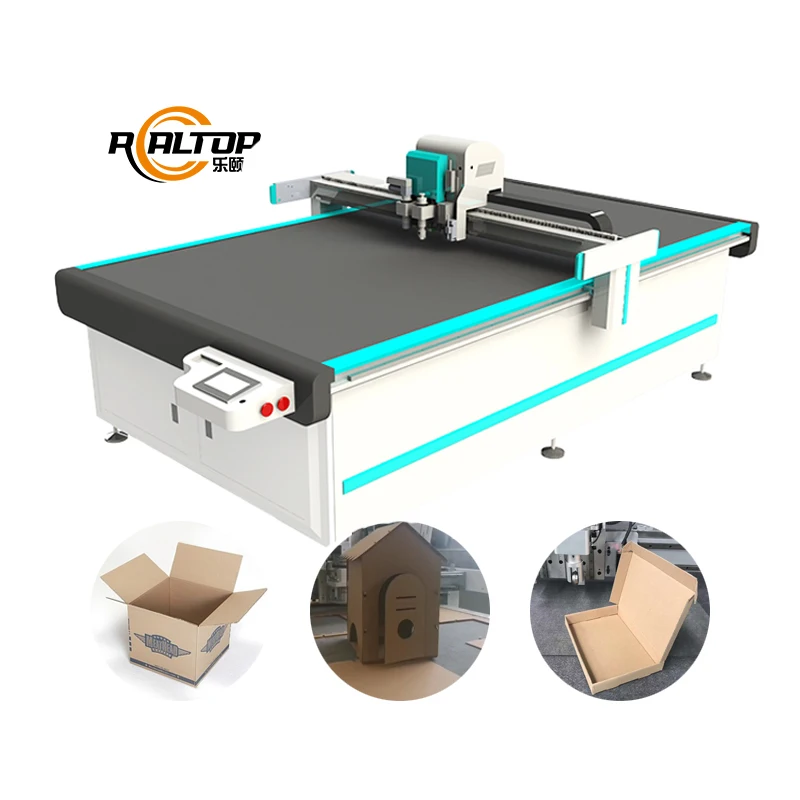
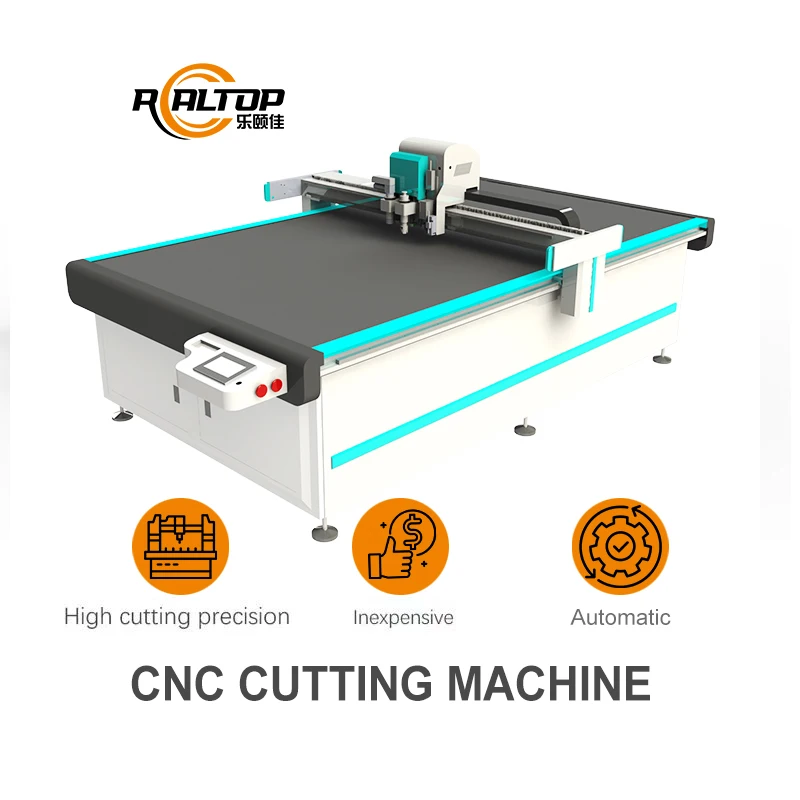
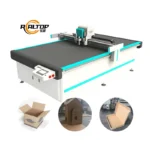
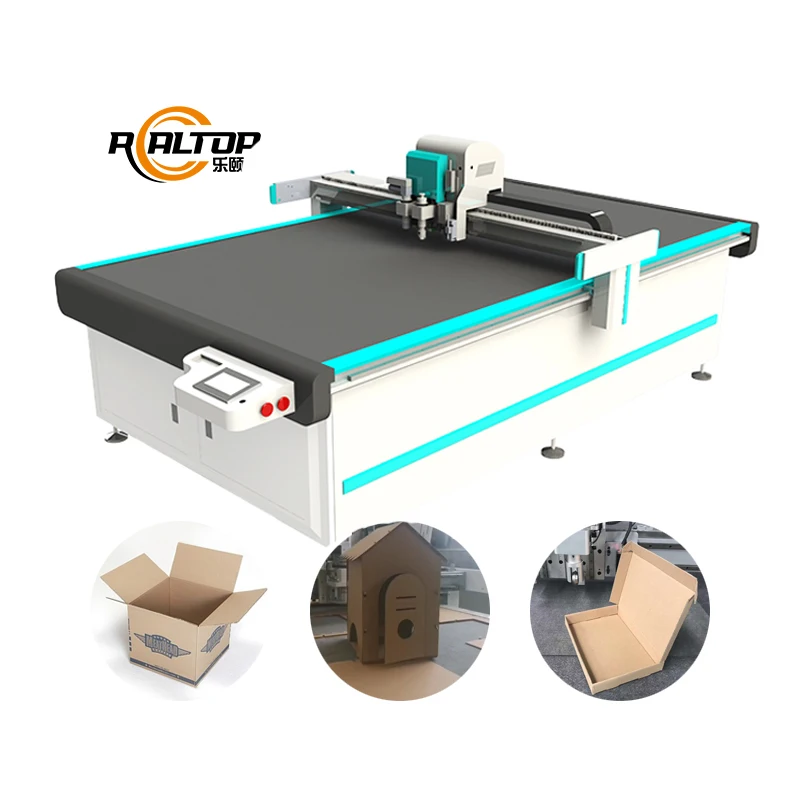
Frame Rigidity Over Paper Specs — Realtop welds thick square seamless steel structures and heat-treats every RT-D2516/RT-S2516 frame so long-term cutting repeatability stays within ≤0.1 mm instead of drifting after six months of production.
Technical Specifications
| Parameter | Value |
|---|---|
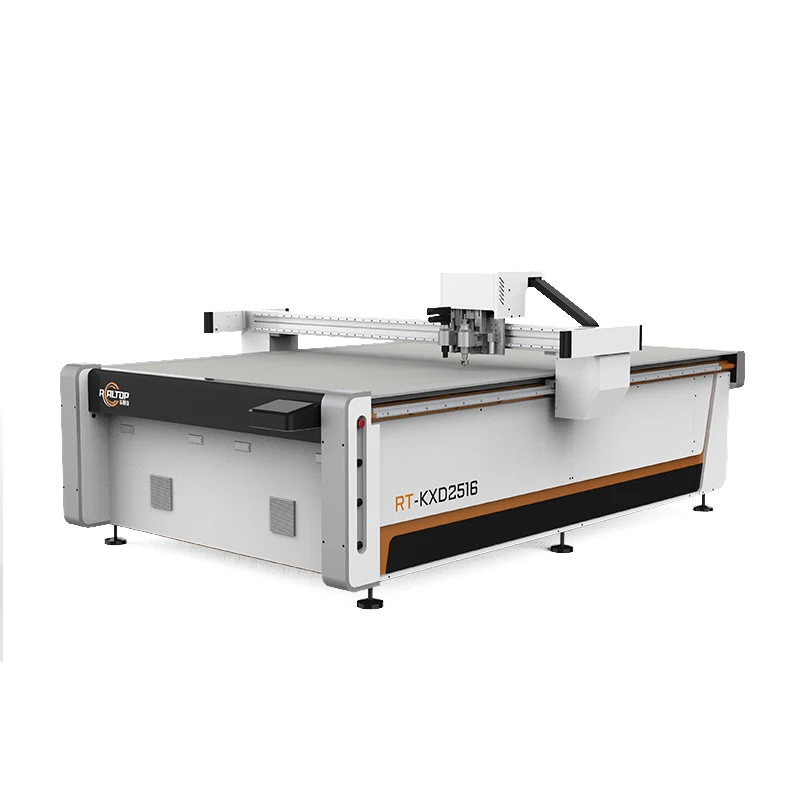
| Model | RT-D2516/RT-S2516 |
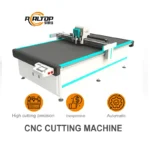
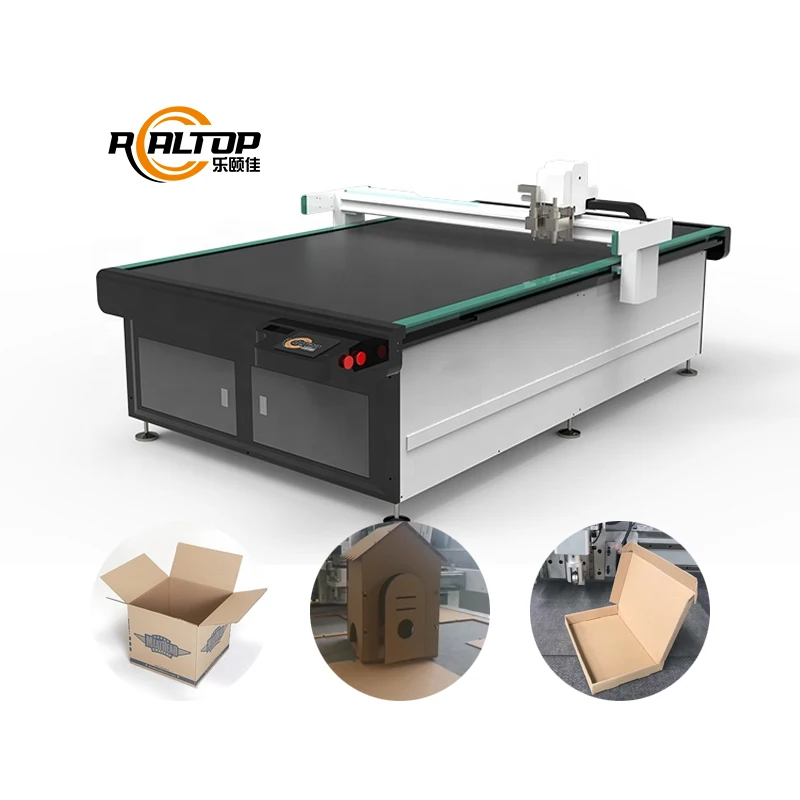
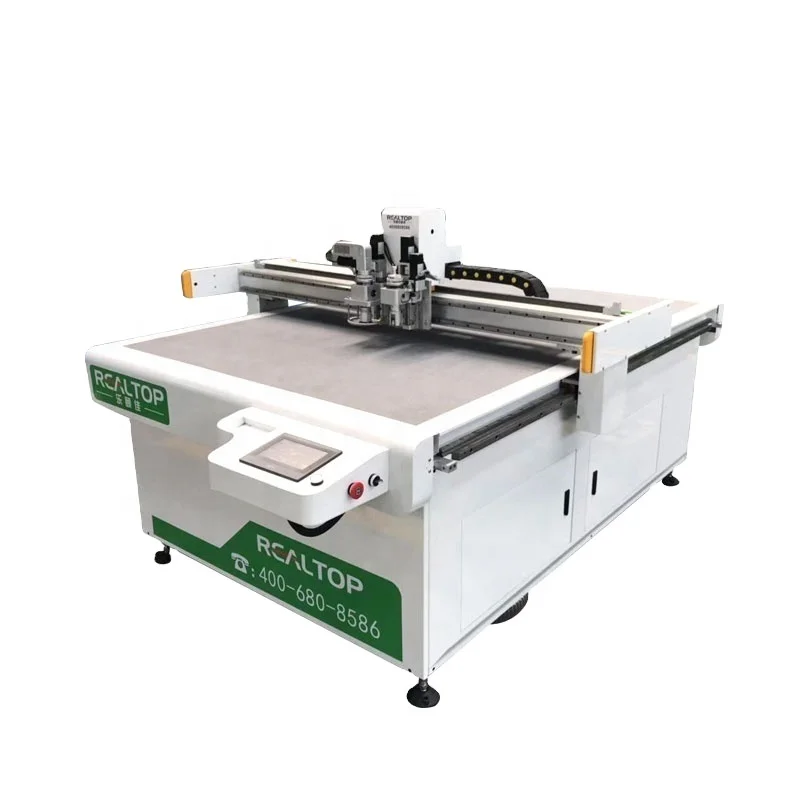
| Product Type | CNC Oscillating Knife Digital Cutting Table |
| Working Area | 1600 × 2500 mm |
| Machine Size (L × W × H) | 3450 × 2300 × 1250 mm |
| Rated Power | 9 kW |
| Voltage | 380V ±10% (50/60 Hz to be confirmed per destination market) |
| Vacuum Pump | 7.5 kW |
| Table Surface | Aluminum alloy honeycomb vacuum adsorption platform |
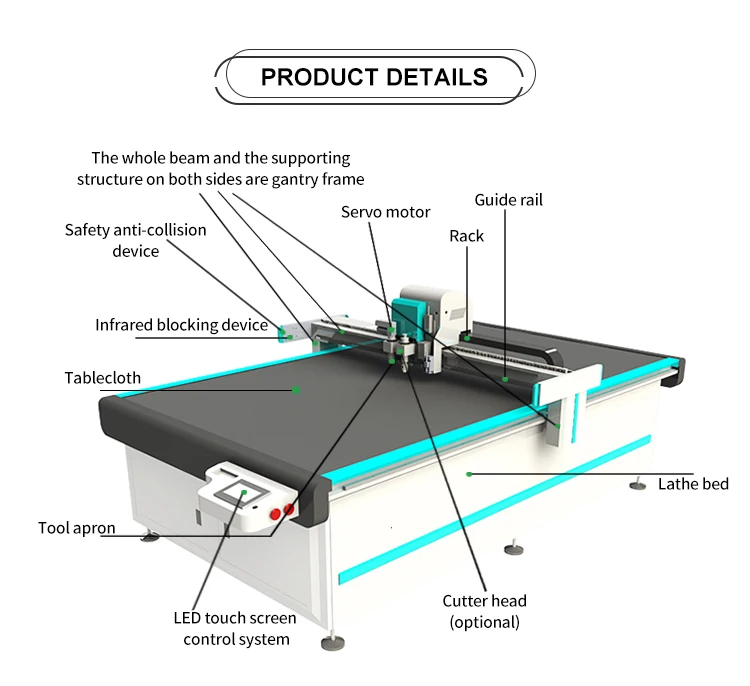
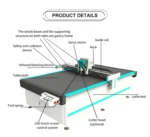
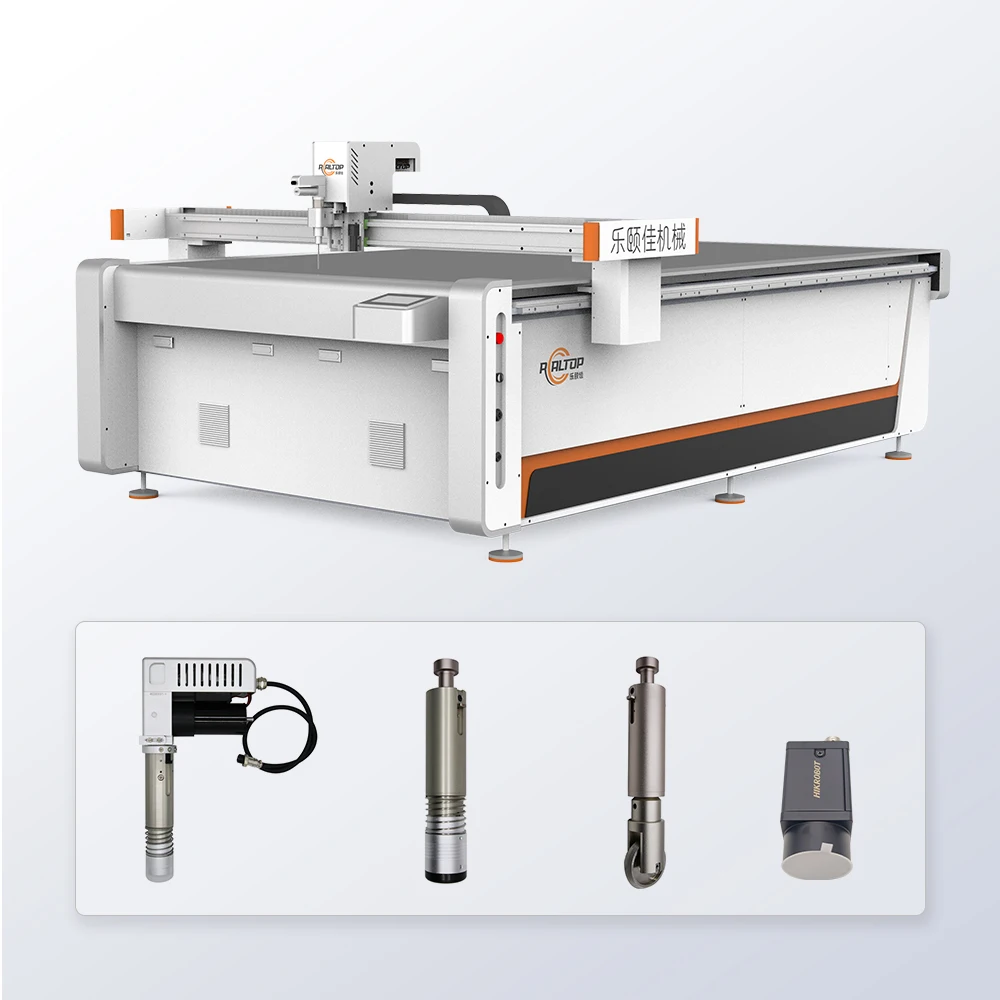
| Tool Head | Swiss imported knife with full cutting, half cutting, and cursor location |
| Translational Velocity | 800–1200 mm/s |
| Cutting Speed | 200–800 mm/s (varies with material type and thickness) |
| Maximum Cutting Thickness | ≤100 mm (material dependent, basis to be confirmed) |
| Repeatability | ≤0.1 mm |
| Drive System | Taiwan Delta servo motors, Taiwan Hiwin linear guides, rack and synchronous belt transmission |
| Safety | Infrared sensors and emergency stop |
| Control Format | HP-GL compatible |
| Software | Professional carton nesting and cutting design; multi-format import; language options available |
| Conveyor Belt | Germany imported wear-resistant anti-pull composite fiber felt |
| Frame | Welded thick square seamless steel, high-temperature treated |
| Assembly State | Fully assembled before dispatch |
Application Suitability
| Application | Material or Output |
|---|---|
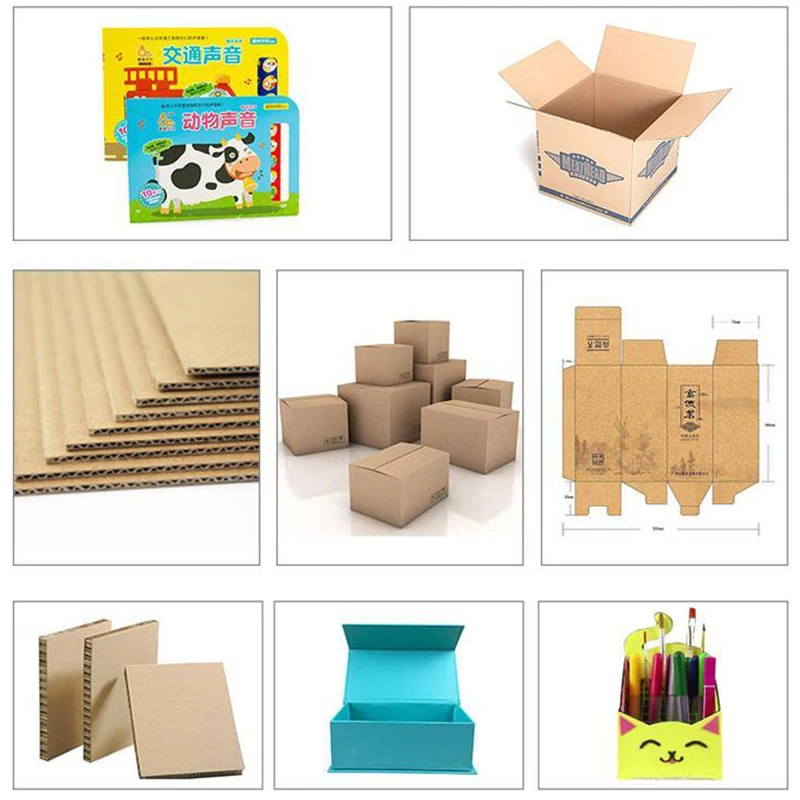
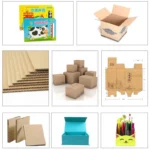
| Packaging carton sample making | Corrugated cardboard, grey board, kraft paper |
| Sticker and label contour cutting | Self-adhesive vinyl, PVC sticker sheets, reflective film |
| Signage and billboard production | Foam board, KT board, corrugated plastic, banner |
| Garment and footwear cutting | Leather, sponge composite leather, flexible fabric |
| Gasket and seal production | Rubber, silicone, soft glass, non-asbestos fiber |
| Advertising display materials | Magnetic sheet, sticker, lightweight flexible composites |
Why "Cutting Thickness ≤100 mm" Means Nothing Without Material Context
A CNC Knife Cutting Machine manufacturer must specify cutting depth against a named substrate, not publish a single ceiling number.
I remember a carton sample shop ordering an oscillating knife table based purely on working area and a quoted 100 mm depth rating. When five-layer corrugated arrived on their floor, the actual throughput dropped sharply because the dense fluting demanded slower passes and multiple tool paths that were never discussed at quotation stage [NEED_CITE: cutting speed versus material density in oscillating knife applications]. The daily volume the buyer had planned around simply vanished. Spec sheets listing a single maximum thickness value across all substrates leave production managers guessing until their own material is on the table.
Frame Treatment Decides Whether Repeatability Holds Past Month Three
Every RT-D2516/RT-S2516 begins as a welded thick square seamless steel structure that goes through high-temperature treatment before machining. This stress-relief cycle removes the internal tension introduced during welding so the frame does not slowly warp under continuous vibration loads. A CNC Knife Cutting Machine manufacturer that skips this step may deliver a table that cuts within tolerance during factory acceptance, then drifts once it runs double shifts in a buyer’s facility. Taiwan Hiwin linear guides and Delta servo motors can only maintain ≤0.1 mm repeatability if the mounting surface beneath them stays dimensionally stable over years of service.
Vacuum Hold-Down Engineered for Real Sheet Sizes
The 1600 × 2500 mm aluminum alloy honeycomb platform pairs with a 7.5 kW vacuum pump to pull flexible sheets flat across the entire cutting zone. Honeycomb construction distributes suction more evenly than drilled MDF beds, which tend to lose grip at the edges as the pump ages. When cutting lightweight sticker sheets or thin garment fabric, uneven adsorption causes material lift that produces ragged edges and forces operators to re-cut rejected pieces [NEED_CITE: vacuum adsorption uniformity requirements for thin flexible substrates]. The 7.5 kW pump capacity is sized to maintain hold-down even when cutting small nested parts near the table perimeter.
Reading the Specs That Actually Govern Daily Output
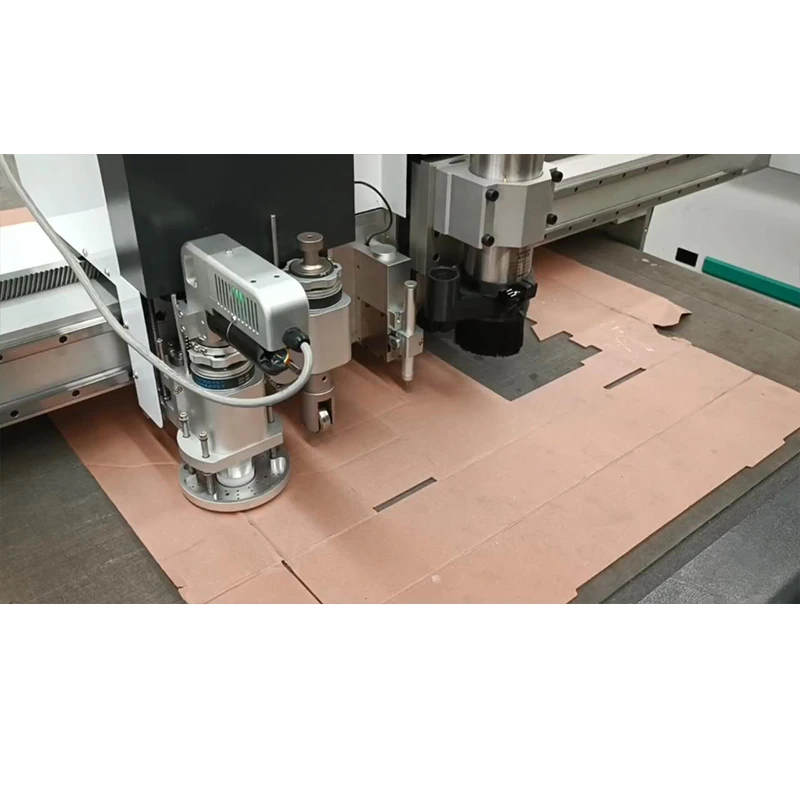
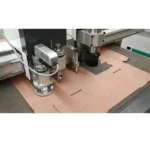
The 200–800 mm/s cutting speed range reflects how differently an oscillating knife behaves across substrates: dense rubber gasket material demands the lower end while thin cardboard allows the upper range. Swiss imported tooling provides both full cutting and half cutting modes, letting a packaging sample shop kiss-cut crease lines without penetrating the back liner. Rack transmission combined with ball screw and synchronous belt elements handles the rapid 800–1200 mm/s traversal between cuts, reducing non-cutting travel time across large nesting layouts. Repeatability of ≤0.1 mm matters most in multi-pass contour work where the knife must retrace the same path for thick sponge composite leather without leaving visible stepping marks. HP-GL compatible control means existing carton design workflows transfer without forcing a complete software replacement.
The Cost of Skipping a Material-Matched Configuration
Choosing a tool head based on catalog photos rather than substrate behavior leads to crushed foam cores, frayed fabric edges, and half-cut stickers that tear during weeding. Buyers who confirm working area but leave vacuum zoning unspecified often discover that small nested gaskets lift off the table mid-cut, destroying an entire sheet layout. Ordering a machine without first testing the buyer’s actual material on the factory floor is the single most common reason CNC knife cutting installations underperform against quoted expectations [NEED_CITE: oscillating knife configuration mismatches reported by packaging converters].
Buying Direct From the Factory Floor
Realtop runs in-house design and production for both knife and laser systems, so the cutting method is matched to the material instead of forcing one technology across every substrate. Each RT-D2516/RT-S2516 receives a tool head and table configuration specified against the buyer’s named material and production volume. Voltage, plug type, and control language are confirmed before production begins rather than discovered at customs. Sample cutting on the buyer’s own substrate is performed and documented before the order moves to assembly. Factory test records and packing photographs are shared so the buyer sees their exact machine running before it leaves Jinan.
Documentation & Verification
- Machine specification sheet listing confirmed tool head, vacuum pump rating, and table zoning layout
- Electrical schematic with voltage and frequency locked to destination market requirements
- Sample cutting report produced on the buyer’s own material with measured edge quality and cycle time
- Software licence and file format compatibility note matching the buyer’s existing nesting workflow
- Factory test record showing repeatability measurement on the configured working area before crating
- Packing photographs documenting frame, tool head, and control cabinet condition prior to container loading
Installation, Commissioning & Support
- 3450 × 2300 mm footprint requires level concrete floor with clearance for 1250 mm machine height plus operator access
- Dedicated 380V ±10% circuit rated for 9 kW machine load plus 7.5 kW vacuum pump on separate breaker
- Fully assembled dispatch means no structural bolting on site; only power connection and vacuum hose routing
- First-run parameter tuning covers oscillating frequency, knife depth offset, and vacuum zone mapping to buyer material
- Operator training addresses nesting software workflow, HP-GL file import, and crease line half-cut calibration
- Swiss knife blades, vacuum seals, and conveyor felt listed in spare parts pack for scheduled replacement intervals
What We Need Before Quoting Your Line
Send the exact material type, thickness range, and maximum sheet dimensions you run most days, along with your target daily volume so the correct tool head and vacuum configuration can be selected. Confirm your local voltage and frequency standard plus the control language your operators need on the HMI. If you have an existing nesting software workflow or preferred file format, share a sample file so compatibility is validated before the order is finalized.
Frequently Asked Questions
Q: How is the machine configured to match my specific material type and daily volume?
A: We request physical samples of your production material first, then run test cuts on the factory floor to measure edge quality, cycle time, and tool wear. The tool head selection, knife frequency, vacuum zoning, and conveyor type are all set based on those results rather than generic catalog defaults, and a sample cutting report is issued before your machine enters production.
Q: What voltage, plug type, and control language options are available?
A: The RT-D2516/RT-S2516 operates on 380V ±10% with frequency confirmed to your destination market before build. Plug types are matched to local standards, and the control interface is available in English, Russian, Italian, Chinese, and other languages on request, all documented on the electrical schematic before assembly begins.
Q: How do you confirm software compatibility with my existing workflow?
A: Send us a sample file from your current nesting or design software. We import it into the professional carton nesting system, verify contour recognition and tool path output, and document the result in a file format compatibility note that ships with the machine. Supported formats include HP-GL and common vector imports.
Q: Can I send my own material for sample cutting before placing the order?
A: Yes. Shipping your actual production material to the Jinan factory is the standard first step. We cut it on a configured table, record edge finish, achievable speed, and any tooling adjustments needed, then issue a sample cutting report so you can evaluate real results against your production requirements before committing.
Q: What OEM and custom configuration options does the factory offer?
A: Because design and production happen in-house, we adjust working area tooling combinations, add CCD camera positioning for printed contour work, configure conveyor systems for automated feed, and modify control cabinet layouts to match distributor branding or local certification requirements. Each modification is confirmed on the specification sheet before production starts.
You may also like

商品评价
Clear filtersThere are no reviews yet.